
Step into the world of motor technology, where every detail counts and where power and performance dance with robustness and durability. Torn between different motor types for your power tools? Let us guide you through the nuances and the technological marvels, and discover how your choice can literally electrify your projects. Ready to light the flame of perfection? This way!
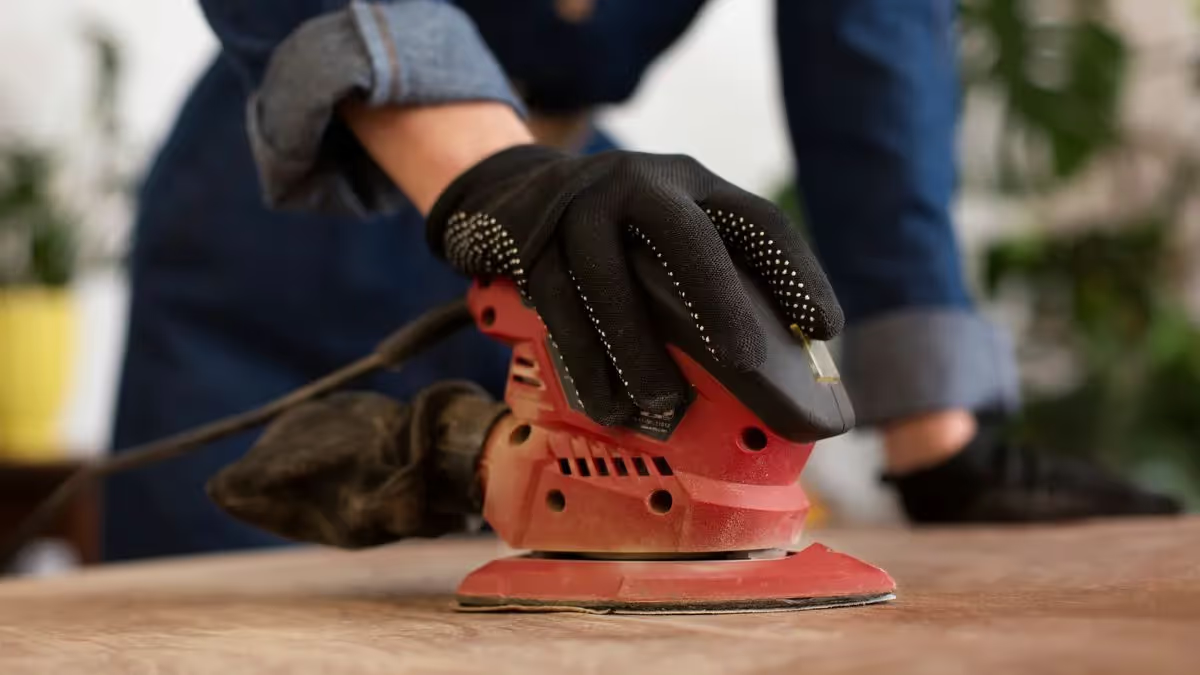
The detail sander, often called a delta sander because of the distinctive shape of its pad, is recognised as a must-have in DIY and finishing work. Its technical specifications, along with its various applications, make it a versatile tool suited to many needs.
Key features of the detail sander
Power supply and output
The detail sander stands out for its different power supply modes. Whether corded electric, with an output ranging from 55 to 300W, battery-powered, offering a voltage between 13 and 18V, or pneumatic, connected to a compressor, each type meets specific needs. It is therefore essential to choose according to the intended use.
Base plates and oscillations
The base plate, the central element of this tool, comes in two main forms: the hook-and-loop abrasive attachment system, more commonly known as "velcro", and the plate, either delta-shaped or triangular. Sanding performance is also determined by the number of oscillations per minute, ranging from 6,000 to 26,000 osc/min.
Motor technology
When we talk about motor technology, particularly in the context of power tools such as sanders, we are referring to the technology and design of the motor that drives the tool. Performance, durability and maintenance requirements can vary according to the type of motor.
1. Synchronous or brushless motors:
Advantages:
- Greater performance: these motors are generally more efficient, because they have no friction caused by carbon brushes, which allows better conversion of electrical energy into mechanical energy.
- Durability: the absence of brushes means there is less wear and friction, which extends the life of the motor.
- Less maintenance: with no brushes to replace, these motors generally require less servicing.
- Lower operating temperature: brushless motors generally generate less heat, which makes them better suited to prolonged use.
Disadvantages:
- Cost: brushless technology is generally more expensive because of its complexity and its performance benefits.
2. Asynchronous or carbon-brush motors:
Advantages:
- Robustness: these motors are often more robust in demanding conditions and can withstand harsher environments.
- Cost: cheaper to produce, they are often less expensive to buy for the end user.
- Ease of repair: carbon-brush motors can often be repaired more easily. If a brush wears out, it can be replaced.
Disadvantages:
- Performance: carbon-brush motors can have reduced efficiency because of the friction and resistance generated by the brushes.
- Service life: carbon brushes wear out over time, which can shorten the life of the motor if the brushes are not replaced.
- Maintenance: although carbon-brush motors are robust, they require the brushes to be replaced regularly, which can be seen as a constraint.
Options and ease of use
Variable speed control, soft start, the dust extraction system, the interchangeable plate and the rotating plate are all options that make the tool more pleasant and more efficient to use.
One form, several offers.
- Two minutes, no account
- Direct, no middleman
- Your identity stays private
Models and uses
- Detail sander for occasional use
Ideal for occasional work, this sander is perfectly suited to stripping, including in the tightest corners. With an output ranging from 50 to 280W, it is suitable for most common DIY tasks. Its dust extraction function is a considerable bonus for keeping a clean working environment.
- Detail sander for regular use
If you work frequently on projects requiring quality tooling, a mid-range sander is recommended. Fitted with variable speed control and optimised dust extraction, it offers great flexibility in use.
- Detail sander for intensive use
Intended for professionals and experienced DIYers, this top-of-the-range sander focuses on power and comfort. Options such as the damping pad or the soft start are particularly appreciated for demanding finishing work.
- Cordless detail sander
The freedom of movement offered by the cordless version is unrivalled. Light and powerful, this sander is ideal for finishing work in hard-to-reach places.
- Pneumatic detail sander
Powered by compressed air, this sander stands out for its light weight and its ability to stop instantly. It does, however, require a suitable compressor.
Plates and abrasives
The choice of plate, whether small or large, is crucial for a flawless finish. Rotating plates are particularly appreciated on delta models for making optimal use of the abrasive. Deciding on the best motor technology for your power tools may seem complex, but it is a choice that shapes performance, durability and even long-term economy. Between the quiet power and efficiency of synchronous brushless motors and the reliable robustness of asynchronous carbon-brush motors, your decision can turn every task into a masterpiece. Make the right choice today, and let your tools be the extension of your passion and your expertise. Dive into the fascinating world of motor technology and bring your projects to life as never before!