
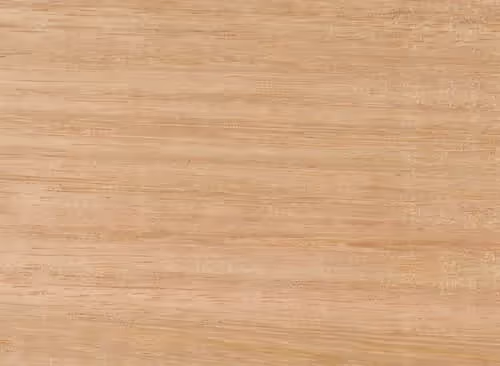
Eucalyptus globulus is an aromatic tree of the myrtle family (Myrtaceae) which generally reaches a height of 45 to 55 metres and a diameter of 1 to 2 metres. It has a straight trunk for up to two thirds of its total height and a well-developed crown. The central trunk and the taproot are fringed with numerous lateral stems and roots. The taproot rarely exceeds a length of 3 metres. The pale, yellow-brown bark is shed.
Introduction and origin — Eucalyptus globulus
Eucalyptus globulus is a subspecies of white eucalyptus, a species native to Tasmania and very common in the north-west of the Iberian Peninsula (Galicia and northern Portugal).
It was during the 19th century that Eucalyptus globulus gained a solid reputation in Tasmania, where the species was used in applications calling for good strength and natural durability.
Eucalyptus globulus thus made its appearance in shipbuilding and civil construction; the timber was used to build quays, bridges, poles, tool handles and so on.
The species was introduced into Spain in the middle of the 19th century. Regarded at first as a botanical "curiosity", it was planted in the gardens of palaces and other luxury residences.
Appearance — Eucalyptus globulus
The leaves on the older branches are narrowly lanceolate, often curved, alternate and hanging vertically. They are glossy, dark green, thick and leathery. The leaves on young shoots are oval, opposite, sessile and horizontal. They are covered with a grey waxy bloom which is much thicker on the underside of the leaf. The young stems are square or winged.
The white flowers are solitary in the axils on flattened stems. They measure about 4 to 5.5 cm across. The sepals and petals are fused to form a warty operculum which is present on the bud and falls at anthesis. The flower has numerous stamens. The ovary is four-locular and contains numerous ovules. The flowers are most abundant from December to May.
Main characteristics — Eucalyptus globulus
The species is characterised by a high density and hardness as well as by good mechanical properties, exceptional natural durability, ease of bending and impact resistance. Its pale tone allows it to take all kinds of finishes.
Density: 800-850-900 kg/m3Hardness: Monnim 6.5, Brinell HB = 50N/mm2Hygroscopicity: between 5 and 25% moisture contentToughness: high resilience coefficient (k=1.2 according to NE 56.540)Strength class: D-40Fire resistance: ßn=0.55-0.47 mm/min
One form, several offers.
- Two minutes, no account
- Direct, no middleman
- Your identity stays private
Applications — Eucalyptus globulus
The species truly took off in the 20th century with the discovery of its good qualities for making wood pulp. From then on, Eucalyptus globulus was planted and grown industrially for that application. That is also why the species is known as white eucalyptus, while in Tasmania it is known as "Tasmanian blue gum".
At present, Eucalyptus globulus plantations in Galicia and Portugal cover an area of one million hectares. In Galicia these are sustainably managed forests under the PEFC or FSC labels. Research and development in recent years has considerably improved the technologies for processing the species, which has thus been able to move into new applications in furniture, joinery and construction.
It is today used to make doors, paving blocks, staircases, shelving, bed frames, window scantlings, structural elements, plywood panels, veneer and more.
Sawn timber — Eucalyptus globulus
Bending strength: 47 N/mm2Average modulus of elasticity parallel: 18,400 N/mm2Modulus of elasticity parallel to the grain: 13,500 N/mm2Average density: 797 kg/m3
Since its arrival in Galicia, Eucalyptus globulus timber has been used in structural applications that are now more than 100 years old. Standard NE 56.546 "Visual grading of sawn timber for structural use" defines Eucalyptus globulus sawn timber as strength class D-40. The standard applies to eucalyptus sawn timber of a section less than or equal to 60 x 200 mm, and the MEF class allows the presence of knots of a diameter of up to 1/3 of the width of the section on the face and of a diameter of up to half the thickness of the section on the edges.
A perfect species for windows
Adolf Münchinger is a company that imports and manufactures components for exterior wooden windows and doors in timbers such as pine, spruce, beech, Douglas fir, European and American oak, sapele and others, and which employs around 140 people for an annual turnover of 70 million euros.
Its head office is located between Karlsruhe and Stuttgart. For its production of pine glulam, the company recently obtained certification of compliance with the European standards EN13307-1 and CEN/TS 13307-2 under the supervision of i.f.t. Rosenheim. Since 2006 it has been the exclusive distributor for the whole of Europe, with the exception of Spain, of the Eucalyptus globulus window scantlings designed by Villapol S.A. "Villapol approached us in 2003," explains Michael Keppler, Münchinger's sales manager, with amusement.
"But at the time we turned down their offer of a partnership. Villapol then began working with a major German window manufacturer, the Pax AG group, which allowed the company to develop the products demanded by the German market more effectively. Three years later, when I discovered not only those developments but also the fact that Villapol had recruited a salesperson who spoke perfect German, we set up our partnership, which has lasted ever since."
Of the 4,000 m3 of scantlings produced annually by Villapol, Münchinger distributes around 1,500 m3 (roughly 50 lorry loads). "We are very satisfied with the very short delivery times provided by Villapol, as well as with its flexibility and its adaptability to our requests," continues Michael Keppler. As for the product, in his view it is "perfect for making windows. The wood is very dense, very hard and durable, and it is perfectly suited to the design of window scantlings."
Engineered wood for windows
Eucalyptus globulus is a product that adapts well to exterior applications. Being sold in the form of scantlings also makes it possible to meet the demand of the German market, where 99% of windows are made from scantlings, but increasingly that of the French market as well.
"In the eastern regions of France, scantlings are being used more and more." One of the main customers for Eucalyptus globulus in France is Menuiserie Couval, but "we could easily find new customers for this product; demand is strong and will be stronger still in the years to come". Eucalyptus globulus is an excellent legal alternative to other tropical timbers.
"The wood is grown in Europe and it is available with FSC or PEFC certificates," Michael Keppler points out. His wish: that Villapol increase its production capacity in the years ahead. "We have taken on a salesperson dedicated to France, Dominique Aubry, a specialist in exterior joinery." Adolf Münchinger is a healthy company that does not take risks, and in its view Eucalyptus globulus has a fine present and an even better future ahead of it.