
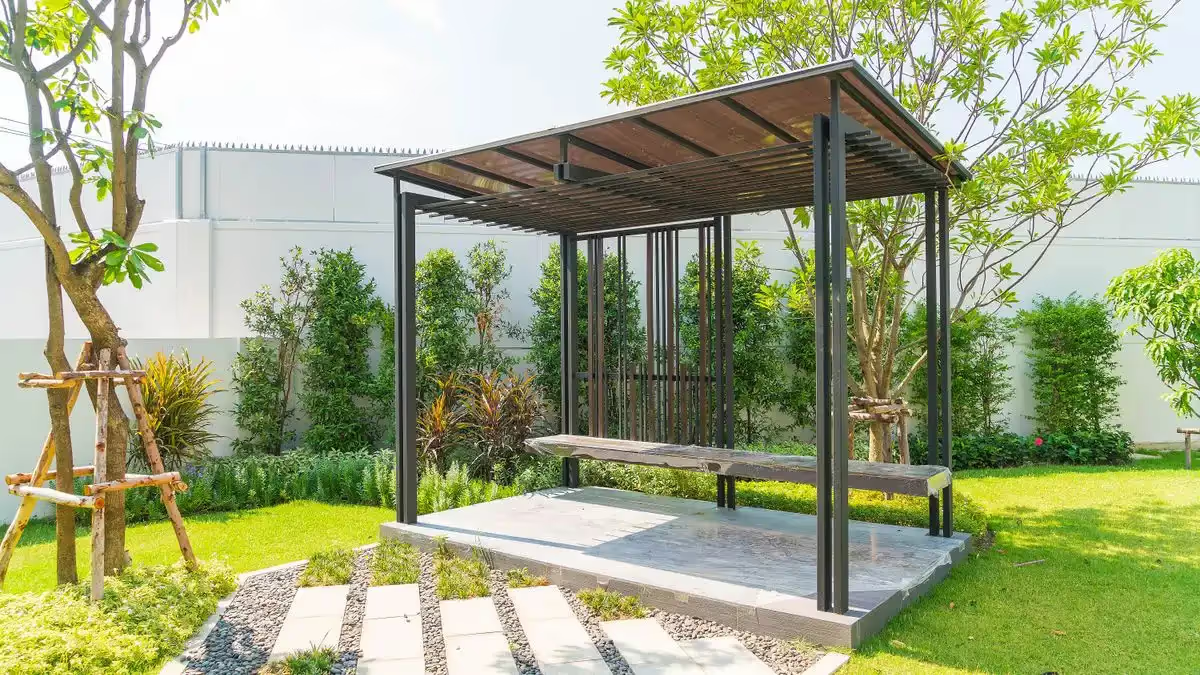
Create your own corner of paradise outdoors: an expert guide to choosing the perfect garden shed. Discover how to turn your outdoor space into a haven of peace or a functional workshop with our expert guide.
How to choose the best garden shed: an expert guide from A to Z
If you are considering adding a garden shed to your outdoor space, you have made an excellent decision. With so many options available, however, it can be hard to know where to start. We are here to guide you through the crucial steps to choosing the perfect garden shed. Whether you need storage space, a DIY workshop or even a habitable cabin, follow our complete guide to take an informed decision. Here are the key steps to choosing the perfect garden shed. Our complete guide offers expert advice, selection criteria and practical tips for taking the best decision to suit your needs.
Choosing the ideal use for your garden shed
A garden shed for what use?
Before jumping into the technical details, ask yourself this essential question: "What will be the main use of your garden shed?" Whether you need to store tools, create a working space or design a habitable garden cabin, your choice will depend greatly on the intended use. Here are a few ideas to inspire you:
- A garden shed for storing your tools, garden furniture and bicycles.
- A DIY and gardening space with storage for your tools.
- A summer kitchen or a playroom for the children.
- A habitable garden cabin for visiting guests.
- A year-round extension of your living space for versatile use.
Selecting the key features
Defining the important features of the garden shed
For each use, there are key features to take into account:
- Interior space and ridge height: make sure you have enough space for your storage or usage needs.
- Ground anchoring, floor, roof, doors and windows: select these elements according to the function of your shed.
- Materials: choose materials that offer good insulation, durability and appearance.
- Floor area: select the size of your shed according to the usable area you need.
Floor area and use
Choosing the floor area of your garden shed
The floor area of your garden shed is crucial to how useful it will be. Here are the different categories according to usable area:
- Under 5 m²: ideal for storing tools, cleaning products, bicycles and a lawnmower.
- Between 5 and 10 m²: perfect for garden tools, the lawnmower, bicycles and even a workshop.
- Between 10 and 20 m²: suitable for larger storage space or even a convertible cabin.
- More than 20 m²: offers a comfortable living space for various uses.
The importance of foundations
The foundations of a garden shed
Do not forget the foundations. They are essential to the stability and the durability of your shed. Various options are available:
- Interlocking pavers, slabs or concrete blocks: offer solid stability.
- Concrete or PVC pads: easy to install and economical.
- Concrete slab: the most durable solution; be sure to follow the specifications.
One form, several offers.
- Two minutes, no account
- Direct, no middleman
- Your identity stays private
The advantages and disadvantages of materials for a garden shed:
- Advantages:
- Visually pleasing: offers a natural, warm look and fits well into most gardens.
- Insulation: wood has natural insulating properties, which makes it a good choice for areas with a variable climate.
- Flexibility: easy to customise in terms of size, shape and colour.
- Disadvantages:
- Maintenance: wood needs regular treatment to protect it from the weather, from insects and from mould.
- Variable durability: the service life depends on the type of wood used and on how it is maintained.
- Advantages:
- Durability: most metal sheds are treated to resist rust and corrosion.
- Minimal maintenance: less likely to suffer damage from insects or rot.
- Strength: can withstand severe weather.
- Disadvantages:
- Conductivity: metal conducts heat, which can make the shed very hot in summer and cold in winter.
- Corrosion: can rust in damp or salty environments if the metal is not properly treated.
- Advantages:
- Low maintenance: resin does not rust, does not rot and is generally unaffected by insects.
- Weather resistance: can withstand many types of weather condition without fading or distorting.
- Easy installation: resin garden shed kits are often simpler to assemble than their wooden or metal counterparts.
- Disadvantages:
- Limited appearance: although the designs are varied, they cannot rival the natural look of wood.
- Durability: although hard-wearing, some plastics can become brittle over time, especially if exposed to extreme temperatures.
Choosing the joinery: door, windows and floor
Personalising your shed with made-to-measure joinery:
- Doors:
- Hinged: traditional, they open outwards or inwards. Ideal for large sheds or when you have enough room to allow a full opening without obstructions.
- Sliding: they slide on rails, which makes them perfect for limited spaces. They also offer easy access without taking up room outside or inside the shed.
- Windows:
- Fixed: they provide no ventilation but let in natural light.
- Opening: they can be opened for ventilation. They are ideal if you work inside your shed and need air to circulate.
- Choice of glazing: double glazing, for example, can offer better thermal insulation, protecting the shed against heat loss in winter and keeping it cool in summer.
- Floor: a good floor can make all the difference in terms of thermal insulation and comfort. It also protects stored items from ground moisture.
- Types of roof:
- Mono-pitch roof: a single slope, ideal for sheds built against another structure.
- Dual-pitch roof: two slopes meeting at the top, resembling an "A". This is the most common style.
- Three-pitch roof: it has three sloping surfaces, offering a more distinctive design.
- Roofing materials:
- Chipboard panels: an economical choice, often covered with another waterproofing material.
- Roof boarding with shingles: roof boards are thin planks that form the base of the roof. Shingle, for its part, is a waterproofing material made of bitumen and granules. It is durable and weather-resistant.
- Steel sheets: offer great durability, stand up well to the weather, and need little maintenance. They can, however, be noisier in the rain.
Complying with the rules and regulations
Siting a garden shed and the regulations
Be sure to comply with the local regulations when installing your garden shed. This may involve administrative formalities, depending on the floor area and the intended use.
Shape your space with wisdom and expertise
Your quest to choose the perfect garden shed is coming to an end, but your journey towards an exceptional outdoor space is only beginning. With our complete and expert guide, you have gained the knowledge and the understanding needed to take an informed decision. The process of selecting a garden shed is far more than a simple technical exercise. It is an exploration that will allow you to create a peaceful corner, a dream workshop or a welcoming cabin.
By following these steps and by taking the technical specifications as well as the intended use into account, you will be able to choose the garden shed perfectly suited to your needs. Always remember that the choice of a garden shed should not only be functional but also visually pleasing and durable. With our expert advice, you can be sure of making the choice that will add value to your outdoor space for years to come. In a rapidly changing world, it is essential to take well-informed decisions.
Our guide has been designed to give you the tools you need to shape your outdoor space with wisdom and expertise. When you lay the first stones of your garden shed, you are creating far more than a simple structure. You are building a space of possibilities, of creativity and of comfort.