
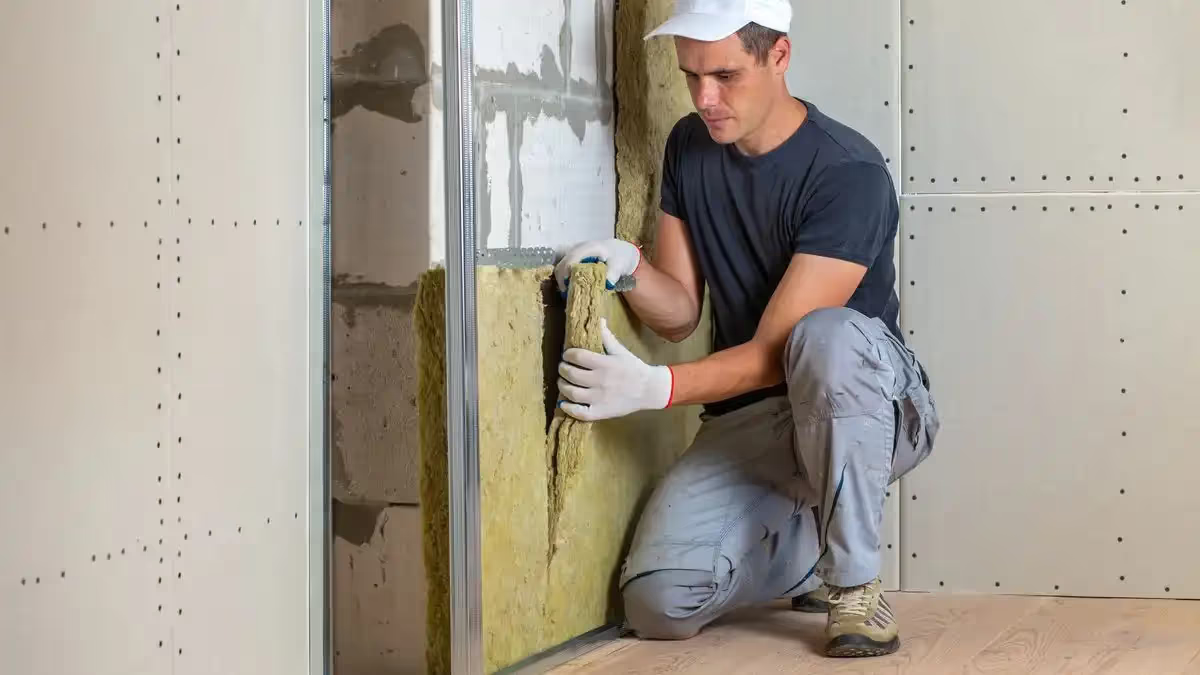
Here is the art of insulating a timber frame house: create an ecological and comfortable thermal cocoon. Explore the methods, materials and precautions for exceptional energy performance.
Insulating a timber frame house: the keys to exceptional thermal performance
Insulating a timber frame house is a crucial challenge in guaranteeing optimal comfort all year round in this type of construction, prized for its durability and its ecological credentials. Although wood has intrinsic insulating properties, adding high-performance insulating materials and following good practice are essential in reaching exceptional levels of comfort. In this article we will dive into the subtleties of insulating a timber frame house, exploring the methods, the materials and the precautions needed to create an ideal interior environment.
The timber frame: a natural basis for excellent insulation
Wood, as a building material, has natural characteristics that make it an insulator of choice. Its ability to retain heat while also being an excellent sound insulator makes it a major asset in insulating a timber frame house. What is more, compared with traditional construction in brick or concrete block, a timber frame house offers better insulation for an equal wall thickness. To maximise thermal efficiency, however, adding quality insulating materials is necessary in order to reduce thermal bridges.
Insulation methods: choices and advantages
1. Distributed thermal insulation (ITR)
Distributed thermal insulation is the preferred method for timber frame construction. The structure of spaced studs provides an ideal space for installing a layer of insulation. This method makes it possible to preserve the living area while offering excellent thermal performance. By combining layers of insulation between the studs and in front of or behind them, optimal insulation is achieved without compromising the interior space.
2. External thermal insulation (ITE)
Although compatible with a timber frame house, external thermal insulation is generally used to supplement conventional insulation. External insulation offers high energy performance by avoiding thermal bridges, and can be installed under timber cladding, composite, PVC and so on.
Insulating materials: choosing performance
Combining wood with high-performance insulating materials is the key to guaranteeing a house that uses little energy. Flexible, fibrous materials such as glass wool, wood fibre and rock wool are recommended. Glass wool, with its low thermal conductivity, stands out as the most effective insulator. Wood fibre, made from forestry residues, offers similar thermal performance while contributing to sustainability.
Essential precautions: moisture and installation
For successful insulation, managing moisture is crucial. The wood must contain less than 18% moisture to avoid distortion. A vapour barrier membrane is needed on the inside to prevent moisture from entering and to ensure airtightness. On the outside, a highly vapour-permeable membrane is essential in order to let moisture escape. Installation in accordance with the standards is essential. The insulation must be ACERMI certified and CE marked in order to guarantee its reliability and its performance. Compliance with DTU 31.2 by the tradesperson ensures durable construction. Combining an interior sealing membrane with an exterior HPV breather membrane preserves the integrity of the building and prevents heat loss.
Raise the comfort and the ecological credentials of your timber frame house through expertly executed insulation.
Insulating a timber frame house is a crucial step in ensuring a comfortable and energy-efficient interior environment. Expertise in choosing insulating materials, an understanding of insulation methods and installation in accordance with the standards are essential in guaranteeing exceptional thermal performance. By combining the natural virtues of wood with high-quality insulation, every timber frame extension or new build can reach an ideal level of comfort for its occupants.
One form, several offers.
- Two minutes, no account
- Direct, no middleman
- Your identity stays private
The keys to perfect insulation of a timber frame house
Energy performance and choosing your results
The timber frame house offers remarkable flexibility in terms of energy performance. From houses compliant with the RT2012 standard to passive houses, different levels of performance are possible. To obtain optimal thermal performance, adding a layer of insulation in front of and behind the frame, in addition to the insulation between the studs, is a well-kept secret. By simply filling the spaces between the studs, the performance of a low-energy house is already reached.
Insulating materials: which to favour?
The choice of insulating materials is a crucial element in insulating a timber frame house. Wood, with its intrinsic insulating qualities, must be combined with insulation offering high thermal and acoustic performance. For substantial energy savings, materials offering maximum thermal performance are to be favoured. Opt for a sufficient thickness or choose a material with a low thermal conductivity coefficient (lambda) for optimal insulation. Flexible, fibrous materials such as glass wool, wood fibre and rock wool are the most suitable.
Preserving the ecology: environmentally friendly materials
To preserve the ecological character of a timber frame extension, using environmentally friendly materials is essential. Glass or rock wool, wood fibre and even hemp are options worth considering. Glass wool stands out for its exceptionally low thermal conductivity, while wood fibre, made from local wood residues, offers high thermal performance. Rock wool sits between these two options in terms of thermal performance.
Precautions to take: moisture and installation standards
Moisture is a potential enemy of wood in timber frame construction. Keeping the water content below 18% is essential in order to avoid distortion. Testing the moisture content of the wood with an electronic meter at the very start of the work is recommended. Fitting a vapour barrier membrane on the inside is essential in order to prevent moisture from entering and to guarantee airtightness. Humidity-variable membranes are ideal because they prevent moisture from entering in winter while letting the wall breathe in summer. On the outside, installing a highly vapour-permeable membrane is necessary in order to let moisture escape. What is more, ventilation is essential in preventing condensation and guaranteeing indoor air quality.
Quality of workmanship and costs
The quality of the workmanship plays a central role in insulating a timber frame house. Check that the tradesperson is insured and holds the appropriate certifications, such as Qualibat or RGE. It is common for the occupant to be involved in choosing the materials and the insulation methods. Asking questions is encouraged, and dialogue with the tradesperson is essential in guaranteeing optimal installation. Compliance with the standards, notably DTU 31.2, ensures the durability of the construction.
Make your timber frame house a refuge of optimal thermal comfort through skilfully mastered insulation.
Insulating a timber frame house is a demanding process that calls for expertise and in-depth knowledge. By combining the insulating properties of wood with high-performance insulating materials, and by respecting the methods and installation standards, superior-quality insulation can be achieved. The ultimate aim is to create a comfortable and energy-efficient living space, in harmony with the environment. For a timber frame house to become a haven of thermal peace, attention to every detail is the key to success.