
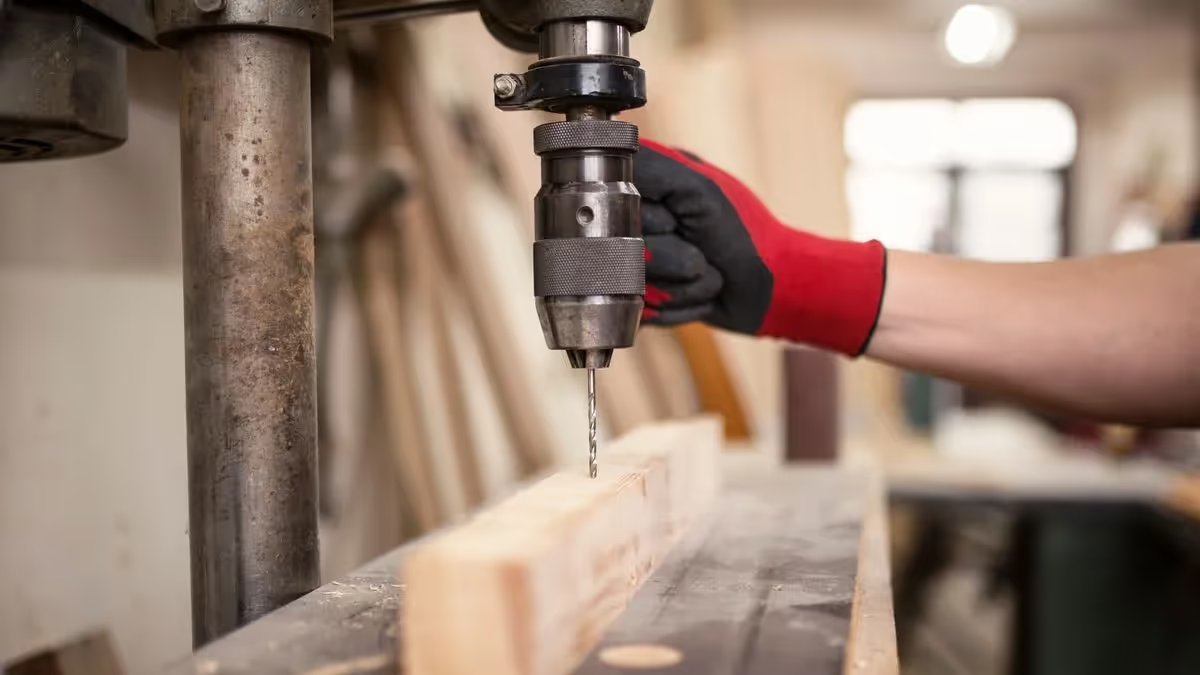
Here is the fascinating world of milling machines: from the evolution of techniques to mechanical precision, dive into a world where innovation sculpts the future of manufacturing. Explore the varied types of milling machine and their essential role in creating complex shapes. Become an insider of material transformation and let yourself be inspired by the harmonious fusion of tradition and technology.
Milling machines: types, operation and applications
An introduction to the world of milling machines
For more than two decades, the world of milling machines has undergone constant evolution, today offering a wider range of applications than ever. Once reserved for traditional processes, milling has established itself as an essential alternative for operations once limited to turning, drilling or tapping. Selecting the milling machine carefully according to the type of milling is a key element. While grooves are handled on 3-axis machines, 3D profiles call for 4- or 5-axis machines. Did you know that, thanks to technological advances, turning centres now incorporate milling operations using rotating, powered tools, while machining centres are also opening up to turning? This increased versatility does, however, come with stability challenges compared with traditional milling machines.
The milling machine in depth
In the past, a simple classification into horizontal or vertical, turning or milling, was enough. Today, the complexity of the machines calls for a more nuanced view. Milling machines, machine tools that work by chip removal, are distinguished by their use of rotating tools, namely precision cutters. Their mission: to shape flat, cylindrical, conical or helical surfaces. The tool invariably rotates about its axis, while the workpiece moves in translation or in rotation. Most milling machines have a single spindle, although a multi-spindle version exists.
The many faces of the milling machine
Variety reigns in the kingdom of milling machines, offering specific features for every need. Let us look at the details.
Horizontal milling machines
You see, in horizontal milling machines the spindle axis takes a horizontal orientation. The tool holder, placed beneath the spindle, moves transversely and vertically. These ingenious machines, in which all the movements are coordinated through a single electric motor, conceal a transmission complexity that should not be underestimated.
Vertical milling machines
Another face of the milling machine emerges with the vertical type. The spindle axis rises proudly to the vertical. The tool holder, for its part, moves with a feed, sliding along two perpendicular slideways.
Special milling machines
Imagine milling machines dedicated to particular tasks: keys, carving, grooves. Special milling machines, as their name suggests, adapt to specific missions, rather like specialised craftsmen.
Universal milling machines
What if one machine could marry the functions of the horizontal and the vertical types? Universal milling machines achieve that feat by incorporating the versatility of the work table, which can even rotate.
Automatic numerically controlled milling machines
For complex profiles and demanding surfaces, automatic numerically controlled milling machines shine. Their probe guides the cutter, remaining in constant harmony with the model to be reproduced, opening the way to remarkable precision.
Mechanical harmony: the art and precision of milling machines
Milling machines embody the very essence of transforming material. Their role goes beyond simple machining: they embody innovation, adaptability and precision in a constantly evolving manufacturing landscape. Whether you are a newcomer or an expert in the field, dive into the world of milling machines, because it holds a captivating journey between tradition and technology.
One form, several offers.
- Two minutes, no account
- Direct, no middleman
- Your identity stays private
The informed choice: the right milling machine and expertise
Selecting the perfect milling machine
The quest for the perfect milling machine begins with a thorough understanding of your needs. The choice of machine depends closely on the type of milling you have in mind. Do you want to cut elegant grooves? A 3-axis machine might answer the call. But if complex 3D profiles are on the horizon, opt for the possibilities offered by 4- or 5-axis machines. Always keep in mind that every project has its ideal milling machine.
The evolution of technological possibilities
Imagine a world in which machines are not limited to a single role. Thanks to technological advances, turning centres now welcome milling operations, driven by rotating, powered tools. Likewise, machining centres are opening up to the art of turning. This increased versatility comes with challenges, however, particularly in terms of stability compared with traditional milling machines. Technological progress widens the horizons, but the foundation of precision remains unshakeable.
Precision in action: movement and machining
Let me take you into the heart of the process. Picture the tool in action, rotating about its axis, while the workpiece dances in translation or in rotation. Precision reigns supreme. As you will have guessed, the milling machine is a machine tool that works by chip removal, using precision cutters to sculpt varied surfaces. Let me reveal a secret: the combination of the movement of the tool and of the workpiece brings unique creations to life, from the simplicity of a flat surface to the elegance of a conical shape.
The quest for perfection: a typology of milling machines
In the world of milling machines, diversity is queen. Let me introduce you to the different players on this technological stage.
The horizontal spectacle
Horizontal milling machines captivate with their bold orientation. The spindle axis stands horizontally, while the tool holder moves in transverse and vertical movements. The coordination of these movements, orchestrated by a single electric motor, is a mechanical feat in its own right.
Vertical elegance
Let us enter the kingdom of vertical milling machines. The spindle stands proudly vertical, while the tool holder moves forward with a feed along two perpendicular slideways. Mechanical simplicity coupled with unrivalled efficiency.
The art of the unique: special milling machines
Special milling machines bear their name with pride. They are dedicated to particular tasks, from cutting keys to meticulous carving by way of producing grooves. These mechanical artists embody the very essence of customisation.
Perfect balance: universal milling machines
Imagine a machine that embodies both the horizontal and the vertical. Universal milling machines merge the functions of both worlds, and the work table, rotating at will, adds a layer of ingenuity.
Advanced precision: automatic numerically controlled milling machines
When complexity arises, automatic numerically controlled milling machines stand out as heroes. Their probe, in symbiosis with the model, guides the cutter in a precise choreography, bringing elaborate profiles and surfaces to life.
Precise shaping: the revolution continues with milling machines
The world of milling machines embodies the quintessence of material transformation. These machines go beyond machining, symbolising innovation, flexibility and precision in a constantly evolving manufacturing landscape. Whether you are a newcomer or an expert, milling machines offer a captivating journey through time and technology. It is up to you to explore, to create and to shape thanks to these genuine jewels of modern engineering.