
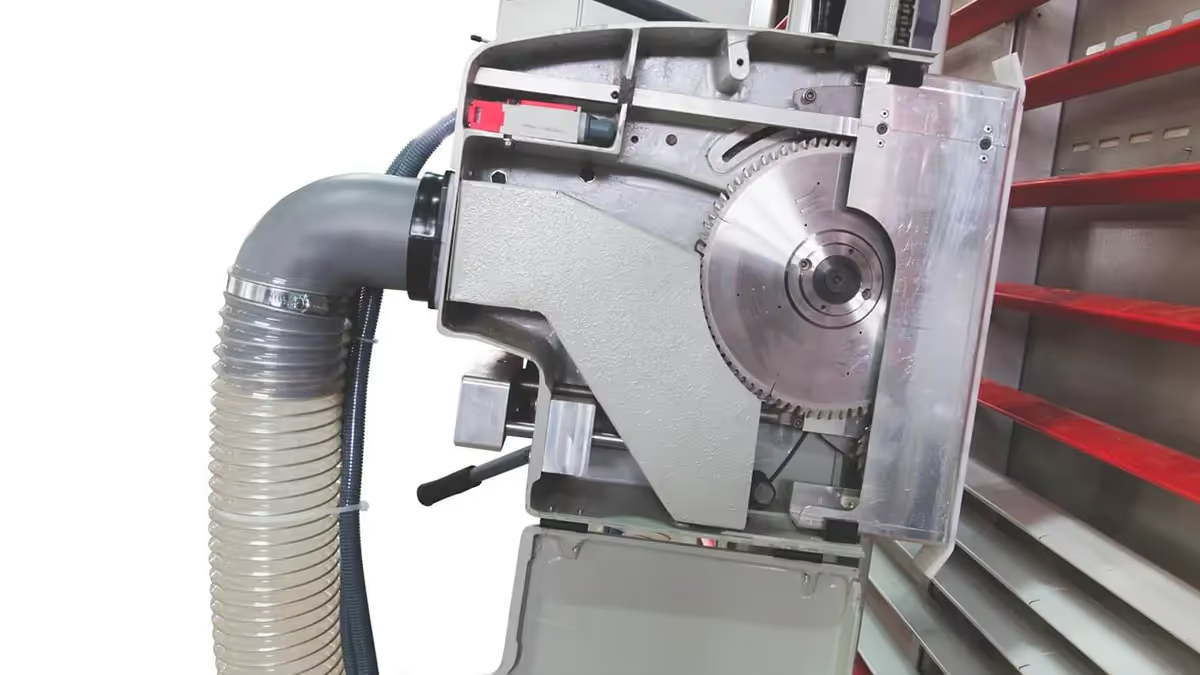
Here is the fascinating world of the panel saw: where precision meets creativity. Discover how this versatile tool raises your joinery projects into artistic achievements, combining efficiency and good looks with unrivalled mastery.
Panel saw: a complete guide to mastering this joinery tool
What is a panel saw: master this precision tool
The panel saw is far more than a simple cutting tool; it is a precision instrument designed to transform wood and wood-based products into joinery masterpieces. This mechanical machine, whether electric or pneumatic, houses an imposing circular blade designed for flawless cuts in a variety of materials, such as wood, chipboard, melamine-faced board, laminate and much more. Circular and high-performing: The panel saw stands out for its circular blade of large size. Its design allows fast, clean and precise cuts in materials of different thicknesses and compositions. This versatile machine is used to create quality joinery components, whether for personal or professional projects. From rough timber to masterpiece: This saw can turn rough wood panels into beautifully worked finished pieces. Whether you need straight cuts, precise angles or complex shapes, the panel saw can meet all your cutting needs with unrivalled efficiency.
Why use the panel saw: the undeniable advantages
Unrivalled precision
One of the main reasons why joinery professionals and keen amateurs turn to the panel saw is its exceptional precision. Thanks to its robust circular blade and its advanced design features, this machine guarantees cuts of unrivalled precision, thereby reducing waste and rework.
Versatility all the way
Whether you are working on construction projects, furniture making or fine joinery, the panel saw is the versatile tool you need. It can handle a variety of materials, from natural wood panels to composite materials, allowing you to produce a wide range of creations without having to invest in several separate machines.
Maximum productivity
The intelligent design of the panel saw focuses on efficiency and productivity. Thanks to features such as tilting tables, pressure systems and precise cutting guides, you can make cuts quickly and effortlessly. This allows you to complete complex projects in less time, which is particularly important in demanding production environments.
Professional finish
When the quality of the cut is paramount, the panel saw stands out for its ability to deliver cuts of professional quality. Whether you are making furniture, doors, shelving or any other joinery component, this machine allows you to make clean, precise cuts, thereby contributing to visually remarkable final results.
Mastering creativity
The panel saw is not simply a cutting tool but a gateway to creative expression. It allows you to turn your ideas into reality by offering unlimited design possibilities. From complex shapes to precise angles, this machine gives you the means to explore and give form to your most ambitious concepts.
One form, several offers.
- Two minutes, no account
- Direct, no middleman
- Your identity stays private
Types of panel saw: horizontal vs vertical
The panel saw comes in two fundamental variants: horizontal and vertical. Each has its distinct advantages, and we are going to dive into the heart of their specificities to help you make the best choice for your projects.
Vertical panel saw: precision both vertically and horizontally
The vertical variant offers exceptional flexibility. Picture a circular saw mounted above a tilting table. This design allows vertical and horizontal movements for precise cuts. Discover how to choose the blade suited to each material in order to optimise your results.
Horizontal panel saw: industrial power on the horizon
Horizontal panel saws are aimed at larger-scale projects. With panels stacked on a horizontal table, a fixed pressure beam guarantees precise and uniform cuts. Explore the subtleties of these professional saws, including the types of blade needed for optimal performance.
The right blades: a critical choice for perfect cuts
Every material requires a specific blade for optimal cuts. Leave nothing to chance when selecting your panel saw blade. Here is an overview of the tooth types and speeds recommended for different materials:
- Natural wood : flat-top or alternate-bevel teeth, speed of 4,000 to 5,000 rpm
- Particleboard : alternate-bevel teeth, speed of 5,000 to 6,000 rpm
- MDF : alternate-bevel teeth, speed of 4,000 to 5,000 rpm
- Panels for scoring cuts : flat-top teeth, speed of 11,000 rpm
Strategic placement: the key to safety and performance
Where you place your panel saw plays a vital role in the safety and the efficiency of your working space. By complying with strict standards, you guarantee an environment conducive to precise and safe cuts. Discover how to prepare the floor, the lighting and the space around your saw in order to maximise your productivity.
An informed investment: the price and performance of panel saws
Acquiring a panel saw is a serious investment. The performance and the precision of this tool make it essential for demanding joinery projects. Discover why prices range from €600 to more than €15,000 and how to choose according to your specific needs.
Become a master of the panel saw
Through years of expertise and passion for joinery, we have compiled the essential knowledge for mastering the panel saw. Whether you are a beginner or a seasoned professional, this comprehensive technical guide will accompany you on your journey towards excellence in precision cutting. Take control of your projects and produce flawless work thanks to the panel saw. Get ready to master the art of cutting with the panel saw, and give your projects the quality and precision they deserve. Join us on this journey to mastering joinery, and discover how the panel saw can become your most valuable asset.