
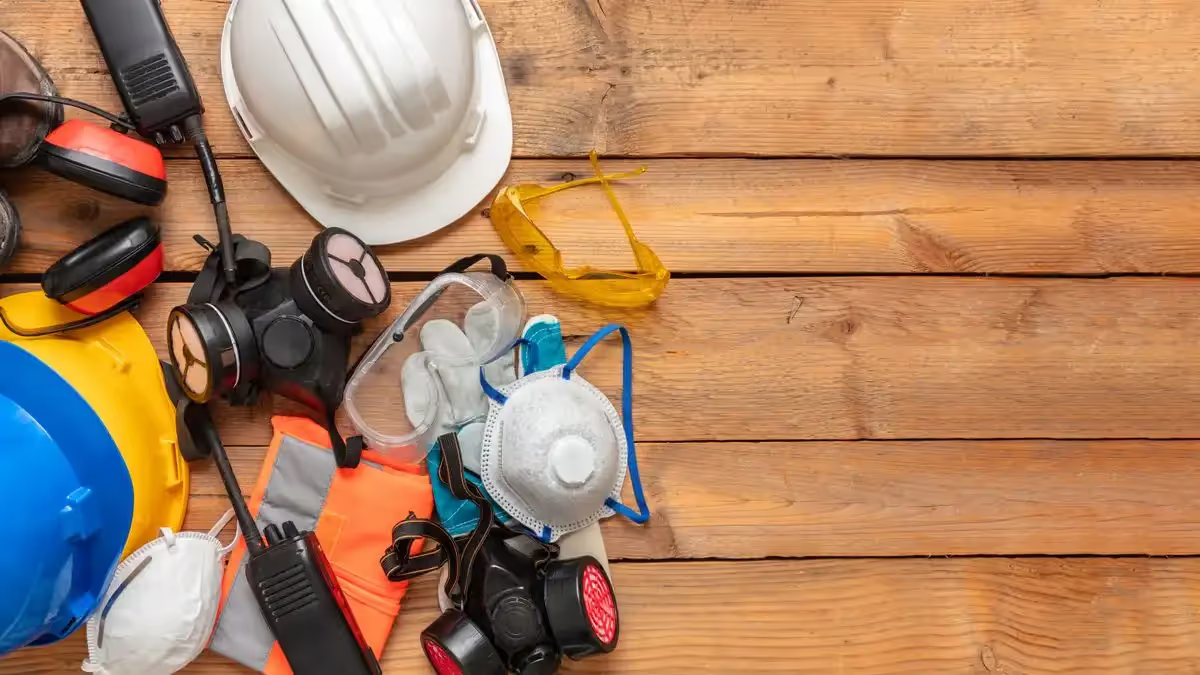
Here are the real risks run when personal protective equipment (PPE) is not worn. Serious injuries, health problems and consequences for productivity can all result from that choice. Explore the vital importance of safety at work and understand why PPE is non-negotiable for optimal protection.
How to choose the best personal protective equipment (PPE) for optimal safety
When you embark on DIY work, you are exposed to various potential risks to your health and your safety. Sharp tools, heavy materials, toxic products and many other hazards call for adequate protection. Personal protective equipment (PPE) is designed to keep you safe while allowing you to carry out your projects with complete confidence.
What is personal protective equipment (PPE)?
Personal protective equipment (PPE) consists of essential accessories for anyone engaging in manual work or DIY projects. It is designed to minimise the risks of injury and hazardous exposure. Helmets, safety goggles, respirator masks, gloves, safety footwear and other equipment are indispensable companions in guaranteeing your safety.
The importance of PPE
PPE protects you from injuries and potential risks to your health. It allows you to work with complete confidence by minimising the hazards. Injuries to the head, the eyes, the hands and the feet are among the most common during DIY work. PPE is designed to counter these specific risks and to ensure your well-being throughout the process.
One form, several offers.
- Two minutes, no account
- Direct, no middleman
- Your identity stays private
What are the different types of personal protective equipment?
PPE covers a wide range of accessories designed to target different parts of the body. Here is an overview of the main types of PPE and what they are for:
Safety helmets
When you work in environments where heavy or sharp objects could fall, a safety helmet becomes essential. Helmets offer an effective barrier against knocks and potential impacts, thereby protecting your head from serious injury.
Safety goggles and face masks
Safety goggles and face masks are designed to protect your eyes from flying fragments, airborne particles and dangerous chemical products. They are particularly important when you work with materials liable to cause eye damage.
Protective gloves
Protective gloves are essential in protecting your hands from cuts, burns and potentially corrosive chemical products. They also offer a better grip for handling tools and materials safely.
Safety footwear
Safety footwear is designed to protect your feet from heavy objects that could fall, from crushing and from potential injury. It often has reinforced toe caps in steel or Kevlar for maximum protection.
Respirator masks
When you work with chemical products or materials that generate fine particles, respirator masks are essential in preventing the inhalation of toxic substances. They filter the air you breathe, thereby minimising the risks to your airways.
Follow the standards in order to choose the right PPE
The choice of PPE must be based on the standards applicable to each type of equipment. Specific standards guarantee that PPE offers the necessary protection in various working environments. Protective gloves, for example, can be graded according to their resistance to abrasion, cuts, tears and punctures. It is important to familiarise yourself with these standards in order to choose the PPE best suited to your needs.
The key to success is wearing personal protective equipment (PPE)
When you take on DIY projects, safety should always be your priority. Personal protective equipment (PPE) plays a crucial role in minimising risks and preserving your well-being. Helmets, safety goggles, gloves, safety footwear and respirator masks are all shields that allow you to work with confidence and peace of mind. By following the appropriate standards and choosing the right PPE, you can take on your DIY projects in complete safety.
The dangerous consequences of not wearing personal protective equipment (PPE)
- Serious injuries and accidents: without safety helmets, safety goggles or gloves, workers are exposed to risks such as knocks to the head, fragments in the eyes, cuts or burns. A single accident can lead to serious or even fatal injuries.
- Respiratory problems: in environments where airborne particles or dangerous chemical products are present, not wearing a respirator mask can cause acute or chronic respiratory problems, allergies, lung diseases and even the risk of poisoning.
- Hearing loss: continued exposure to high noise levels without appropriate hearing protection, such as ear defenders, can lead to permanent hearing loss or even deafness.
- Exposure to chemical products: working without protective gloves or without suitable overalls when handling toxic or corrosive chemical products can cause chemical burns, skin irritation and even serious allergic reactions.
- Falls and injuries: on construction sites or in situations requiring work at height, the absence of a safety harness and fall-arrest equipment can lead to serious falls with traumatic or even fatal injuries.
- Exposure to radiation: in certain industries, such as welding, where radiation can be emitted, not wearing appropriate goggles or face shields can lead to eye damage and long-term vision problems.
- Infections and diseases: in the medical and healthcare sectors, not wearing face masks and gloves when handling patients or infectious substances can lead to the spread of infections and diseases.
- Impact on productivity and costs: besides personal injury, failure to observe PPE requirements can lead to prolonged absences from work in the event of injury, which can affect the productivity of the business. What is more, the costs of medical care and legal proceedings can be considerable.
It is essential that workers understand the risks run when they do not wear the necessary PPE and that they follow the safety guidelines in order to minimise those risks and protect their health. Employers also have a responsibility to provide PPE and to promote its appropriate use in order to guarantee a safe working environment.
Always opt for personal protective equipment (PPE)
Your safety at work should never be compromised. Personal protective equipment (PPE) is far more than a simple legal obligation; it is your shield against potential risks. By choosing to wear the PPE suited to each situation, you are investing in your well-being and your peace of mind. Every hammer blow, every measurement taken and every task completed is done with the assurance that you are taking the necessary steps to protect yourself. Do not let carelessness or haste deprive you of your health and your safety. Always make wearing PPE a priority and cultivate a culture of prevention within your projects. Your safety is at stake, and with PPE you hold the power to preserve your health and to work with complete confidence.