
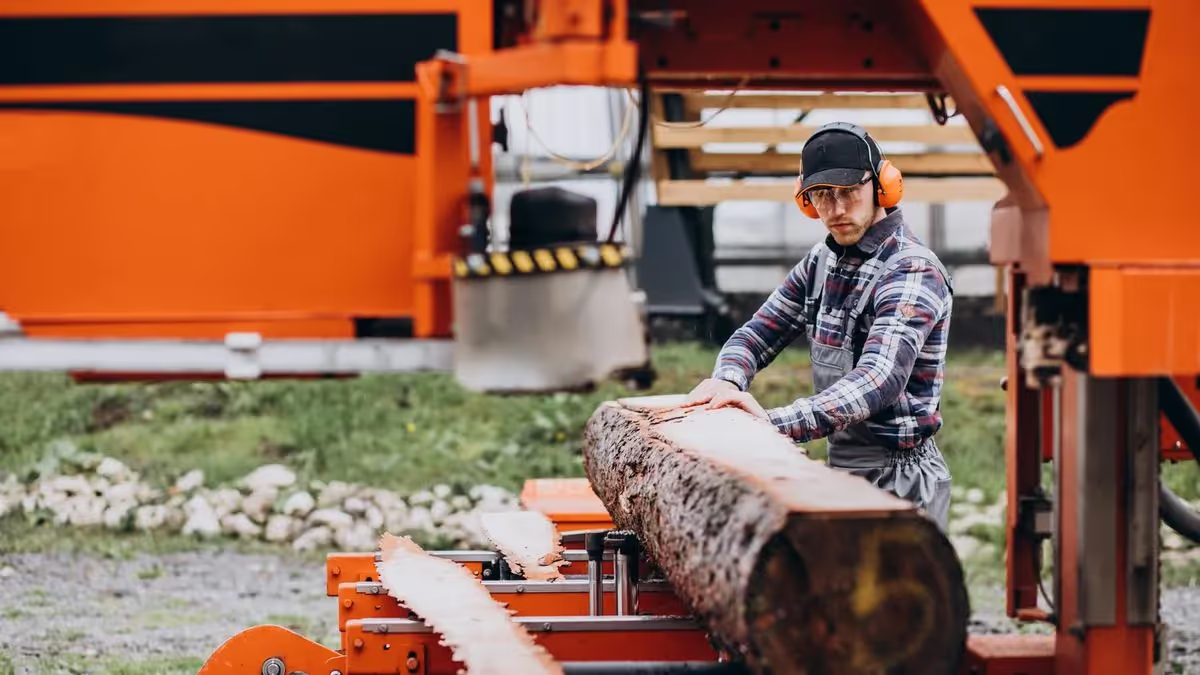
The art of sawing: expertise, techniques and sawing line technology. From choosing the saw to advanced automation, dive into a world of precision and efficiency. Take control of your mastery of sawing right now!
Everything about the sawing line: uses, techniques and advice
The sawing line is an essential technology for a variety of industrial and craft applications. In this article we will explore in depth the different aspects of the sawing line, from its varied uses to advanced cutting techniques. If you are looking for unrivalled expertise on this subject, you are in the right place.
The versatile uses of the saw
The sawing line finds applications in a multitude of tasks, each calling for a specific approach. Among these uses are:
- Simple sawing : a basic cut that calls for the precision of a suitable saw.
- Cross-cutting : making precise transverse cuts for pieces of different sizes.
- Edging : cutting irregular edges in order to obtain straight surfaces.
- Bevel cuts : angled cuts that call for particular technical mastery.
Each of these applications calls not only for a specific saw but also for a suitable blade in order to guarantee optimal results.
Essential advice for efficient sawing
Choosing the appropriate saw and blade is crucial before starting any sawing work. Different materials call for different approaches:
- For wood, a wood saw is the right choice.
- Concrete calls for a specialised concrete saw.
- Tiles are handled with a dedicated tile saw.
- Metals call for the use of a specific hacksaw.
Once you have found the right saw-and-blade combination, you are ready to achieve flawless cutting results.
Types of saw: manual and powered
The world of sawing divides into two main categories: the hand saw and the powered saw. Each offers distinct advantages.
Hand sawing: a technique to master
The technique of hand sawing may seem simple, but it calls for a certain level of skill. Here are the steps to follow:
- Clamp the workpiece firmly to a stable surface.
- Start the cut by placing the saw at a shallow angle on the material.
- Guide the saw carefully, making a steady back-and-forth movement.
- At the end of the cut, raise the saw almost to the vertical in order to avoid problems caused by the weight of the workpiece.
Powered sawing: precision and complexity
Powered sawing brings greater complexity. Here are the essential steps:
- Select the blade suited to the material, its shape and its tooth pattern.
- Make sure the blade is clean and properly sharpened.
- Choose the saw speed according to the disc or the blade in order to obtain clean cuts.
- Always use the guard for your safety.
- Follow the cutting line marked out beforehand and slow down slightly before the end of the cut.
Precise measurements for perfect sawing
When taking measurements, it is crucial to take the thickness of the blade into account, as it affects the precision of the cut.
- For a band saw blade, allow 1 mm of deviation.
- With a circular saw, the deviation can reach up to 5 mm.
In France, the conventional unit of measurement for sawing is the pouce du Roi (the king's inch), equivalent to 27 mm. The sawing line is far more than a simple cutting tool. It offers a variety of applications and techniques, from hand cutting to mechanical precision. With this knowledge, you are now ready to master the art of sawing like a true expert.
One form, several offers.
- Two minutes, no account
- Direct, no middleman
- Your identity stays private
Choosing the sawing line suited to your needs
In the vast world of sawing, choosing the sawing line that best meets your specific needs is essential in obtaining optimal results. Here are a few points to consider when making your selection.
1. Types of sawing line
There are several types of sawing line, each designed for specific applications. Among the most common are:
Horizontal sawing line
The horizontal sawing line is ideal for cutting long, narrow pieces. It is often used in the timber, metalworking and construction industries.
Vertical sawing line
The vertical sawing line is favoured for more precise and complex cuts. It suits thicker materials and offers great versatility across various industrial applications.
2. Technical specifications
When choosing a sawing line, pay attention to the following technical specifications:
Motor power
Adequate motor power is essential in guaranteeing a smooth, precise cut. Make sure the motor power is suited to the material you plan to cut.
Table size
The size of the sawing table determines the machine's capacity to handle different sizes of material. Opt for a table size appropriate to your usual projects.
Guidance system
A good guidance system is essential for straight, precise cuts. Look for sawing lines fitted with advanced guidance systems for optimal results.
3. Safety and ergonomics
Safety is paramount when using a sawing line. Opt for models fitted with safety features such as emergency stop devices, protective guards and braking systems.
4. Flexibility and automation
If you need flexibility in your sawing operations, look for sawing lines with advanced automation features. These may include programmable settings, quick tool changes and multiple cutting capacities.
Technological advances in sawing lines
With the rapid evolution of technology, sawing lines have also seen significant improvements. Here are a few advances worth considering:
1. Numerical control
Sawing lines fitted with numerical control systems offer unrivalled precision. You can programme precise, repeatable cuts, which reduces waste and speeds up production.
2. Measuring sensors
Some models incorporate advanced measuring sensors that automatically adjust the cut according to the actual dimensions of the material. This guarantees maximum precision and reduces human error.
3. Software integration
Modern sawing lines can be integrated with production management software. This makes it possible to plan operations efficiently, optimise the use of materials and monitor machine performance in real time.
Master the art of the sawing line
In short, the sawing line is far more than a simple cutting machine. It is a technology that constantly evolves to meet the needs of modern industry. By choosing the right sawing line, mastering the cutting techniques and embracing technological advances, you can guarantee exceptional results in your sawing projects. Whether you are a craftsman, a contractor or an industry professional, the sawing line remains a valuable ally in achieving excellence in your operations.
