
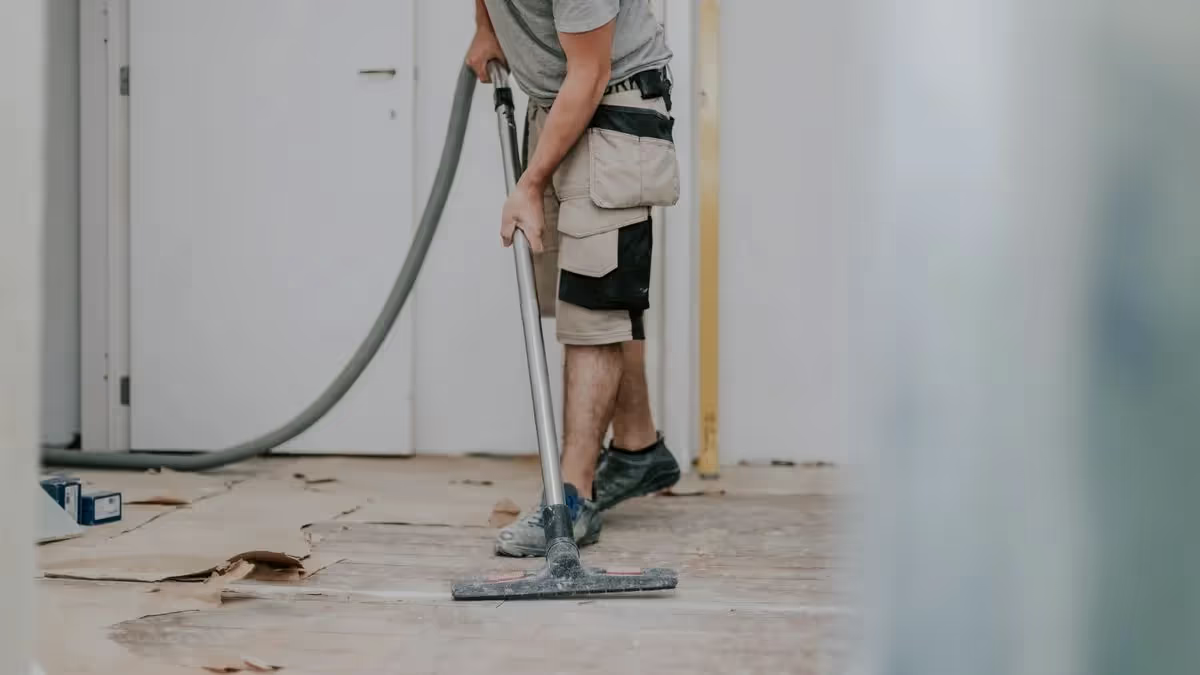
In the world of building, a site vacuum is far more than a simple cleaning tool. It is a key to guaranteeing a safe and optimised working environment. But with so many options on the market, how do you make sure you make the right choice? From suction power to specific capabilities, we dive into the details to guide you towards the ideal vacuum. Discover the essential criteria for a wise investment and uncompromising efficiency.
The site vacuum, a professional essential
The site vacuum is an essential tool for professionals looking to keep their working space clean and safe. Unlike a standard domestic vacuum cleaner, it is designed to handle heavier and bulkier debris. It is therefore vital to choose a model suited to your needs in order to ensure maximum efficiency and extend the service life of the machine.
An industrial vacuum: what is it for?
An industrial vacuum is designed to handle heavy tasks that standard domestic vacuum cleaners cannot manage. They are specially designed to:
- Clean up large volumes of debris: Building sites and workshops often generate a large quantity of dust and debris.
- Handle hazardous materials: They can pick up chemicals or hazardous particles.
- Clean up liquids: Many industrial vacuums can pick up both liquids and solids, which is ideal for floods or spillages.
Understanding the difference: site vacuum vs domestic vacuum cleaner
The domestic vacuum cleaner is a cleaning appliance found in almost every home. It is designed to pick up light debris such as dust, crumbs and pet hair. On a building site or in a workshop, however, you will be faced with far heavier residue. Using a professional vacuum is then indispensable to avoid damaging a standard domestic appliance.
The two appliances have different purposes:
- Household vacuum cleaner: Designed for everyday domestic tasks, it is generally lighter, less powerful, and suited to dust and small debris.
- Site vacuum: Robust and powerful, it is designed for intensive use and can handle larger debris and greater volumes.
The main uses of a site vacuum
A site vacuum is versatile and suited to several types of cleaning. Whether for picking up rubble, ash, water or even pieces of metal, this machine is up to the job. One interesting feature is that it can also be used to clean the inside of cars, giving a far better result than a domestic vacuum cleaner.
Uses of a site or workshop vacuum
These vacuums are not limited to building sites. They are also useful in:
- Workshops: Picking up sawdust, metal shavings and other tool residue. During machining, some woods can give off a dust that can cause skin irritation, for example teak wood.
- Garages: Cleaning up oil or petrol spillages and picking up accumulated dirt.
- Warehouses: Removing dust that has built up on shelves, or spilt liquids.
- Renovation sites: Picking up construction debris, such as plaster or leftover tiles.
What a professional site vacuum is made up of
- Motor: It generates the suction and is protected by filters for an extended service life.
- Hose and suction head: They pick up the waste.
- Brushes and nozzles: They optimise cleaning according to your needs.
- Tank: It stores the waste. It can be with or without a bag.
- Castors: They make it easier to move the machine around the site.
How do you choose the right site vacuum?
The market offers a variety of industrial vacuums, each with its own specifications. It is therefore essential to define clearly what you are going to use it for before making your choice.
Selection criteria for a site vacuum
The performance and the efficiency of a site vacuum depend on several key factors. Here are a few to take into account when buying:
- Power and vacuum pressure: These two elements determine the suction force of the machine. High power and strong vacuum pressure guarantee that even the heaviest or most ingrained debris will be picked up easily.
- Air flow rate: It indicates the volume of air the vacuum can take in. A high air flow rate makes it possible to cover larger areas in less time.
- Tank capacity: The size of the tank should match the size of your sites. For large sites, opt for a bigger tank so as to avoid frequent emptying.
- Weight and manoeuvrability: If your vacuum has to be moved frequently, make sure it is light and easy to manoeuvre. Models with wheels or ergonomic handles are preferable in this case.
- Noise level: Building sites are often noisy, but a vacuum that is too noisy can increase the strain on your hearing. Check the noise level of the machine and consider using ear protection if necessary.
How do you choose a good, powerful vacuum?
Power is often the main concern when it comes to site vacuums. Here is how to make sure you choose a model that lives up to your expectations:
- Suction power: It is generally measured in watts or air watts. High suction power guarantees better performance, especially when handling large debris or ingrained dust.
- Tank capacity: A large-capacity tank reduces the number of times it needs emptying, thereby optimising working time.
- Additional functions: Some industrial vacuums have the ability to pick up liquids, which can be useful on wet sites. Others have built-in sockets allowing power tools to be connected, thereby offering greater versatility.
- Ease of movement: In large spaces or on sites with many obstacles, a vacuum with large wheels or swivel castors will be easier to move.
- Quality of the filters: Make sure the vacuum is fitted with high-quality filters. HEPA filters, for example, can capture very small particles, thereby guaranteeing a healthier working environment, especially if you work in areas where air quality is crucial.
In short, choosing a powerful site vacuum well comes down to considering both its raw performance and the features that optimise its day-to-day use.
One form, several offers.
- Two minutes, no account
- Direct, no middleman
- Your identity stays private
Types of industrial vacuum
Every industrial vacuum is designed to meet specific needs. Let us look at the different types in detail.
Wet and dry vacuum
This type of vacuum is versatile. It can pick up both liquids and solids, which makes it practical for a variety of situations. The wet and dry vacuum combines the ability to pick up both liquids and solids. This makes it ideal for spaces where spillages, whether dry or wet, are frequent.
- Features:
- Stainless steel tank: Resistant to corrosion, it is essential for collecting liquids without risk.
- Filtration system (hydrophobic): This system prevents debris and liquids from damaging the motor.
- Blowing function: It makes it possible to clear away debris or leaves, making this machine ideal for cleaning gardens.
The combination of these features guarantees durability and adaptability for different environments.
Vacuum for water, dust, sawdust and rubble
More robust, this vacuum is designed to handle heavier and larger items. It is the ideal tool for building sites. Building sites produce a variety of debris, from the lightest, such as sawdust, to the heaviest, such as rubble. A specialist vacuum is needed to handle this diversity.
- Features:
- Large wheels: To make it easier to move over the uneven ground of building sites.
- Powerful motor: To pick up heavy items effectively.
- Reinforced tank: To withstand the suction of heavy materials.
- Interchangeable filter: Allowing the vacuum to be adapted to the type of debris.
These elements ensure safety, mobility and efficiency in demanding environments.
Plaster vacuum
Designed specifically to pick up the fine dust from plaster, which can clog or damage traditional vacuums, the plaster vacuum is recommended during renovation work, where plaster dust is a challenge. Plaster dust is extremely fine, can spread quickly and can damage the motors of traditional vacuums. A specialist vacuum guarantees a clean working environment and reduces the risks to health.
- Features:
- Specialist, high-quality filters: Designed to capture even the smallest particles of plaster dust.
- Automatic filter cleaning system: It keeps the filter clean and effective.
- Protected motor: It prevents dust from getting into the motor.
- Disposable bags: For easy and clean disposal of the dust.
These features guarantee the longevity of the vacuum while offering effective cleaning.
Ash vacuum
Designed specifically to pick up the ash from fireplaces, barbecues or stoves, the ash vacuum is essential for anyone who uses fire. Ash can be corrosive and hot. A dedicated vacuum guarantees that the ash is picked up in complete safety.
- Features:
- Metal tube and drum: Heat-resistant, it makes it possible to pick up ash in complete safety.
- Hard-wearing filters: To prevent fine particles of ash from escaping.
Safety is paramount when picking up ash; the metal components guarantee that the vacuum can handle the heat and the corrosive nature of the ash without being damaged.
With or without a bag?
The question of the bag is crucial when selecting a site vacuum. Using a bag is recommended for picking up dust, whereas for water it is better to opt for a bagless mode. Fabric bags are particularly hard-wearing and filter fine dust effectively.
The site vacuum, a necessity for every professional
Buying a site vacuum is an investment that every professional should consider. Whatever the size of your site, cleanliness is essential to the safety and the efficiency of the work. Good regular maintenance of your vacuum will also extend its service life and guarantee optimal performance.
Care and maintenance of your site vacuum
A site vacuum is a robust tool, designed to withstand intensive use. Like any equipment, however, regular maintenance will guarantee maximum performance and a long service life.
Regular cleaning
- Emptying the tank: It is crucial to empty the tank regularly, especially if you are picking up liquids. Wet vacuums can develop mould or odours if the waste sits in them for too long.
- Replacing or cleaning the filters: Clogged filters reduce the suction power. Clean or replace them according to the manufacturer's recommendations.
- Checking the accessories: Make sure the hose, the brushes and the nozzles are not clogged or damaged.
Appropriate storage
Correct storage extends the service life of your vacuum. Keep it in a dry place, away from heat and direct sunlight. If possible, hang up the hoses to prevent them from becoming distorted.
Safety advice during use
- Do not pick up flammable liquids: This can cause a fire risk.
- Use ear protection: Some models can be noisy and, over time, this can be harmful to your hearing.
- Do not pull the vacuum by the cable: This could damage the cable or the plug.
A few well-known brands on the market
When it comes to site vacuums, certain brands have managed to stand out thanks to their excellence, their innovation and their robustness. Here is a more detailed look at three giants in this field: Kärcher:
- History: Originally from Germany, Kärcher has been an undisputed leader in the world of cleaning since it was founded in 1935.
- Specific features: The brand is praised for its vacuums, which are able to handle difficult environments, combining power and precision. Their machines are designed to last, using high-quality materials.
- Strong points: They often offer additional features such as advanced filtration systems or adapters for different types of debris.
Bosch:
- History: Bosch, another German source of pride, has been synonymous with technology and innovation since it was created in 1886.
- Specific features: When it comes to site vacuums, Bosch focuses on reliability. Their product range is designed to be both powerful and durable, guaranteeing that investments last over time.
- Strong points: The brand is known for building in modern technologies, guaranteeing optimal performance while placing the emphasis on user safety.
Makita:
- History: Originally from Japan, Makita has built a solid reputation since 1915 as a maker of top-quality power tools.
- Specific features: Although they are better known for their power tools, Makita site vacuums are not to be outdone. They combine ergonomics, power and compactness.
- Strong points: One of the advantages of choosing Makita is their expertise in batteries and motors, guaranteeing powerful suction and an extended service life for their machines.
When selecting your site vacuum, taking the reputation of the brand into account can prove useful, since it often reflects the quality and the reliability of the products.
The importance of an informed choice for effective suction
A site vacuum is a worthwhile investment for any professional. It offers an effective cleaning solution for various debris and residue. With appropriate maintenance, it will serve you faithfully for many years. Do not forget always to prioritise safety during use and to choose a model suited to your specific needs.