
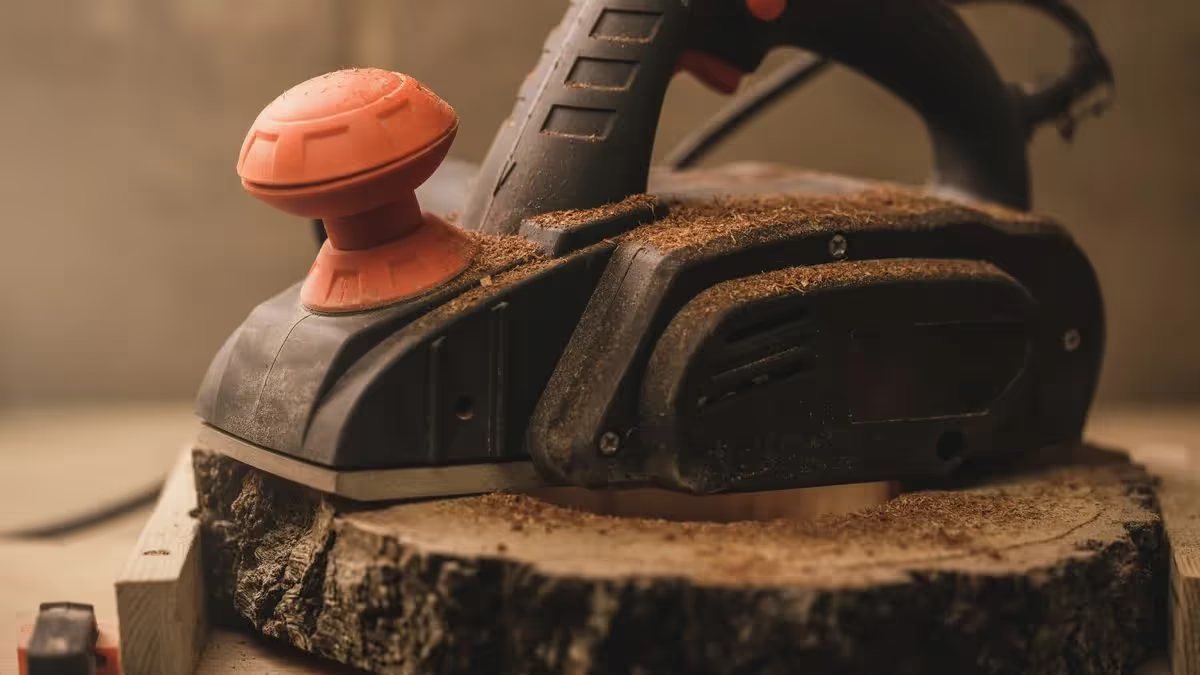
The stationary thicknesser: a jewel at the heart of the joinery workshop. It shapes, transforms and perfects every piece of wood, offering craftsmen unrivalled precision. Step into the heart of this machine, discover its secrets and understand why it is so highly prized by wood professionals.
The importance of the thicknesser in joinery!
Joinery, an age-old craft, has constantly evolved thanks to the adoption of high-performance tools. One of these essential tools, particularly for wood enthusiasts, is the
stationary thicknesser
. It plays a crucial role in obtaining flawless surfaces and in carrying out high-precision woodworking projects.
Obtaining a flat surface is not just a simple step, it is dressing the timber
, which is fundamental in guaranteeing the quality of the final product.
The stationary thicknesser: its role in joinery
What is a stationary thicknesser?
Unlike a portable tool, the stationary thicknesser is a robust machine intended to stay in a fixed place in the workshop. Its main mission is to rough down and flatten a piece of wood by removing a precise amount of material. The aim: to obtain a flat surface, parallel to a reference surface, with a predefined thickness, often measured
to within a tenth of a millimetre
.
Thicknessing versus the surface planer
It is essential not to confuse thicknessing with surfacing. Surfacing comes first, to straighten a board of wood. Once that step is complete, the thicknesser comes into play to flatten the piece and give it the desired thickness. Distortion caused by moisture can affect the integrity of doors or furniture.
Thicknessing corrects these imperfections
, ensuring that they work properly.
The different types of planer
The diversity of planers
meets a variety of specific needs. From the hand tool to the sophisticated electric machine, every model has its place.
Hand plane
Generally made up of a metal sole housing a blade, the hand plane is simple to use. It allows precise adjustment of the depth of cut, offering incomparable flexibility for detailed work.
Electric planer
More than a simple planing tool, the electric planer can also soften the edges of a piece of wood, a process known as
chamfering
. It is also capable of cutting rebates, which are essential for receiving other pieces of wood.
Planer thicknesser
This machine combines the functions of surfacing and thicknessing, making it doubly efficient and practical for a complete joinery workshop.
Free, no commitment Describe your project, manufacturers reply.
One form, several offers.
- Two minutes, no account
- Direct, no middleman
- Your identity stays private
How to choose your stationary thicknesser well
It is not enough to know the different types of planer, you must also know how to
identify your needs
in order to make a sound choice.
Essential criteria
The planing width
, expressed in millimetres, is a fundamental criterion. It determines the maximum size of the boards the machine can handle. Next, the
depth of cut
indicates the amount of material the machine can remove in a single pass. Some models offer an adjustable depth for greater flexibility.
The weight of the machine
affects its stability and how easily it can be installed, while
the price
, of course, must match the craftsman's budget while guaranteeing good value for money.
Safety and precautions when using the stationary thicknesser
Safety is paramount when using powerful machines such as the stationary thicknesser. Complying with certain standards and using specific equipment can prevent many accidents.
Safety guide
The presence of a
guide
is essential. It serves to feed the wood through the machine in a stable and even way. This not only produces a flawless result, it also prevents the wood from jamming or being thrown out violently, which could cause injury.
Protective cover
A
protective cover
or a
safety barrier
is crucial in protecting the user from flying chips and from the moving parts of the machine. It also makes sure that hands or other objects do not come too close to the rotating blades.
Emergency stop
The emergency stop
is an essential feature on any machine tool, allowing the machine to be stopped immediately in the event of danger or malfunction. It provides additional safety, particularly when working with large pieces of wood or when several operators are present.
Dust extraction system
A good
dust extraction system
is essential in maintaining a clean and healthy working environment. By extracting the chips and dust generated during thicknessing, it not only reduces the risk of inhaling harmful particles, it also limits the risk of fire and makes it easier to see the work in progress. In short, using a stationary thicknesser safely is not limited to operating it correctly, it also involves putting rigorous safety protocols in place and observing them. It is imperative always to read and follow the manufacturer's instructions, to be properly trained in the use of the machine, and never to overlook the importance of personal protective equipment.
The stationary thicknesser is more than a simple tool for the joiner: it is a valuable ally that guarantees the perfection of every project. By understanding its features and choosing the right model, every joiner can take their craft to
an unmatched level of excellence
.
In exploring the intricacies of joinery, it is clear that the stationary thicknesser is not merely a tool but a valuable working companion. It symbolises the fusion between advanced technology and the age-old craft of working with wood. The importance of safety, the variety of models available and their crucial role in creating works of art in wood make it a centrepiece in any serious workshop. If you are passionate about wood, know that mastering this machine opens the door to a world of endless possibilities. With it, every project becomes a symphony of precision and perfection. So, are you ready to embrace the magic of the thicknesser?