
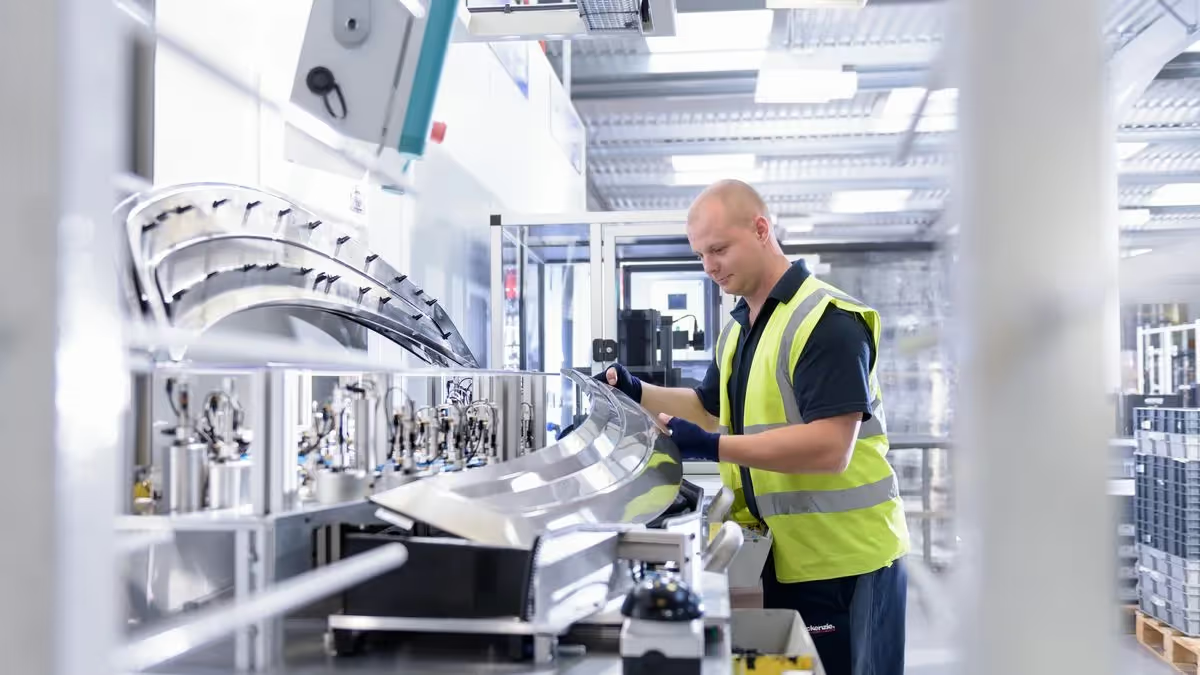
Thermoforming: a plastics revolution that has been shaping industry for more than 20 years. Dive into the advantages and challenges of this essential technique, guided by unique expertise. Explore the future of plastics manufacturing with our in-depth expertise.
Thermoforming: advantages, disadvantages and how it works, explained
Thermoforming is an essential practice in modern industry, particularly in the sectors involved in processing plastics. This method often provokes passionate debate because of its undeniable advantages and its potential disadvantages. In this article we dive into the heart of thermoforming to examine every facet of the technique.
Understanding how thermoforming works
Thermoforming is an industrial technique of crucial importance in the manufacture of plastic items. The process involves using plastic in reel or sheet form, which is then turned into a variety of functional objects. The process begins by heating the plastic to a high temperature, thereby making it malleable. Once softened, the material can be shaped using specific moulds. The resulting shape is retained even after cooling and demoulding, giving the plastic a strength determined by the quality of the material used. It is important to note that thermoforming is particularly suited to creating prototypes and small production runs rather than mass production.
The materials used in thermoforming
The materials used in thermoforming vary according to the type of object to be produced. Among the thermoplastics commonly used are:
- Polystyrene and high-impact polystyrene (PS) : known for their light weight and their impact resistance.
- Acrylonitrile butadiene styrene (ABS) : valued for its durability and how easy it is to machine.
- Polycarbonate (PC) : offering excellent impact resistance and great transparency.
- Polyvinyl chloride (PVC) : versatile and widely used in various applications.
- Polypropylene (PP) : known for its chemical and thermal resistance.
The stages of thermoforming
The success of thermoforming rests on one essential machine: the thermoforming machine. It is made up of several key elements, notably interchangeable moulds, a heating hood and a vacuum pump. The process can be broken down into several crucial stages:
1. Heating the plastic
The plastic is heated until it reaches a malleable state, ready to be shaped.
2. Shaping using the moulds
The plastic is placed in specific moulds, thereby giving it the desired shape.
3. Suction and vacuum
Suction is created to press the plastic against the moulds, thereby removing the air and creating the shape required.
4. Cooling
The plastic is cooled so that it retains its shape and its strength.
5. Demoulding
The thermoformed part is carefully removed from the mould, ready to be used in various applications.
One form, several offers.
- Two minutes, no account
- Direct, no middleman
- Your identity stays private
Advantages and disadvantages of thermoforming
Thermoforming offers a range of considerable advantages, but it is not without its drawbacks.
Advantages
- A variety of items produced : from bathtubs to automotive components and food packaging, thermoforming offers a diversity of applications.
- Customisation : every part can be made to measure in terms of size, shape and colour, thereby meeting individual needs.
- Speed of production : thermoforming excels at creating items in series, offering manufacturers a fast solution.
- Competitive costs : thanks to reduced costs, this technique is an economical option for many companies.
- Durability and recyclability : thermoformed parts are often recyclable and can be made from recycled plastics, thereby contributing to environmental sustainability.
Disadvantages
- The complexity of the spreading phase : the main limitation lies in the phase in which the molten plastic spreads into the mould, which can lead to defects such as chill marks, wrinkles and variations in thickness.
- Suited to small runs : thermoforming is better suited to producing prototypes and small runs, and is less practical for large-volume manufacturing.
- Variability of materials : the properties of the materials can vary, affecting the final quality of the thermoformed parts.
In short, thermoforming is a complex and versatile technique, offering undeniable advantages for manufacturing plastic items. Although challenges remain, its potential for customisation, speed and durability makes it a valuable option for many industries.
The importance of thermoforming in modern industry
Modern industry relies on innovative manufacturing techniques to meet the diverse needs of the market. Thermoforming holds a place of honour in that context, thanks to its ability to shape plastics precisely and efficiently.
Thermoforming: more than a technique, a revolution
Over the past two decades, thermoforming has evolved to become far more than a simple manufacturing method. We have watched it expand and be adopted across a range of sectors. From food packaging to automotive components and on to the medical sector, thermoforming has the ability to bring a made-to-measure solution to many industries.
Expertise in the service of innovation
Our long experience in the field of thermoforming has allowed us to develop in-depth expertise that goes beyond the basics. Our commitment to innovation and quality drives us to push back the limits of this technique. Every challenge encountered is an opportunity to refine our methods and offer made-to-measure solutions to our customers.
People-focused thermoforming: concrete benefits
Unmatched expertise in the service of the customer
Our approach to thermoforming highlights our commitment to customer satisfaction. Drawing on our unrivalled expertise, we have the ability to understand each customer's specific needs and to create tailored solutions. Our aim is for everyone who reads our content to feel informed and prepared to take well-founded decisions.
Education as a fundamental pillar
One of the pillars of our people-focused approach is education. We firmly believe that a thorough understanding of thermoforming is essential in guaranteeing well-founded decisions and optimal results. Every piece we write aims to demystify this complex technique and to provide useful and accessible information.
Thermoforming in the service of innovation
In short, thermoforming is far more than a simple manufacturing method. It is a constantly evolving technique that adapts to the changing needs of modern industry. We continue to explore new ways of improving this method and of applying it to ever more varied applications.