
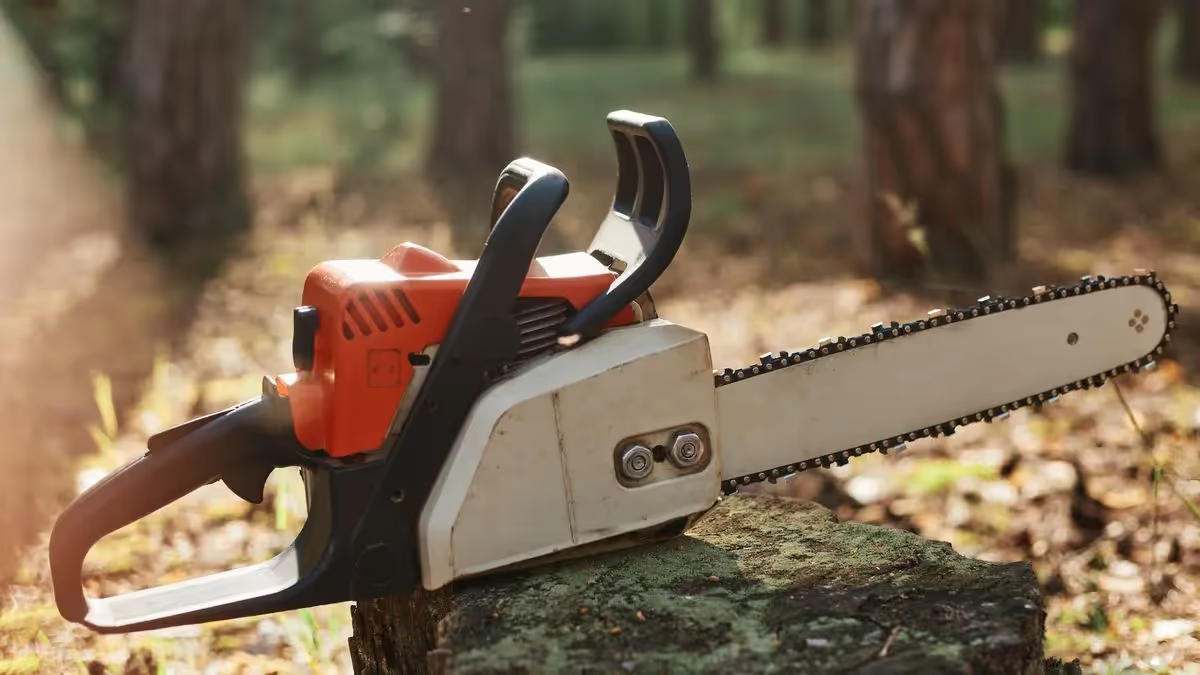
Expert techniques for precise and safe cuts. From pruning to bucking, master every stage with our expert advice. Become a pro at cutting wood today!
Everything about using a chainsaw safely and efficiently
The advantages and precautions of using a chainsaw
Using a chainsaw for tasks such as pruning, felling and bucking offers an economical and practical solution. Despite the technological advances that have made these machines safer and more user-friendly, however, it is imperative to follow strict guidelines in order to avoid any risk of injury or damage. In this article we will explore in detail the different facets of using a chainsaw, focusing on the crucial safety measures and the best techniques for successful results.
Protective equipment: protect yourself with the right PPE
To begin with, protecting yourself properly is a fundamental step when using a chainsaw. Personal protective equipment (PPE) is essential in minimising the risks associated with these powerful machines. Be sure to wear a helmet to protect your head, goggles and a mesh visor to prevent flying debris. Cut-resistant gloves and cut-resistant trousers are indispensable in avoiding injury should you come into contact with the chain. Opt for safety footwear offering reinforced protection and solid grip in order to maintain your stability.
Expert handling: the crucial techniques for using a chainsaw
Positioning and grip
Handling a chainsaw requires specific expertise in order to guarantee efficient and safe results. Before starting, make sure your machine is ergonomically suited to your build. Maintain a stable position, with both feet firmly anchored to the ground. Always hold the chainsaw with both hands, keeping the left hand on the front handle and the right hand on the rear handle. Avoid work requiring balance and be careful to keep your wrists straight for maximum comfort.
The cutting technique
When cutting, use the full power of the chainsaw by entering the wood with the middle of the chain. Avoid at all costs using the tip of the chain, as this could cause dangerous kickback. This could throw the machine violently backwards, creating a potential risk of injury. Keep in mind that chainsaws are designed exclusively for right-handed users. The safety features cannot guarantee your protection if you use them as a left-handed user would.
Safe starting: the crucial steps for starting a chainsaw
Preparation and checks
Before starting your chainsaw, make sure you are in a clear environment, at a safe distance from anyone without protective equipment and from any flammable sources. Check the tension of the chain and adjust it if necessary. Check the oil and fuel levels, according to the chainsaw model.
Starting correctly
To start a petrol chainsaw, follow these precise steps:
- Set the control to the starting mode.
- Press the primer bulb to bring fuel into the system.
- Open the choke if the engine is cold.
- Take hold of the carrying handle with your left hand and the starter handle with your right hand.
- Pull the starter with a sharp, short movement, guiding the starter cord back in with your right hand.
- Switch from the starting mode to the normal mode once the engine is idling.
- Let the engine run for about 10 seconds, then close the choke.
- Your chainsaw is now ready to be used safely.
One form, several offers.
- Two minutes, no account
- Direct, no middleman
- Your identity stays private
Master the art of using the chainsaw
In conclusion, using a chainsaw demands a combination of technical expertise and compliance with safety standards in order to guarantee optimal results. By following the precise advice on protection, handling and starting, you will be able to carry out your cutting tasks with confidence and safety. Always remember that mastering the art of using a chainsaw calls for ongoing training and constant attention to detail in order to avoid accidents and maximise your efficiency. Keep these guidelines and techniques in mind, and explore our advice sheet for even more detailed information on cutting wood: felling, bucking, limbing and so on. You are well on the way to becoming a chainsaw expert and completing your work successfully.
The art of cutting: advanced techniques for perfect results
Now that you have taken in the basics of using a chainsaw safely, let us dive deeper into the art of cutting. These advanced techniques will help you achieve flawless results and make full use of the potential of your chainsaw.
The science behind the precise cut
When you approach a cut with your chainsaw, always remember to aim for the middle of the chain. This guarantees a stable and efficient cut while minimising the risk of kickback. Avoid using the tip of the chain, as this can cause excessive vibration and compromise your control. Expert tip: when cutting larger timber, divide the task into manageable sections using relief cuts. This reduces the pressure on the chain and improves the precision of the cut.
The secrets of pruning and felling cuts
The pruning cut calls for particular attention to the angle and the position of the chainsaw. Use sweeping cuts to remove unwanted branches while preserving the integrity of the tree. For felling, the angled felling cut is crucial in directing the fall of the tree in the required direction. Expert tip: when making the felling cut, plan a clearly marked escape route where you can get away safely once the tree starts to fall.
Bucking made simple
To cut trunks into more manageable sections, master the technique of bucking. Start with a notch cut on the upper side of the trunk, then make a relief cut to separate the section. This technique allows you to control the cut while avoiding trapping the chain. Expert tip: place a felling wedge behind the notch cut to prevent the wood from closing on the chain during the relief cut.
Essential maintenance: preserving performance
A well-maintained chainsaw is essential for quality cuts and safe use. Be sure to tension the chain regularly for an optimal cut. Check the oil levels and the fuel before each use, and clean the air filters and the cooling fins to maintain optimal performance. Expert tip: use a high-quality chain oil for adequate lubrication of the chain, which extends its life and reduces wear.
The path to mastery: progress and perfection
As you put these advanced techniques into practice, remember that mastering the use of the chainsaw takes time and practice. Every cut is a learning opportunity to refine your skills and achieve increasingly precise results. Continue to observe the safety standards and to focus on the efficiency of your cuts.
From novice to expert, your path of progress
With these advanced techniques to hand, you are ready to move from novice to expert in the art of using the chainsaw. By combining your expertise with proven methods and expert advice, you can make quality cuts, safely and with confidence. Continue to explore the many facets of using chainsaws and to perfect your skills for exceptional results every time you pick up your machine.