
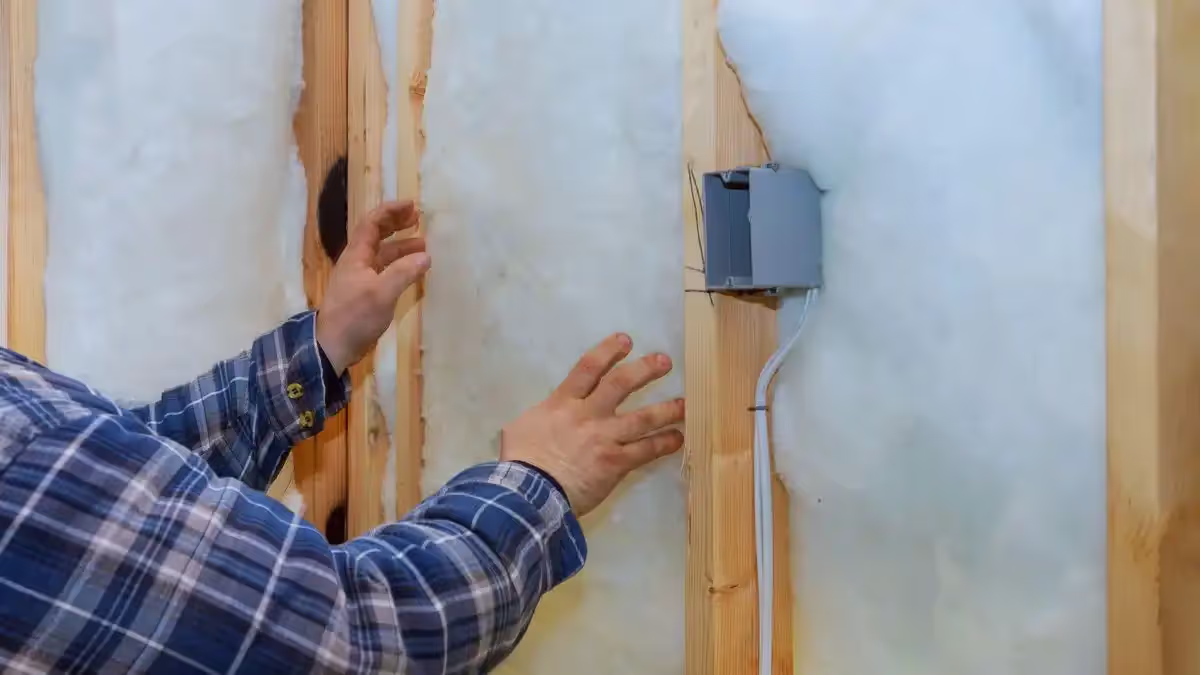
Here are the secrets to optimising the insulation of your walls and partitions! From the inside to the outside, from the choice of insulation to financial assistance, dive into our expert guide to creating a comfortable, energy-efficient and sustainable space. Do not miss these key tips for turning your home into a haven of warmth and savings.
How to choose the optimal insulation for walls and partitions
Insulating walls and partitions is an essential step in improving the energy performance of your home. In this article we will explore in depth the different options available for choosing the ideal insulation, whether for a new build or a renovation. We will guide you through the important considerations, the advantages and disadvantages of each method, as well as the regulations to comply with. Get ready to take informed decisions to make your living space more comfortable and more economical.
Internal insulation vs. external insulation
Internal insulation
Internal insulation is a practical and economical approach. It consists in adding insulation directly to the internal walls. You have the choice between insulating boards and an independent lining wall system. Bear in mind, however, that this method reduces the living area and may require electrical cables and pipes to be moved. Advice: opt for internal insulation if you prefer a simple solution and if the loss of space is not a major problem.
External insulation
External insulation offers better efficiency, because it creates a continuous barrier against thermal bridges and air leaks. This method can be more expensive, but it does not encroach on interior space. You will have to choose between insulation under render or under cladding depending on your needs and on the configuration of your wall. Advice: opt for external insulation if you are seeking maximum energy performance without sacrificing interior space.
Selecting the insulation and its thickness
The importance of thickness
The thickness of the insulation plays a crucial role in its effectiveness. Generally, a thickness of 12 to 18 cm is recommended. The thermal performance of the insulation must also be taken into account, however. Advice: give priority to high-performance insulation even at a lower thickness in order to achieve optimal insulation without sacrificing space.
Mineral, synthetic and bio-based insulation
Different insulating materials are available, each with its advantages. Mineral insulation such as glass wool and rock wool is economical and offers good sound insulation. Synthetic insulation, such as polystyrene, is easy to handle but may have limits in terms of sound insulation. Bio-based insulation, made from natural materials, is environmentally friendly. Advice: opt for mineral insulation for economical internal insulation and for bio-based insulation for an ecological solution.
One form, several offers.
- Two minutes, no account
- Direct, no middleman
- Your identity stays private
Financial assistance and regulations
Maximise your savings with financial assistance
To encourage energy renovation, various forms of financial assistance are available. MaPrimeRénov', the grants from the Anah (the French national housing agency) and the Prime Énergie (energy bonus) can help ease your outlay. Make sure your work is carried out by certified professionals. Advice: explore the various forms of financial assistance in order to optimise your investment in insulating your walls.
Complying with thermal regulations
The 2012 thermal regulations (RT2012) set standards for the energy performance of new and renovated buildings. Performance thresholds for energy consumption, thermal comfort and airtightness must be met. Good insulation is essential in reaching these standards. Advice: choose insulation materials and techniques that meet the requirements of RT2012 in order to guarantee an energy-efficient home.
The many roles of insulation: comfort, savings and the environment
- Thermal comfort: effective insulation keeps the heat inside during the cold months and prevents excessive heat from entering during the summer. This creates a stable thermal balance, allowing you to enjoy a pleasant temperature all year round.
- Reduced energy costs: a properly insulated house needs less heating in winter and less air conditioning in summer. That translates into considerably lower energy bills, which saves money in the long term.
- Lower CO2 emissions: by reducing energy consumption, good insulation helps reduce the carbon dioxide (CO2) emissions associated with producing electricity and heat, which is essential in the fight against climate change.
- Improved acoustic comfort: insulation is not limited to regulating temperature. It also plays a crucial role in attenuating outside noise, thereby creating a peaceful and quiet interior environment.
- Increased property value: a well-insulated house is a major asset when reselling. Potential buyers appreciate an energy-efficient home that offers long-term savings and superior comfort.
- Regulatory compliance: many regulations and building standards require minimum levels of energy efficiency and insulation in order to guarantee the well-being of occupants and reduce the environmental impact of buildings.
- Improved quality of life: living in a well-insulated space means a better quality of life. You can enjoy a space that is warm in winter, cool in summer and peaceful all year round, creating a pleasant family cocoon.
In short, insulation is not simply about managing temperature, it has a profound impact on your comfort, your finances and the environment. Investing in quality insulation is a smart decision that improves your daily life while helping to preserve the planet.
Shaping your future: insulating walls and partitions as a guarantee of comfort and sustainability
Choosing the insulation for your walls and partitions goes beyond the simple notion of temperature. It is a decision that influences your quality of life, your finances and the ecological footprint of your home. By understanding the differences between internal and external insulation, by selecting appropriate insulation materials and by taking advantage of the financial assistance available, you now have the power to turn your space into a comfortable and environmentally friendly refuge. Investing in well-designed insulation amounts to investing in a warmer, more energy-efficient and more sustainable future. By taking the practical and environmental benefits into account, you are helping the fight against climate change while improving your everyday quality of life. So whether it is to keep the warmth in during winter, the coolness in during summer, or simply to create a place where you feel good, insulating walls and partitions becomes an essential step towards a home that is both comfortable and responsible.