

Wood recycling makes it possible to recover wood waste in order to recycle it into secondary raw materials (making wood products by incorporating recycled wood), to turn it into other consumer products such as pellets or panels, or to recover it as energy, depending on the type of wood material.
In France, according to ADEME, more than 7.2 million tonnes of wood waste are produced every year. Of those 7.2 million, 28% are used for energy recovery and 61% are recycled to make new products such as panels, pallets or cardboard.
- What is wood recycling? Why is it essential?
- How does wood recycling work?
- Where do you take your wood waste?
- How is wood recycling organised? A closer look at Ecomaison: the leader in recycled wood in France
- What are the innovations in wood recycling?
- Other questions about wood recovery
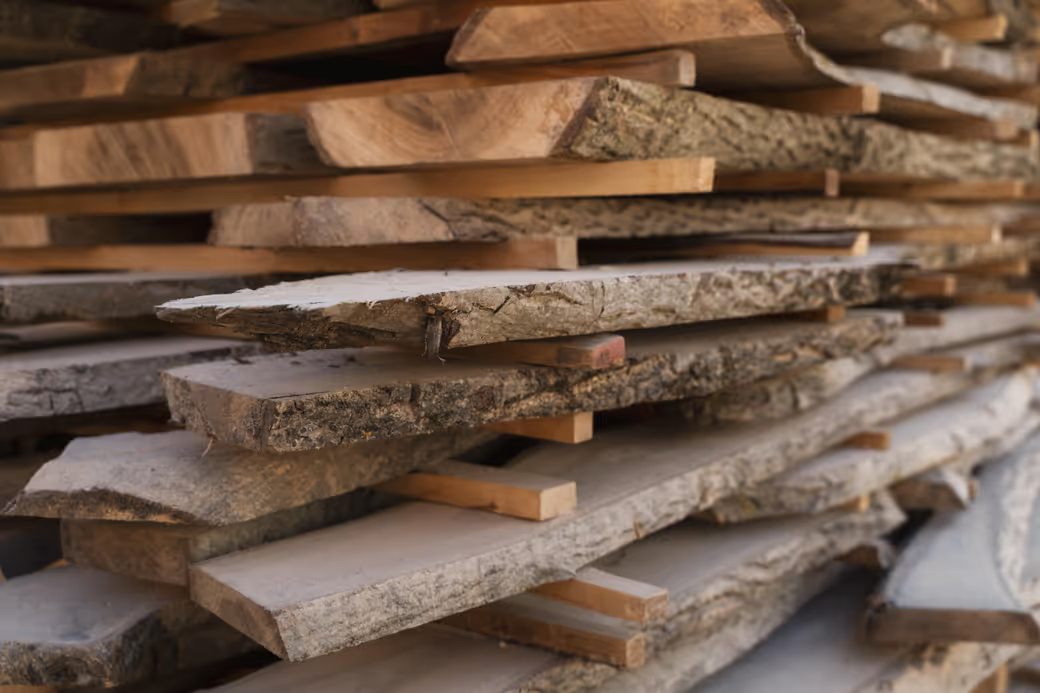
What is wood recycling? Why is it essential?
Wood recycling consists of recovering the various waste products of the timber industry in order to make use of them and incorporate them into the making of recycled products such as panels or pallet blocks.
Recycling wood is essential if the available resources are to be optimised at the lowest possible carbon "cost". Recycling wood waste to make paper, panels or pellets for firewood makes it possible to reduce the costs and the environmental impact of the timber industry.
Managed by a responsible sector, wood recycling and recovery are possible without damaging the environment. But recycling alone is not enough. Reuse, repair and extending the useful life of wood products and materials are essential and paramount drivers.
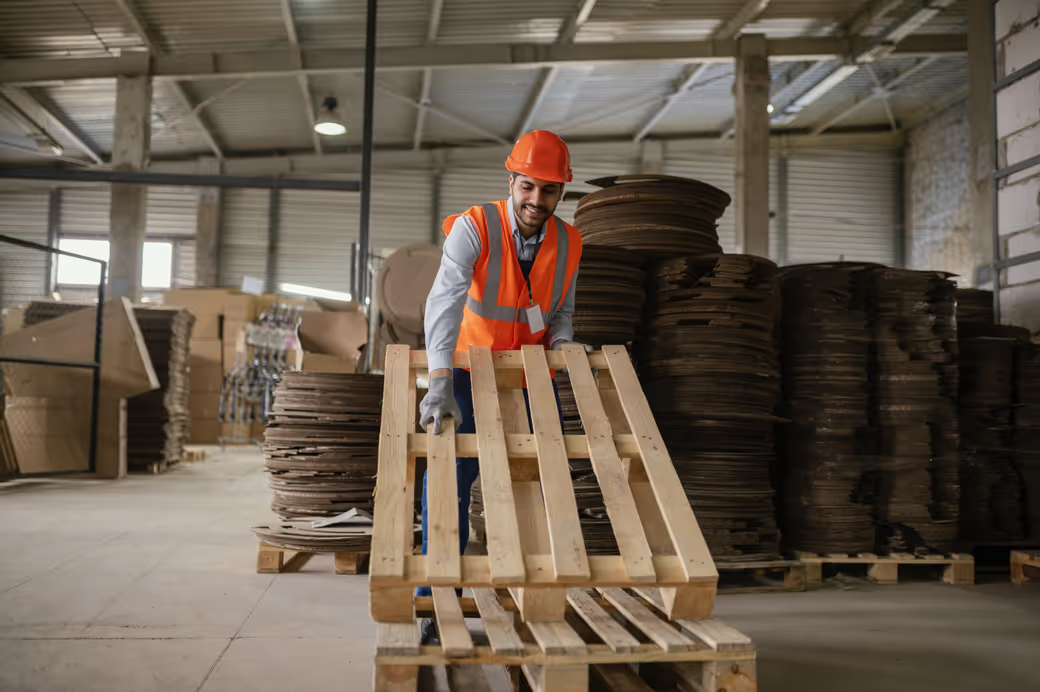
How does wood recycling work?
Wood recycling works in several stages:
- The waste is first collected and then received at the processing sites.
- It is then sorted according to its category: A, B or C. This categorisation increases the chances of the material being recycled to the fullest extent possible, since some categories of wood are not currently recyclable.
- Depending on their category, the waste products are recycled or incinerated.
The types of wood waste and their recycling
There are four categories of wood waste that determine how recyclable it is:
- Class A wood waste is recyclable: this is untreated wood such as raw timber, dry wood that is untreated and unpainted, crates, pallets, boxes and boards.
- Class BR1 and BR2 wood waste is recyclable: this is treated wood that is nevertheless considered non-hazardous; it is found in the form of doors, formwork timber, demolition timber, panels, furniture or sawn timber such as construction timber.
- Class C wood waste is not recyclable: this is certain wood treated with chemicals judged to be hazardous, as is the case with railway sleepers (creosoted wood). This category of wood waste cannot currently be recycled; it is recovered as energy in hazardous waste incineration installations (2770).
Where wood waste ends up: recovery or destruction
In the recycling process, wood waste is destined for different destinations according to its category:
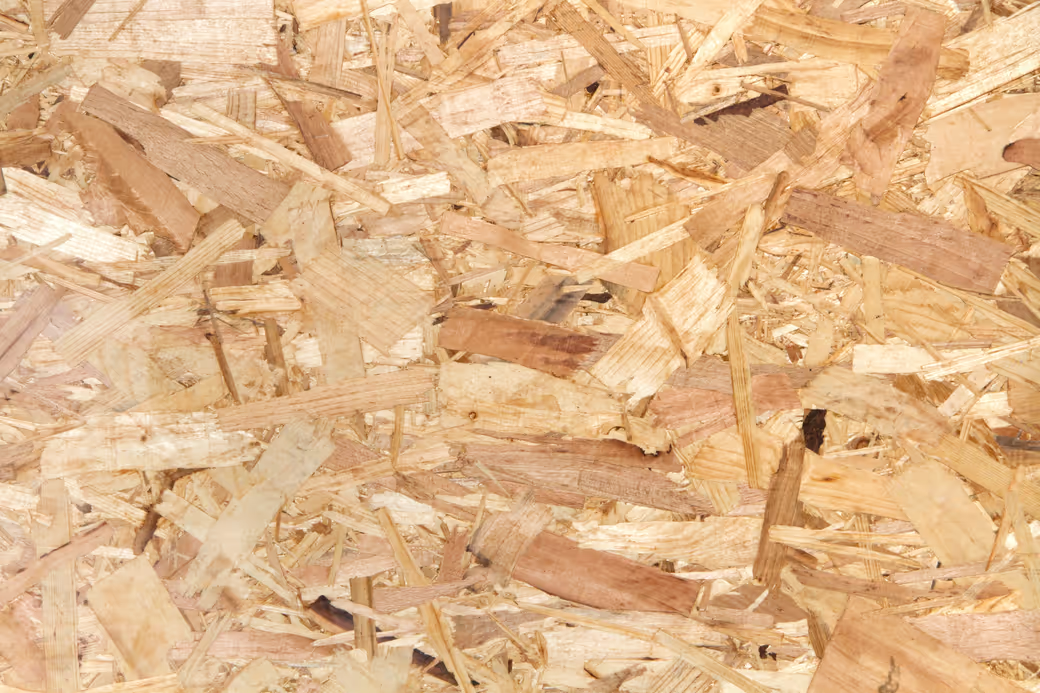
- Material and organic recovery : category A and B wood waste can be reused and transformed, as is the case with the recycling of pallet wood, or serve as a raw material for making new products such as particle panels (built from the recycling of sawdust, offcuts and class A and B recycled wood), paper pulp or mulch.
- Energy recovery: some wood waste can be used as fuel in a district heating plant or for a biomass boiler, for energy recovery or on an industrial site, because wood provides a considerable contribution of heat and/or electricity.
- Disposal: non-recyclable class C wood waste must be incinerated in specific installations so as to avoid any risk of toxic emissions.
One form, several offers.
- Two minutes, no account
- Direct, no middleman
- Your identity stays private
Where do you take your wood waste?
Wood waste has to be collected if it is to be recycled. For this, specific spaces and collection points are at your disposal, such as recycling centres for private individuals or professionals.
Many professional recycling centres take back your class A wood waste free of charge, so recycling a pallet proves easy. What is more, with the introduction of the REP Bâtiment scheme (extended producer responsibility for construction waste), class B waste is now taken back free of charge at the collection points currently being rolled out. This saves you the 60 euros/tonne initially charged, and all your waste can be recovered and recycled.
What is more, for smaller waste such as sawdust and shavings, composters exist and allow you to dispose of your wood waste quite simply, so as to respect the environment and support the circular economy.
Hazardous treated wood, however, cannot be taken to recycling centres, because it will not be accepted. You therefore have to turn to a specialist company, which will collect your class C wood waste.
How is wood recycling organised? A closer look at Ecomaison: the leader in recycled wood in France
The recycling channels for wood products are organised by eco-organisations. Among them is Ecomaison, which is the leading supplier of recycled wood in France with a capacity of 760,000 tonnes per year.
The eco-organisation recovers 100% of the wood it collects and, according to the latest available figures, that corresponds to 500,000 tonnes of wood in recycled particle panels (that is 70% of the wood recycling) and 210,000 tonnes of wood waste used for energy recovery (that is 30% of the total collected).
Ambre Le Ferrec, Head of Innovation, Research & Development and an expert in wood and wood-based products, answered our questions.

What innovations in wood recycling is Ecomaison driving?
One of Ecomaison’s objectives is to encourage innovation and eco-design in order to optimise the recycling and recovery of the end-of-life products collected. The eco-organisation is working, among other things:
- On a way of recycling MDF, which many pieces of furniture are made of today. "For the moment this material is not recyclable, but the latest work undertaken shows that solutions are technically viable. It is possible to incorporate it into insulation products of the wood wool type, or in a minority proportion into particle panels".
- On better preparation of the wood particles from panel recycling so as to increase the circularity of this material.
The leader in recycled wood in France also launched, in 2020, the Innovation For Eco-Design programme, making Ecomaison "the only eco-organisation that offers programmes on innovation and eco-design." This programme, intended for its members, offers support with eco-design approaches in order to optimise environmental impact.
Other questions about wood recycling
How do you recycle a wooden pallet/crate?
The recycling of wooden pallets or crates is a special case because, if their condition allows, they are repaired and reused. Nevertheless, if it is impossible to take them back, they follow the classic wood recycling path and end up shredded or transformed.
Being class A wood, pallets and crates in poor condition are most often used for material recovery. They therefore become panels, paper pulp or serve as ground mulch to fight weeds.
How do you recycle your wooden camembert box?
People often think, wrongly, that recycling a camembert box is a matter of simply putting it in the yellow bin. It is neither plastic packaging nor cardboard or metal packaging, so it goes in the grey bin. To recycle it, however, you can put it in a composter so that it breaks down.
How do you recycle the other types of wood: sawdust, offcuts and wood ash?
Recycling every type of wood is essential, where it is possible, because each one opens up various possibilities:
- Recycling sawdust: it is recovered and used mainly in the making of particle panels and wood pellets for heating.
- Recycling a wood offcut: it makes it possible to give new value to a piece that would otherwise be thrown away. What is more, recovering offcuts can allow a new product to be made with variations in colour, giving it undeniable charm.
- Recovering wood ash: it is an essential asset for your garden as a fertiliser because it is rich in magnesium, potassium, calcium and phosphorus, and as a natural repellent against insects (note that this depends on the type of wood burnt).
- Recycling wooden windows: the simplest method is to return them to the company that fitted them. It will deal directly with contacting a recycling centre so as to ensure they are put to new use.
- Recycling wooden beams: this is possible if they have not been painted or treated with a chemical treatment judged to be hazardous.