
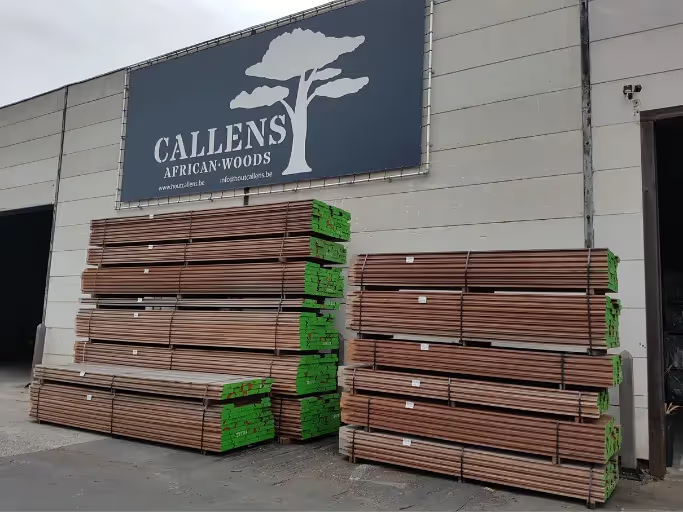
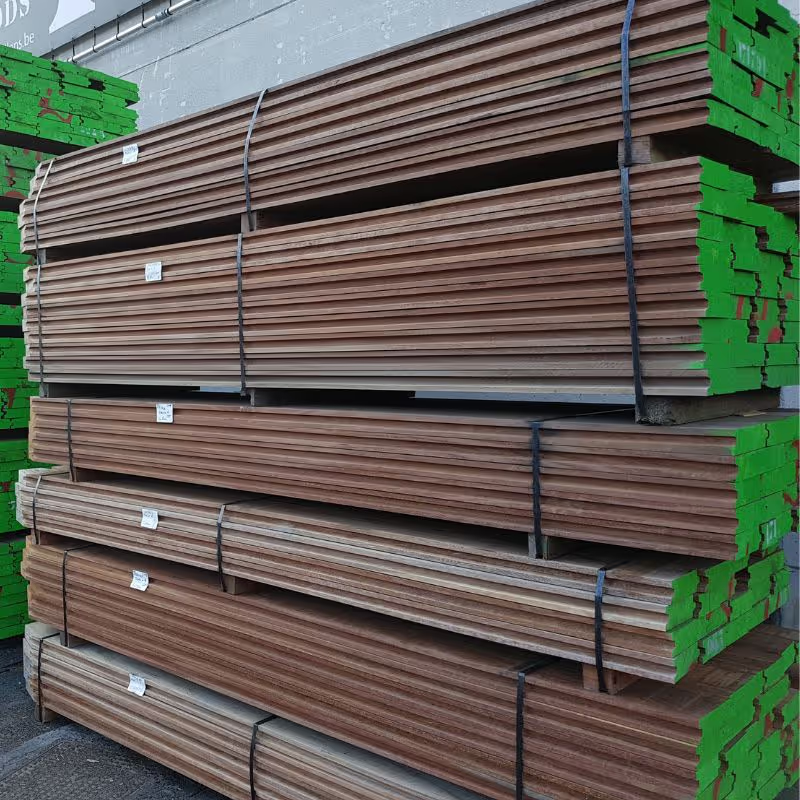

Azobé planks
Rough outdoor timber
Description
Azobé (Lophira alata) is an extremely dense and durable African tropical wood. Known for its exceptional mechanical strength, it is commonly used in applications requiring high solidity and long service life. Naturally rot-resistant, it withstands insect attacks, fungi, and extreme weather conditions, making it a preferred choice for structures in direct contact with water and soil. Advantages -Extreme durability: Resistant to weather, insects and fungi without treatment. -High density: Great mechanical strength, ideal for demanding constructions. -Rot-proof: Does not deteriorate in contact with water or humidity. -Exceptional longevity: A wood that can last for decades without significant deterioration. -Responsible certifications: FSC® and OLB ensuring sustainable forest management and legal origin of the wood. Technical characteristics -Scientific name: Lophira alata -Origin: Africa (mainly Cameroon, Gabon, Congo) -Density: About 1,100 to 1,300 kg/m³ (very heavy wood) -Grain: Coarse, often irregular -Dimensional stability: Medium to low (precautions to take during drying) -Durability class: Class 1 (very durable) -Impact resistance: Excellent -Machinability: Difficult (hard wood requiring suitable tools) -Fastening: Pre-drilling recommended for nails and screws Main applications -Marine and river construction: Piles, pontoons, dikes, locks -Public works and railways: Railway sleepers, piles, bridges -Outdoor structures: Frames, cladding, decking, fences -Industry: Machine supports, lifting chocks, infrastructure protection -Outdoor landscaping: Urban furniture, decking, road edging
Technical characteristics
Wood species
Certification
Use class
Country of origin
Outdoor wood type
Dimensions (L × W × H) (mm)
6x100; 40x60; 40x150; 40x200; 45x130