
Cantilever racking
Discover our selection of 11 references in Cantilever racking . In just a few clicks, contact wood industry experts directly and get personalized advice for your project.
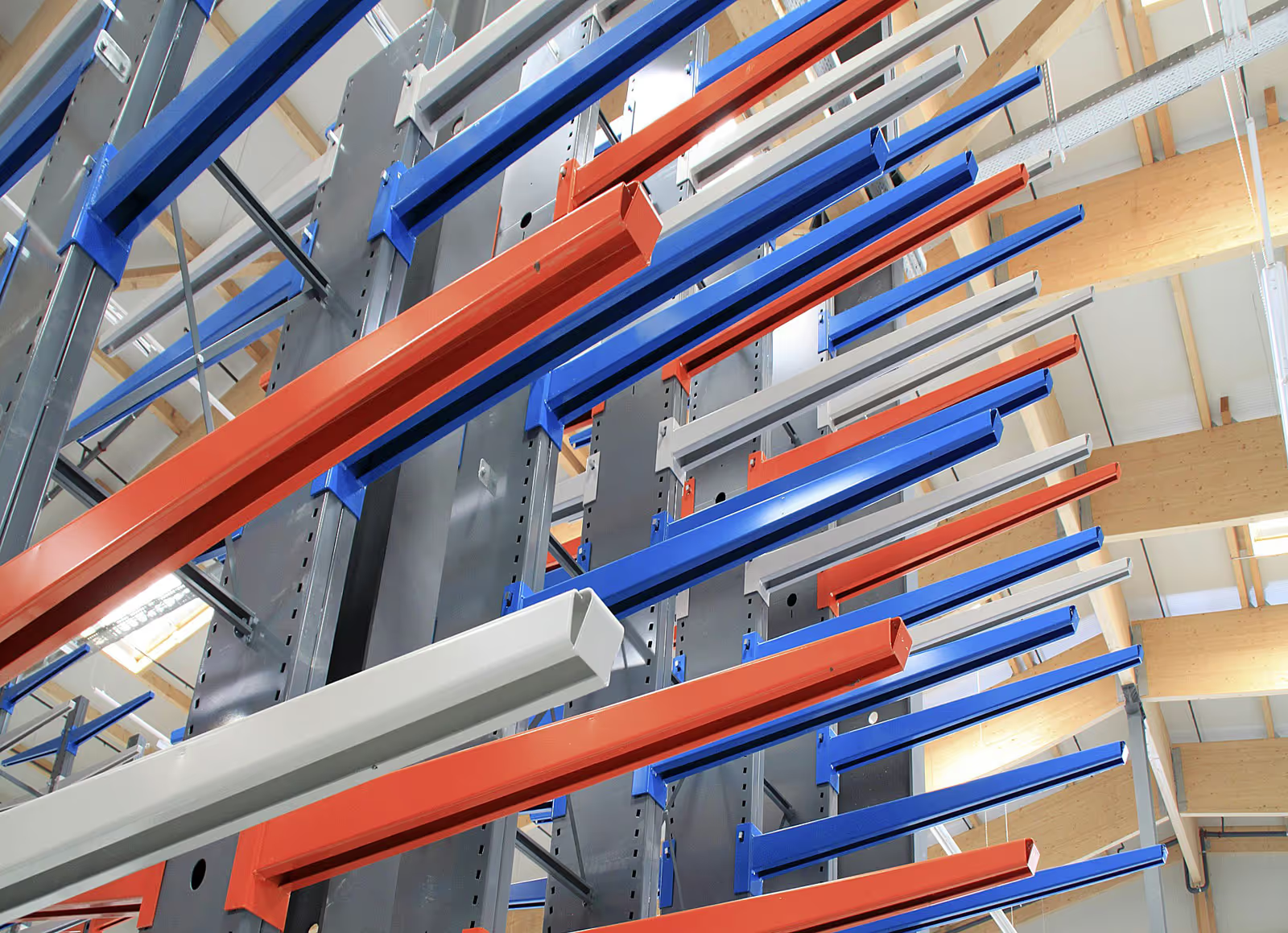


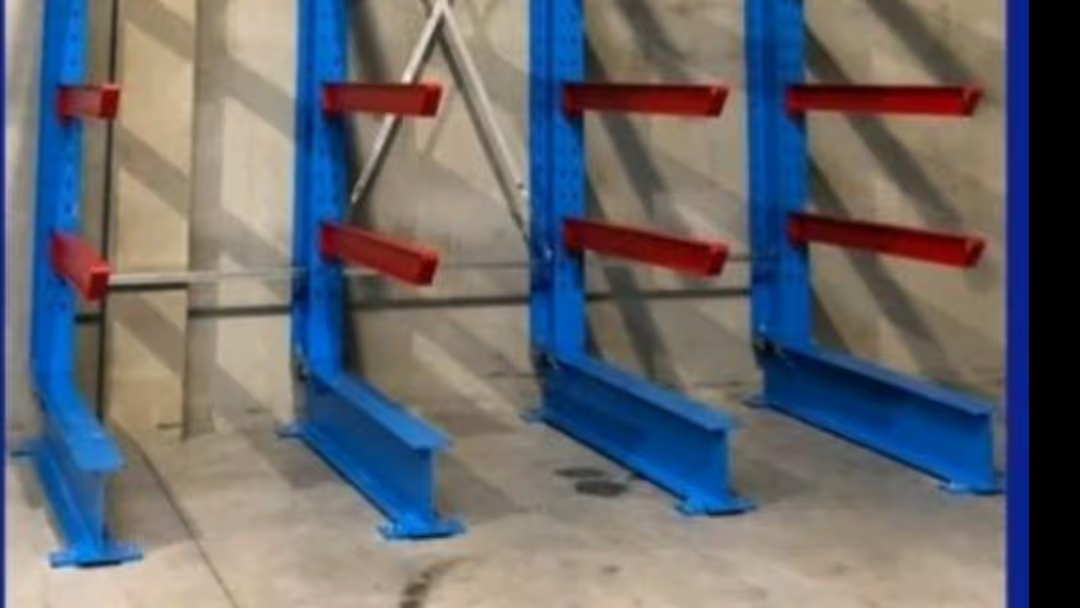


11 of 11 products
Heavy-duty cantilever racking
When starting a warehouse organisation project, it is essential to first determine which type of racking best suits your products and storage needs. Although most companies use pallet racking, it is not always the best choice. If your warehouse holds pipes, tubes, carpets, timber or other items that are difficult to move and store on pallets, cantilever racks are the ideal option to organise your space.
Cantilever racking: what is it?
Cantilever racks store products that are difficult to keep on pallets. They allow horizontal storage of longer, heavier goods on several levels. The vertical uprights of pallet racking limit the length of stored products, which does not mean that cantilever racks cannot be used to store standard-size pallets.
You can customise a cantilever racking system so that it holds both standard pallets and larger products, depending on your warehouse needs. However, pallets can only be stored to a limited depth per row. If your warehouse only holds standard pallets, you can still use cantilever racking, but it will not make optimal use of the space.
Cantilever racking: how does it work?
A cantilever rack is made up of four main components: the base, the uprights, the arms and the braces. The base of a cantilever rack is usually made of steel, providing solid support and extending from the bottom of the rack to balance the weight of the stored items.
Cantilever racking: the best option for my warehouse?
The main benefits of cantilever racks depend on your storage needs. If your business mainly stores small items that stack easily on pallets, cantilever racks are not necessarily essential. However, for heavy and long loads, a cantilever rack is the ideal solution. Cantilever racking extends storage options for this type of item and optimises the use of available space in your warehouse.
Does your warehouse already store larger, heavier items, or use floor stacking for items that do not fit on pallets?
The cantilever racks offer the versatility needed to meet this constraint. Unlike pallet racking, they are easy to assemble, modify and reconfigure.
What types of forklifts and what planning are needed for cantilever racking?
When choosing a cantilever racking system, you need to consider many factors. First, you need suitable forklifts. As cantilever arms are supported by a single connection to the uprights, their maximum length is limited. If the arms are very long, your cantilever rack will lose strength at the arms. This means your warehouse may need more rows of cantilever racks to hold your goods, which results in narrower aisles.
Wide enough aisles are essential for front-loading forklifts to carry the long products you store, which requires a lot of free manoeuvring space. Before considering cantilever racks, you should look into side-loading or multidirectional forklifts, which are often more expensive. Finally, you will probably want to plan and design your cantilever rack storage solution with a partner specialising in warehouse layout optimisation.