
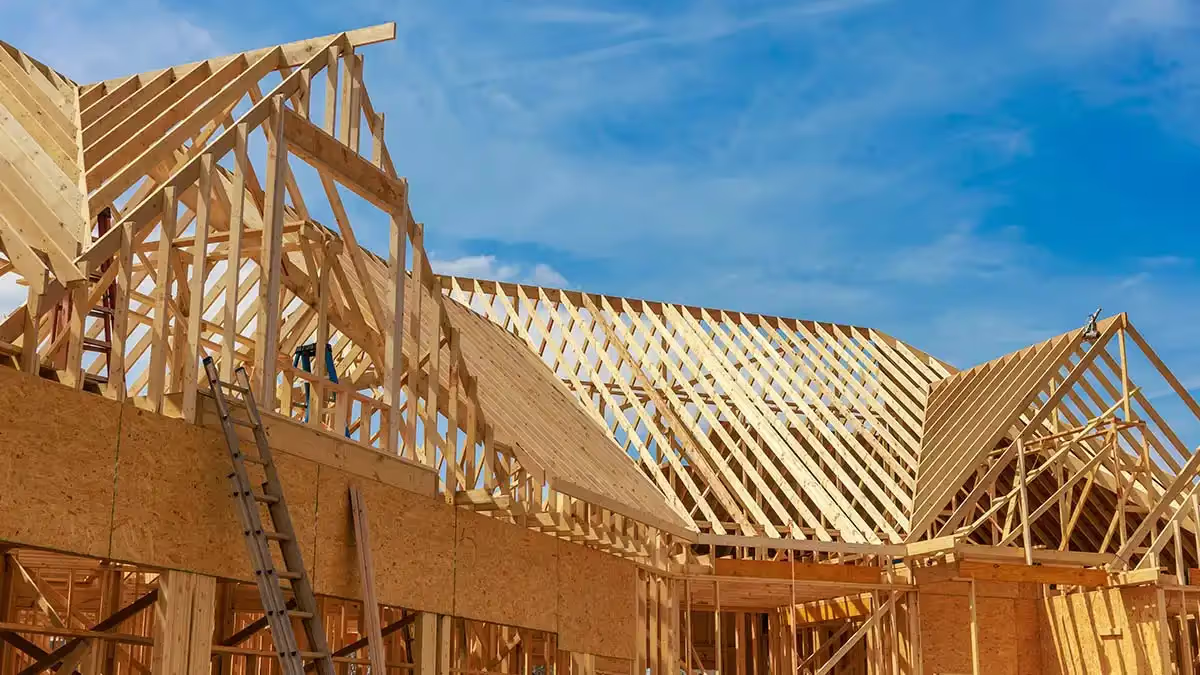
Here is the art of choosing the perfect roof structure for your building project. From traditional structures to modern design, our complete guide sheds light on the options, the costs and the appearance. Make the informed choice for a solid building that reflects you!
Which type of roof structure should you choose? Comparison & budget to plan for
In this article we will guide you through the different roof structure options, help you understand their essential role and give you the information you need to take an informed decision about choosing the roof structure best suited to your project. Whether you are considering a traditional structure, trussed rafters, a glulam structure, or one in concrete or metal, we will look in detail at the characteristics of each type.
The different types of roof structure: 5 possibilities
When you undertake the construction of your house, selecting the appropriate roof structure can be a considerable challenge. With our expertise, however, you will have all the information you need to make the optimal choice, taking your project as well as your budget into account.
Traditional roof structure: robust and convertible
The traditional roof structure, a legacy of proven methods, embodies durability, robustness and good looks. Regional variations in timber design affect its appearance, with shallower pitches in southern regions compared with mountain areas. The key advantage of this type of structure lies in the possibility of converting spacious lofts. Although slightly more expensive than trussed rafter structures, the traditional roof structure offers superior strength and allows the loft to be adapted quickly during an extension. Despite the longer building process, this structure offers expansive attic space and flexibility in modifying the interior layout.
Trussed rafters or industrial structures: robust and economical
Trussed rafters, an innovation of the 1950s, use a triangulated structure with small-section timber elements, guaranteeing both strength and economy. Although converting the loft is not directly possible, they are as strong as traditional structures. Prefabricating trussed rafters speeds up their installation while maintaining strength. They represent an economical alternative for those looking for a strong and reliable roof structure.
Glulam structures: exemplary mechanical strength
Glulam bonds laminations of timber together by gluing, offering superior mechanical strength. This option is particularly suited to buildings with a long span or exposed to hazardous conditions. The high mechanical strength of glulam, combined with its resistance to fire and heat, makes it an ideal choice for certain specific constructions. Its laminated configuration allows loads to be distributed optimally across the whole structure.
Concrete structures: strength and versatility
Concrete roof structures, modern and durable, stand out for their use of factory-prefabricated artificial beams. They suit commercial and residential buildings, offering the possibility of a flat roof or a roof terrace. The concrete structure, strong and fireproof, represents a contemporary solution for various types of construction. While ensuring strength and stability, it allows varied architectural designs, such as flat roofs.
Metal structures: speed and economy
Metal roof structures, built in steel and assembled industrially, are favoured in agricultural and industrial settings for their quick installation and their affordable cost. Metal structures offer an economical option for buildings in professional use. Their quick installation makes them an attractive solution for those wanting fast construction without sacrificing strength.
The fundamental role of a roof structure
A roof structure fulfils several essential roles within a building:
- It supports the roof covering, guaranteeing the stability of the structure.
- It protects the building from the weather and ensures greater longevity.
- It contributes to the overall strength of the building, guaranteeing its durability over time.
The make-up and construction of a roof structure
The roof structure, a centrepiece of the roof, consists of a timber and metal framework located above the load-bearing walls. Various elements make it up, each fulfilling a specific role:
- The truss: transfers the weight of the roof to the vertical load-bearing elements.
- The purlins: connect the trusses and allow the loads from the rafters to be transferred.
- The rafters: distribute the weight of the roof over the purlins.
- The wall plate: ensures the overall strength of the construction.
- The struts: stabilise the structure by connecting the principal rafters to the tie beam.
- The principal rafters: support the purlins, set at an angle.
Building a roof structure, a meticulous process, guarantees the balance of forces and the optimal distribution of loads. The drawings, produced by experts, ensure the coherent and solid assembly of the structure, while taking climatic and architectural considerations into account. Selecting the ideal roof structure will depend on your specific project, on the budget available and on the structural requirements. Whatever your choice, be sure to work with qualified professionals in order to guarantee the strength and the durability of your roof structure.
One form, several offers.
- Two minutes, no account
- Direct, no middleman
- Your identity stays private
Advice for choosing the perfect roof structure
When taking crucial decisions about the roof structure of your house, keep the following points in mind to guide you towards the perfect choice:
1. Purpose and use of the building
First of all, clarify the purpose of the building you are constructing. Is it a residential house, a commercial structure or an industrial space? This distinction will greatly influence the choice of your roof structure. By understanding the purpose of the building, you will be able to select a roof structure that specifically meets your needs, thereby ensuring the long-term function of the structure.
2. Budget and costs
Budget is a decisive factor in the choice of roof structure. The different types of structure vary in cost, with more economical options such as concrete and metal structures, and more traditional choices such as an oak structure. It is essential to strike a balance between the quality of the structure and the associated costs, thereby ensuring that your investment is wisely spent.
3. Interior layout
If you are planning to convert the loft to gain extra space, the traditional roof structure could be your best option. If the loft is not a priority, on the other hand, trussed rafter structures or other economical types could be suitable. Planning according to your future space needs will help you make the most of your building while preserving its structural integrity.
4. Strength and durability
Depending on the location of your building and on the surrounding climatic conditions, you will have to choose a roof structure that withstands the elements. Concrete and glulam structures stand out for their mechanical strength, while traditional structures have a long history of durability. The strength and durability of your roof structure are essential in ensuring the long-term safety and stability of your building.
For that, you will have to choose a suitable species such as merbau, the tropical timber garapa, the tropical timber massaranduba or poplar.
5. Appearance and design
Appearance plays a major role in the choice of roof structure, as it contributes to the overall look of the building. If you are after a traditional and warm look, a timber structure could be your preferred choice. On the other hand, if you are aiming for a modern, clean look, options such as concrete or metal might suit better. The roof structure you choose will have an impact on the visual appearance of your building, so it is important to match the choice to your aesthetic preferences.
6. Environmental considerations
If you favour ecological and sustainable materials, it is worth taking the environmental impact of the chosen structure into account. Timber structures, particularly those from sustainable sources, are often considered an environmentally friendly choice. Showing environmental awareness in your choice of roof structure will contribute to the long-term sustainability of your building and to the preservation of the ecosystem.
An informed choice of roof structure
Choosing a roof structure is a critical step in constructing a building, whether for your house, your commercial space or your industrial premises. By taking your specific needs, your budget and the characteristics of each type of structure into account, you can take an informed decision that guarantees the strength, the function and the appearance of your building. With this thorough understanding of the different options, you are ready to take every step of your construction project with complete confidence.