
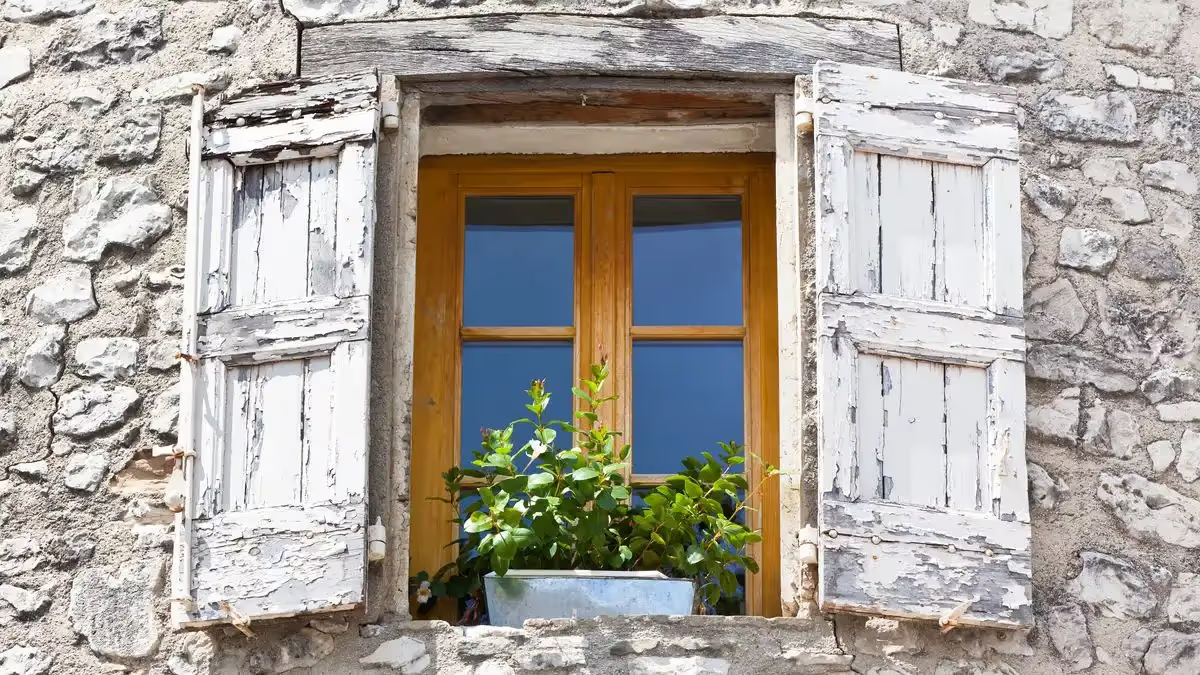
Dive into the world of hinged shutters with our expert guide. From tradition to technology, find the perfect balance between aesthetic charm and modern functionality for your shutter choices.
How do you select the best hinged shutters for your home?
When it comes to choosing shutters for your home, the choice is vast and can prove complex. Between traditional hinged shutters, practical roller shutters, modern sliding shutters or louvred shutters with their timeless charm, each type has its own features and advantages. What is more, materials such as wood, aluminium, PVC or steel each bring their own properties in terms of insulation, appearance and maintenance. Before taking a decision, it is essential to weigh up the pros and cons carefully, taking into account the style of your home, your insulation and security needs, and your budget.
Hinged shutters: tradition and style combined
Roller or hinged shutters: decoding the differences
Before diving into the details, it is essential to understand the differences between roller shutters and hinged shutters. Each has its own share of advantages and disadvantages. We review these characteristics to help you determine the choice best suited to your needs. The advantages of hinged shutters Why opt for hinged shutters? They stand out for how easy they are to install. Whether for a new build or a renovation, the fit is simple thanks to a well-placed sub-frame. Charm is also part of the package: these shutters add a touch of elegance to your home, whatever its architectural style. The versatile options allow you to enhance the authenticity of a stone façade or to set off modern architecture. Insulation is also a strong point, with wooden models standing out for their thermal performance. The disadvantages of hinged shutters You should not, however, ignore the potential disadvantages. Not motorised, hinged shutters can prove demanding in the daily routine. Opening and closing them by hand, sometimes even in the rain, can become tiresome.
The different types of shutter: comfort, thermal efficiency, practicality...
Hinged shutters
- Advantages:
- Traditional looks that suit many styles of home.
- Robust and offering excellent protection against the weather.
- Variety of materials and finishes available.
- Easy to use with a simple push or pull.
- Good level of blackout when closed.
- Disadvantages:
- Require space on the façade when open.
- Some materials, such as wood, call for regular maintenance.
- Less insulating than roller shutters.
Roller shutters
- Advantages:
- Excellent thermal and acoustic insulation.
- Possibility of automation for maximum comfort.
- Reinforced security against break-ins.
- Easy to use, especially with motorised versions.
- Perfect level of blackout.
- Disadvantages:
- Mechanism sometimes prone to breakdowns, particularly for motorised versions.
- Higher installation cost than hinged shutters.
Sliding shutters
- Advantages:
- Modern, uncluttered design.
- Easy to use with a simple slide.
- Take up little space when open.
- Level of blackout depending on the design and the material.
- Disadvantages:
- Generally higher cost.
- Installation requires rails, which can complicate the process.
Folding shutters (accordion)
- Advantages:
- Suited to narrow windows and patio doors.
- Compact and practical for confined spaces.
- Easy to use.
- Level of blackout generally good.
- Disadvantages:
- The folding mechanism can wear out over time.
- Less common, so a limited choice of styles and materials.
Louvred shutters
- Advantages:
- Timeless looks suited to many styles of home.
- Allow ventilation while keeping the shutter closed.
- Easy to use for the folding and sliding versions.
- Level of blackout varying according to the design.
- Disadvantages:
- Slats can distort over time, particularly wooden ones.
- Less insulating than other types of shutter.
Materials: aluminium, wood or PVC?
Deciding on the ideal material for your shutters
The choice of material is a crucial step in selecting your hinged shutters. Each one has its own characteristics and advantages. We guide you through the most popular options: aluminium, wood and PVC.
- Aluminium shutters
Aluminium stands out for its exceptional insulation, its suitability for sunny climates and its resistance to corrosion. As well as being durable and easy to maintain, it fits harmoniously into modern décors thanks to a variety of colours and finishes.
- PVC shutters
PVC offers a variety of colours and great flexibility of customisation. Resistant to insects and to mould, it is a practical choice. With insulating properties and resistance to seaside conditions, PVC is a versatile ally.
- Wooden shutters
Wooden shutters add a warm, authentic touch to your home. They come in different wood species, resistant to the weather and to UV rays. Regular maintenance is, however, essential to maintain their durability.
One form, several offers.
- Two minutes, no account
- Direct, no middleman
- Your identity stays private
Motorisation: automated comfort and security
Automation for ultimate comfort
Automating your shutters offers an unrivalled level of comfort and security. Whether you want to avoid the crank handle or to control your shutters remotely, motorisation is an option worth considering. In the vision of the house of the future, home automation plays a central role in creating intelligent, ultra-connected homes. At the heart of this development, the installation of electric shutters stands out as an essential step. These shutters, integrated into a home automation network, allow not only unprecedented ease of use — by adjusting opening and closing remotely or according to precise programming — but also better energy management of the home. They can adapt automatically to weather conditions, maximising natural light in winter and protecting against heat in summer. This automation of shutters fits perfectly with the idea of a self-sufficient, responsive and environmentally responsible home, where every element interacts harmoniously for optimised comfort and a reduced environmental footprint. Comfort and security Thanks to the remote control or even your smartphone via home automation, you can now control your shutters remotely. Automation offers optimal management of light and heat, while reinforcing the security of your home. Types of motor Various motor options are available for hinged shutters. From invisible motorised hinges to articulated arm systems, each configuration meets specific needs.
Expertise at the service of your choice
Choosing hinged shutters is not an ordinary decision. With two decades of experience behind us, we offer you a complete guide to making the ideal choice. Whether you prefer the traditional charm of hinged shutters or the modern efficiency of roller shutters, our expertise is at your service to help you make a wise investment for your home.
The perfect selection: shedding light on the important details
Hinged shutters: how do you make the right choice?
Hinged shutters, although traditional, remain a popular option for many reasons. Their appearance and their functionality make them sought-after choices for old houses as well as for new builds. Before embarking on the selection process, it is important to understand the different types of hinged shutter and their distinct characteristics. Types of hinged shutter There are two main types of hinged shutter: interior and exterior. Interior hinged shutters fold back onto the window, whereas exterior hinged shutters fold back towards the inside. These two options offer specific advantages in terms of light, ventilation and appearance. What is more, there are variants with solid, louvred or mixed slats to meet your light and ventilation needs.
Choice of material: long-term impact
- Wood: warmth and durability
Wooden hinged shutters evoke a warm, natural atmosphere. With different species available such as exotic woods, you can choose the one that best matches the look of your home. Wood also offers natural insulation and resistance to the elements, although it requires regular maintenance to maintain its durability. Opt for wood if you favour authenticity and performance.
- Aluminium: modernity and strength
Aluminium shutters combine modern style and durability. Resistant to corrosion and to UV rays, they are particularly suited to sunny climates. As well as their thermal performance, aluminium shutters offer a range of colours and finishes to match your décor.
- PVC: versatility and ease of maintenance
If versatility is what you are looking for, PVC shutters are an excellent choice. They offer a variety of colours and resist insects and mould. Easy to maintain and insulating, PVC shutters are suited to different environments, including coastal regions.
Motorisation: the evolution of comfort
Home automation at the service of your shutters The motorisation of hinged shutters is a technological advance that brings increased comfort to your home. Gone are the crank handles and the manual effort; motorised shutters can be controlled via a remote control or even your smartphone. As well as the comfort, this reinforces the security of your home by simulating a presence when you are not there. The choice of motors Two main options are open to you for motorising hinged shutters: motorised hinges and articulated arm motorisation. Motorised hinges replace conventional hinges and are almost invisible. Articulated arm motorisation consists of fixing an arm to the sides of the shutter to automate its movement. You can choose the solution that best suits your aesthetic and functional preferences.
The art of choosing your hinged shutters
Choosing hinged shutters is a process that calls for careful thought. By being aware of the differences between roller and hinged shutters, by understanding the advantages and disadvantages of the materials available, and by exploring the possibilities offered by motorisation, you can take an informed decision that matches your needs and your lifestyle perfectly.