

Wood is the ideal covering for creating an outdoor deck, giving your space a natural, warm style. Environmentally friendly and durable, it also assures you of a long-lasting result. Knowing which wood to choose for your deck can prove difficult, however, so varied are the criteria: wood species, budget, look, use class and so on.
Are you looking for the best wood for your deck? WoodPartners explains everything about wood species and which one to choose for your outdoor deck:
- Choosing a European wood for an affordable outdoor deck,
- Choosing an exotic wood for an ultra hard-wearing outdoor deck,
- Choosing a composite wood for an environmentally responsible outdoor deck,
- Choosing a modified wood for an innovative outdoor deck,
- Summary table of woods for an outdoor deck,
- The durability of the wood- the essential criterion for choosing the best decking wood.
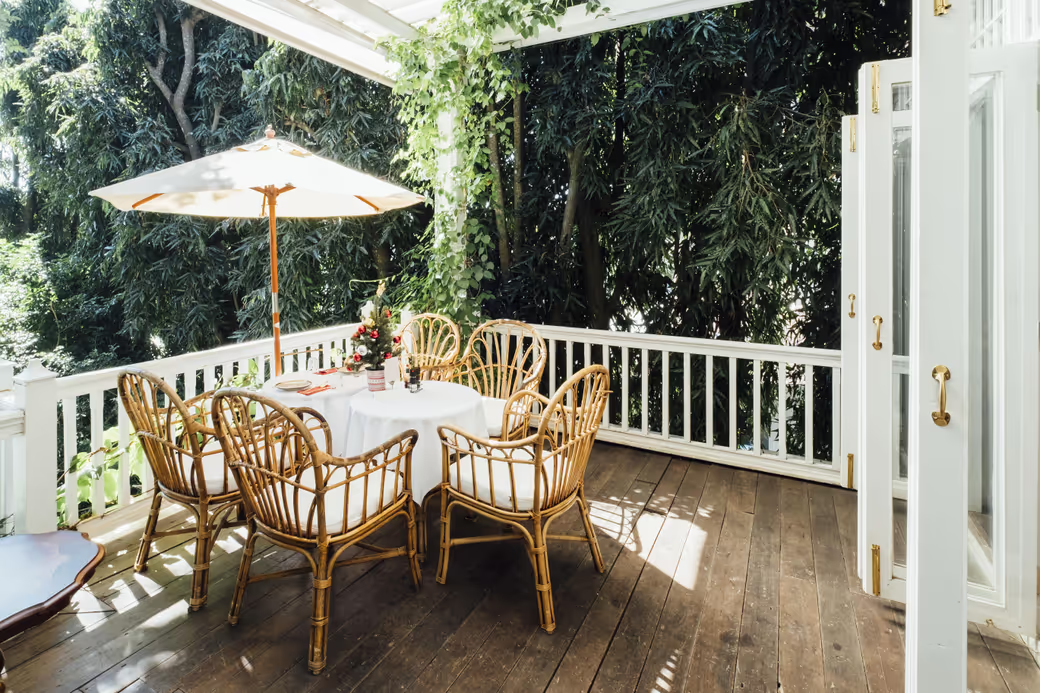
Choosing a European wood for an affordable outdoor deck
European woods are softwoods from conifers, with an often light shade. These species, which are very popular, are very affordable and very easy to work, making it easy to create an outdoor deck. Among these species we find:
-Scots pine, naturally light
-Douglas fir, ranging from pink to reddish brown,
-Larch, from pinkish brown to golden,
Pine and Douglas fir are the most common European wood species for an outdoor deck, offering good value for money. In terms of budget, these woods will cost you:
-Pine: €80 to €140/m², including installation;
-Douglas fir: €95 to €140/m², including installation.
While they have good natural resistance (larch in particular is very hard-wearing) and an adequate service life (about 15 years), these softwoods are less durable than exotic woods or composite woods.
To improve the resistance of these decking woods, and of Scots pine in particular, you can carry out a pressure treatment that makes them rot-proof. Choosing a European wood for your deck does, however, mean regular maintenance to ensure its physical and visual durability. Watch out in particular for the yellowish marks that can appear because of resin escaping.
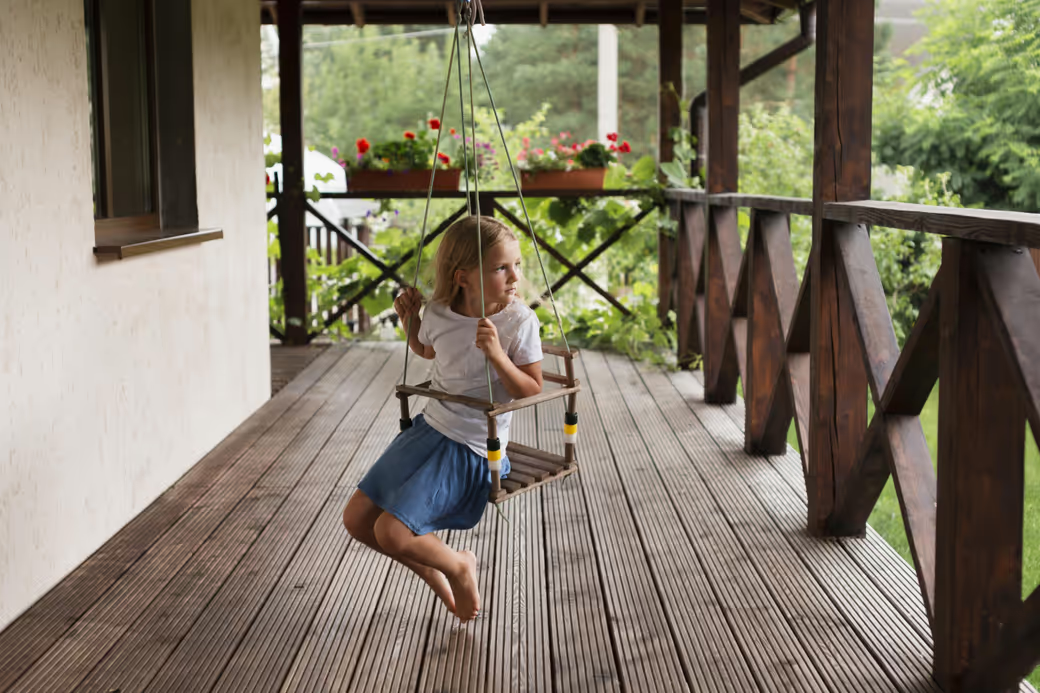
Choosing an exotic wood for an ultra hard-wearing outdoor deck
Exotic woods are the most hard-wearing woods on the market. Naturally very dense, with fine grain, they stand up very well to external attack (insects, fungi) and to the most exposed environments, in particular to water. This great strength and durability does, however, translate into a higher cost. Among these decking woods, we will find:
-Ipe(South America), yellowish brown to olive brown in colour, it is the exotic wood most used for decks,
-Cumaru(South America), nicknamed "ironwood", in orange-brown colours,
-Massaranduba(Brazil and South America), from light reddish brown to dark reddish brown,
-Padauk(tropical Africa), in bright red colours,
-Teak (Asia), in warm colours.
In terms of budget, these woods cost more than European woods, in particular because of their overexploitation, which makes them rarer:
-Ipe: €140 to €220/m², including installation,
-Cumaru: €110 to €180/m², including installation,
-Massaranduba: €115 to €190/m², including installation,
-Padauk: €135 to €185/m², including installation,
-Teak: €160 to €240/m², including installation.
If price is not a problem for you, these exotic species are the best woods for building a deck. Of high quality and naturally rot-proof, they need no particular treatment and little maintenance. What is more, the appearance and the fine colours of these exotic wood species assure you of unique character.
One form, several offers.
- Two minutes, no account
- Direct, no middleman
- Your identity stays private
Choosing a composite wood for an environmentally responsible outdoor deck
Composite wood is a kind of hybrid made from recycled wood and polymer resins (and sometimes plant fibres), offering an environmentally responsible alternative to exotic wood, the victim of deforestation. Composite wood has the advantage of being rot-proof with very good resistance to water, to wood-boring insects and to temperature changes, while keeping the look of a 100% wooden deck.
In terms of budget, a deck made from composite wood will cost you on average €50 to €80/m², without installation.
Composite wood is thus one of the best woods for a deck, offering a solution that is durable, affordable and attractive (many shades being available). What is more, being light, it makes fitting a deck simpler and quicker, being laid with hidden clip-in fixings.
Since it contains plastic, however, it is not biodegradable. Likewise, to make sure your composite wood deck lasts well, you have to maintain it regularly.
Choosing a modified wood for an innovative outdoor deck
Modified wood is wood that has been treated or mixed with other substances in order to obtain properties different from those of natural wood. This type of wood offers an innovative and durable solution for building outdoor decks. There are various options that combine appearance and performance:
-Heat-treated wood : heat-treated wood is wood that has been raised to a temperature of more than 280 degrees, in order to make it more hard-wearing and usable for an outdoor deck. Its dark caramel colour gives a warm feel that lasts over time. There are different heat treatment processes: retified wood, BMT, THT, torrefied wood and so on;
-Impregnation : a chemical process (treatment with biological alcohol or with vinegar) used on species that are treatable enough, which gives durability and mechanical resistance, as well as resistance to external attack, similar to those of dense woods. With this treatment, the wood takes on a golden brown shade;
-Rice husk: rice husk is a material from rice which, combined with PVC, gives a material that looks like wood but is not. It is a material resistant to UV and to water, with the particular feature of being naturally non-slip, which means it can be installed safely, beside a swimming pool for example.
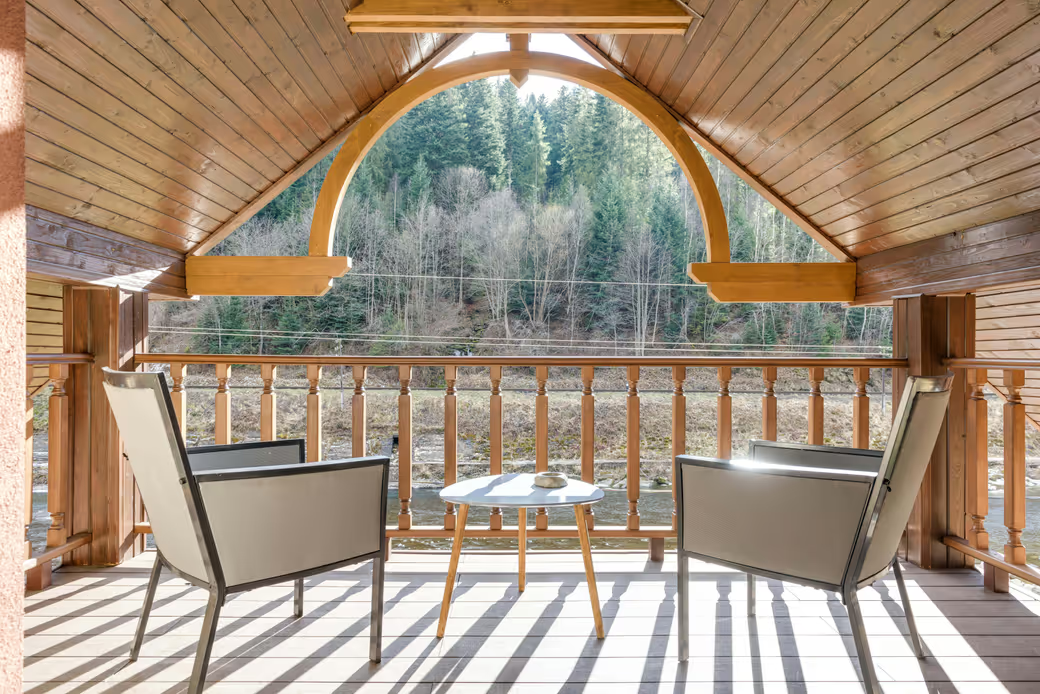
Summary table of woods for an outdoor deck
To help you in your choice, here is a summary table of the different woods and their characteristics for a deck. Note that this information is given as a guide and may change.
|
Wood |
Origin |
Price including installation (€ / m²) |
Price without installation (€ / m²) |
Durability |
Maintenance |
|
Pine |
Europe |
80-140 |
20-40 |
High |
Pressure treatment |
|
Spruce |
Europe |
85-140 |
25-50 |
High |
Pressure treatment |
|
Douglas fir |
France |
95-140 |
30-50 |
High |
Regular treatment |
|
Cumaru |
Exotic |
110-180 |
50-90 |
Very high |
Little maintenance |
|
Massaranduba |
Exotic |
115-190 |
70-120 |
Very high |
Little maintenance |
|
Padauk |
Exotic |
135-185 |
70-100 |
Very high |
Minimal |
|
Teak |
Exotic |
160-240 |
100-150 |
Very high |
Minimal |
|
Composite wood |
Synthetic |
30-80 |
30-80 |
Very high |
Minimal |
|
Heat-treated wood |
Modified |
100-120 |
80-90 |
High |
Minimal |
|
Rice husk |
Modified |
60-70 |
60-70 |
High |
Minimal |
The durability of the wood- the essential criterion for choosing the best decking wood
While you should of course choose the wood for your deck according to your project, your tastes or your needs, the essential objective criterion to remember is that of the durability of the species.
The wood species chosen has to guarantee you the greatest durability and the greatest resistance to external attack. The longevity of your deck is determined in several ways:
-The natural durability of the wood, against UV, moisture, insects, fungi and so on,
-The use class,
-Labels and certifications.
The use class determines the field of use of the species: indoor use, outdoor use (under shelter, exposed) and so on. There are 5 wood classes in Europe, going from 1 to 5, and only class 3.2 woods (sheltered deck), class 4 (exposed deck)and class 5 (deck by the sea or fully immersed) are accepted for an outdoor deck.
The best woods for a deck are thus those that meet the requirements of these classes, ensuring optimal resistance to moisture, to prolonged wetting or to immersion in fresh water. Species can reach these classes thanks to their natural durability, as with exotic woods, thanks to a preservation treatment (such as a pressure treatment), or both.
Pine, for example, is naturally in class 3 but, thanks to a treatment, can reach class 4. Ipe, conversely, is a naturally very hard-wearing class 4 wood, which can be used without treatment.
Finally, there are several labels and certifications indicating the quality and the durability of the species, including:
-PEFC or FSC, certifications attesting to responsible and sustainable management of the forest,
-CTB-B+, a certification indicating that the species has undergone a quality preservation process in line with the intended use classes.
You now know which wood to choose for your deck. If you are looking for the best wood species at the best price to build your deck, discover our WoodPartners collection and find the ideal material.