
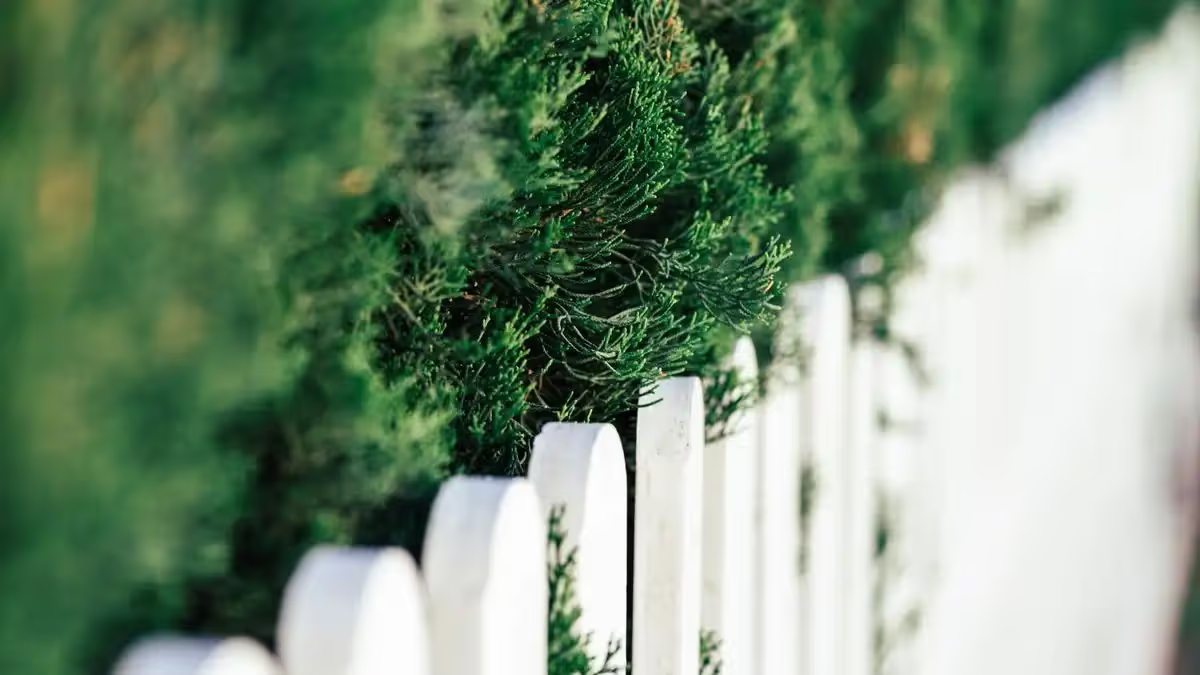
Dive into the world of softwoods, tropical timbers and composites to create a fence that combines charm, durability and responsibility.
Expert guide: everything about wood for outdoor fencing
Make the best choice for your wooden fence
You have decided to replace your outdoor fence and are opting for the timeless charm of wood. Faced with the multitude of options ranging from softwood timber to tropical species, however, making the right choice can be tricky. Neowood guides you through this process, helping you select the ideal wood for your fence while guaranteeing quality and durability.
Softwoods: economy and ecology to consider
Explore softwoods for your affordable fence
When looking for a wood for your fence, you will ideally need use class 4 timber, which can be used outdoors in contact with the ground. You will probably come across softwoods such as Scots pine, larch and Douglas fir. These European species are prized for their attractive price and their ecological credentials. The decision should not be rushed, however.
Softwood species: understand and protect
Softwood species, grown in regions with a temperate climate, can be vulnerable to moisture, mould and insects. To avoid these problems, it is crucial to look at the use class and to opt for pressure treatment. This guarantees an extended service life for your softwood fence.
Choosing softwood species wisely
Among the species to favour for a softwood fence, Douglas fir, larch and sweet chestnut stand out. Douglas fir offers natural resistance, while larch shines through its durability in harsh conditions. As for sweet chestnut, its rot-proof nature makes it a low-maintenance option.
Tropical timbers: robustness and responsibility considered
Opt for tropical timbers for a durable fence
Unlike softwoods, tropical timbers come from distant and hostile regions. These species, such as padauk, ipe, teak and sipo, stand out for their natural resistance without the need for pressure treatment. It is important to consider their environmental impact and their responsible sourcing, however.
Tropical species for imposing fences
Padauk, with its vivid red tones, brings a noble touch to your fence. Ipe, with its shifting shades, warms the atmosphere of the garden. Teak, valued for its orange colouring, remains a versatile option for outdoor landscaping.
Composite wood: durability and ease of maintenance
Switch to composite wood for a worry-free fence
Faced with the limits of natural wood outdoors, composite wood is emerging as a durable solution. Made of 95% recycled materials, it offers an environmentally responsible alternative. Thanks to its co-extrusion technology, composite wood resists attack from outside, remaining true to its original appearance.
The undeniable advantages of composite wood
Composite wood imitates natural wood perfectly, thanks to its variety of tones and its UV Reflect technology. Its resistance to moisture and to the weather makes it ideal for every climate. What is more, it is practically maintenance-free, with simple annual cleaning. It is also easy to install thanks to its innovative fitting system.
One form, several offers.
- Two minutes, no account
- Direct, no middleman
- Your identity stays private
The perfect wooden fence within reach
By selecting the right wood for your outdoor fence, you create a balance between good looks and durability. Softwoods, tropical timbers and composites each have their distinct advantages, but it is your vision and your needs that will determine the final choice. With this in-depth knowledge, you can now create a fence that adds charm and function to your outdoor space.
The selection process: guaranteeing quality and longevity
To choose the ideal wood for your fence, follow these crucial steps:
Use class: resistance to the fore
All wood species are graded into five resistance categories, from 1 (fragile) to 5 (very resistant). For a durable softwood fence, aim for at least class 3, together with pressure treatment.
Pressure treatment: essential protection
Pressure treatment plays a vital role in preserving your fence. By protecting the wood against moisture, insects and fungi, this treatment considerably extends its service life. For a robust softwood fence, opt for a treated species of class 4.
Recommended wood species: the perfect balance
Among the wood species recommended for fences, Douglas fir stands out for its natural resistance and its sustainable sourcing. Larch shines through its durability in harsh conditions, while sweet chestnut offers you a hassle-free option.
Responsible tropical timbers: a considered choice
If you opt for tropical timbers, keep their origin and their environmental impact in mind. Padauk adds an elegant touch with its vivid red tones, while ipe creates a warm atmosphere with its shifting shades. Teak, versatile and popular, brightens your outdoor space with its orange hues.
Composite wood: modern durability
If durability and ease of maintenance are your priorities, composite wood is the informed choice. Made of recycled materials, it resists the weather and attack from outside. Its natural wood appearance is preserved thanks to UV Reflect technology, and it needs only simple cleaning to keep its lustre.
The art of fitting: do it yourself
Installing your composite wood fence is made simple thanks to its innovative fitting system. Sliding the boards into the posts allows you to create a strong and attractive fence without needing a professional.
Forge your dream wooden fence
By familiarising yourself with the wood options for your outdoor fence, you are better equipped to take an informed decision. Whether economical softwood, robust tropical species or modern composite wood, every choice has its advantages. By taking your needs, your style and the environment into account, you can create a fence that reflects your personality while ensuring quality and durability. Do not forget that choosing the wood for your fence is a personal decision that depends on many factors. Take the time to weigh up your options and to consult experts if necessary.