
What is a wood class? If you work in the timber field, you will inevitably hear about wood classification. This noble, natural material has its place in every home, from construction to furnishing, by way of joinery.
In this article, we will give you the answers to all your questions about wood classes. To do this, we will go over the following topics:
- What is a wood class?
- Who are these different wood classes for?
- What is the use class of a wood?
- What is the durability class of a wood?
- What is the treatability class of a wood?
- The bodies behind wood classification
- What future developments are there for wood classes?
- Other questions about wood classes
What is a wood class?
Wood is categorised according to a system of classes, each with specific characteristics. There are three of them: wood use classes, durability classes and treatability classes.
This categorisation is carried out according to the physical properties of the woods, their structural characteristics, their origin and also their functions.
Wood classes make it possible to understand the advantages and the specific uses of each type of wood better, which makes the selection process easier for varied projects such as construction, joinery or design.
The classification of woods goes back several centuries and has evolved over time with changes in the timber industry. The classifications have gradually gained in precision and consistency so that professionals have access to standardised benchmarks.
Who are these different wood classes for?
Professionals and private individuals alike use wood classes to make the right choice of material according to the characteristics expected of their structure. Among these professionals are building craftspeople and contractors, carpenters, architects and designers, and the interior fitting-out trades.
Building craftspeople and contractors will use the classification to select the appropriate wood according to the structural requirements of the project: outdoor resistance (for example for cladding), insulation and so on. Carpenters will rely on wood classes to choose the suitable material that will ensure the strength and the stability of their roof frame: hardwood or heat-treated softwood, and so on.
Wood classes will also be crucial for architects and designers, who will seek to incorporate wood attractively while taking account of environmental conditions and of resistance over time.
Finally, landscaping professionals will use the wood class to choose the one best suited to outdoor applications. If the aim is to build a deck, for example, the wood has to be very durable, hard, watertight, and well ventilated so as to withstand differing weather conditions without deteriorating.
What is the use class of a wood?
The use class of a wood determines the degree of resistance and protection of the wood, whether through natural durability or through treatment of the wood. There are 5 wood use classes, defined by the NF EN 335 standard, which expresses the level of exposure to which the wood will be subjected.
Class 1 wood
Class 1 wood is an indoor wood. This type of wood must always stay dry, and keep an exposure to moisture below 20%.Wood class 1 is suited to making furniture, interior coverings such as panelling, interior roof frames, and other similar applications.
Here are a few examples of use class 1 wood species:
- Poplar
- Cherry
- Maple
Class 2 wood
Class 2 wood is also a dry indoor wood. It can, however, be subject to occasional variations in humidity above 20%.
This wood use class is rather used for items such as interior doors or windows.
In wood class 2, the following species can be found:
- Walnut
- Cherry
- Beech
Class 3 wood
Class 3 wood is an outdoor wood with no direct contact with the ground. It remains subject to humidity frequently above 20%. It is a wood class suited to outdoor applications such as cladding, exterior panelling, exterior doors and windows.
A few examples of class 3 woods are worth noting:
- Oak
- Larch
- Sweet chestnut
- Exotic sipo wood
Class 4 wood
Class 4 wood is also an outdoor wood, but it withstands direct contact with the ground and can be immersed in water. This type of wood is therefore subject to humidity that is always above 20%. It is suitable for outdoor applications such as fence posts, railway sleepers or bridges.
In wood class 4, you can find the following types of wood:
- Garapa
- Bangkirai
- Pressure-treated pine such as Landes pine
- Muiracatiara
- Black locust
- Cumaru
Class 5 wood
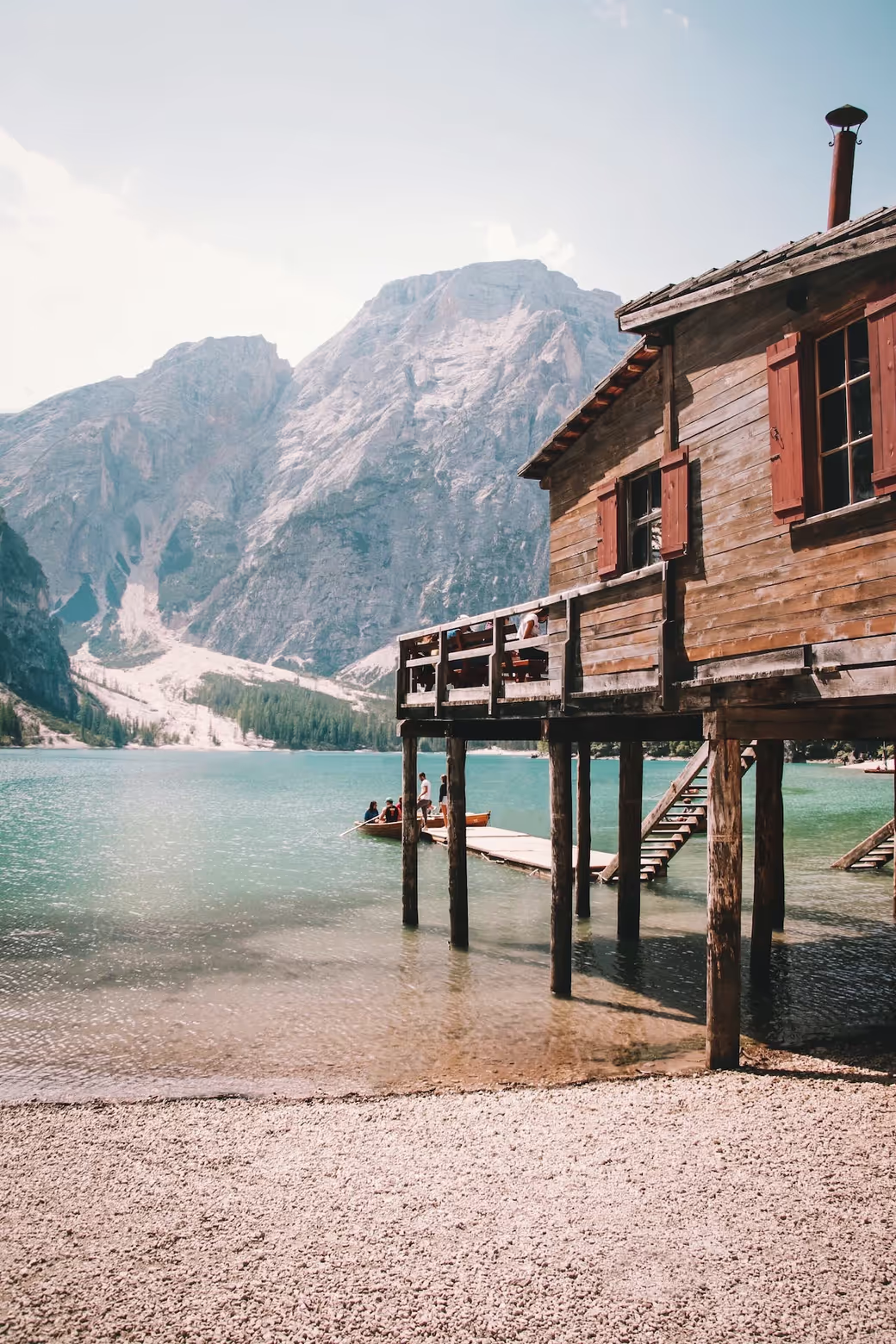
Class 5 wood is specifically intended to be used in direct contact with sea water. It is therefore very useful for marine applications, such as quays, piles or pontoons.
For this last wood class 5, you can find these species:Cumaru
- Ipe
- Azobe
One form, several offers.
- Two minutes, no account
- Direct, no middleman
- Your identity stays private
What is the durability class of a wood?
The durability class of a wood represents the ability of the material to withstand external attack such as pests, fungi and the weather.
The durability of wood is classified according to the EN-350 standard,and it is a paramount parameter. The durability of wood influences the service life of outdoor timber structures. This service life depends mainly on the choice of the wood used and on how well suited it is to local weather conditions.
Durability classes against fungal attack
Fungal attacks are the damage suffered by wood because of various fungi. There are five of them:
-Class 1 wood: this type of wood is very durable. Here you find top-of-the-range woods or hardwoods. They are water-resistant, even watertight. Exotic woods make up the greater part of class 1 woods. These woods are perfectly suited, for example, to your decks. The service life of these wood species is estimated at more than 25 years.
-Class 2 wood: it is considered durable. Hardwoods offering good value for money and heat-treated softwoods are found in this wood class. The service life of these wood species is between 15 and 25 years.
-Class 3 wood: it is described as moderately durable. Here you find hardwoods of lower quality and more sensitive to moisture. As a result, they are prone to distortion. The service life of these woods outdoors is estimated at around 10 or 15 years.
-Class 4 wood: it is slightly durable. In this class are the untreated softwoods. Treating the woods in this category is, however, strongly recommended if you want to use them outdoors. The service life of these woods outdoors is estimated at between 5 and 10 years.
-Class 5 wood: among the types of wood, class 5 wood is not durable. It is therefore strongly advised against using it outdoors. The service life of this wood class is estimated at less than 5 years.
Durability classes against beetles
For this type of attack, which can lead to visual deterioration or to a loss of strength in the material, there are two kinds of wood durability class:
-Wood class D: D for durable.
-Wood class S: S for susceptible. This wood is therefore not durable. Here, the wood has to be treated with a preservative.
Durability classes against termites and marine borers
Some attacks harm the appearance of the wood, but also the safety of people. Wood can deteriorate because of these pests and compromise the safety of people if it is no longer strong enough. That is why there are three wood durability classes in the field of termites and marine borers:
-Class D wood: for durable.
-Class M wood: for moderately durable.
-Class S wood: for susceptible or not durable.
When the risk of termite attack is increased, only the use of durable or moderately durable class wood is permitted without treatment. The choice between the two will be made according to the function you want to give the structure.

What is the treatability class of a wood?
The treatability class of a wood defines the extent to which a liquid can penetrate the wood. This can be useful when you want to apply a product to a type of wood.
Class 1 wood
This wood treatability class is considered treatable. This type of wood is therefore easy to treat; any treatment can penetrate without difficulty.
Class 2 wood
This type of wood is moderately treatable. Complete penetration of the treatment is impossible. This wood can therefore be treated, but it takes more time and the result is harder to obtain.
Class 3 wood
Class 3 wood is poorly treatable. This type of wood proves difficult to treat; you will have to devote time to the treatment without it being a lasting solution.
Class 4 wood
This wood class is described as not treatable. With this wood, it is almost impossible to impregnate it with a product.

The bodies behind wood classification
In France, wood certifications are generally awarded by recognised standardisation and certification bodies.
FCBA (Institut technologique Forêt Cellulose Bois-construction Ameublement, the French technological institute for forestry, pulp, construction timber and furniture)
The FCBA is a French body specialising in research, expertise and certification in the field of wood, forestry and furniture. It plays an active part in setting standards and in certifying wood products.
CSTB (Centre Scientifique et Technique du Bâtiment, the French building research centre)
The CSTB is a French public body. It works in the field of research and evaluation of construction products, including wood. It may be involved in certifying the mechanical and durability performance of wood.
CTBA (Centre Technique du Bois et de l'Ameublement, the French technical centre for wood and furniture)
The CTBA is a technical centre specialising in the field of wood and furniture. It contributes to the standardisation and certification of wood products, particularly as regards mechanical strength and wood use classes.
Qualibat
Qualibat is not specifically dedicated to wood; it is a body that qualifies and certifies building companies in France. Companies certified by Qualibat demonstrate their competence in installing materials, including wood, in accordance with the standards in force.
What future developments are there for wood classes?
The future development of wood classes is likely to be influenced by several factors. Among them are technological advances, environmental concerns, expectations in terms of sustainability and changes in building standards.
Development of new treatments and coatings
Advances in wood treatments could lead to more specific classifications in terms of durability and resistance to environmental factors. New coatings could also improve the resistance of the different types of wood, which would potentially change the wood use classes, but also the durability classes.
Innovation in composite materials
The arrival of new composite materials, combining wood with other substances, could introduce hybrid wood classes, with improved properties that can be used in building a deck.
Incorporation of environmental criteria
Future classifications could incorporate more environmental criteria, responding to the growing demand for sustainable and environmentally friendly building materials.
International standardisation
With globalisation, more international standardisation of wood classes could develop, making it easier to compare and use woods from different regions.
Adaptation to climate change
Wood classes could evolve to respond better to the problems caused by climate change, taking it and variable environmental conditions into account.
Incorporation of artificial intelligence
The use of artificial intelligence could allow real-time monitoring of the performance of wood, thereby allowing classifications based on data recorded in the field.
Developed building standards
Changes in building standards and regulations could influence wood classes, placing the emphasis on stricter standards in terms of durability, safety and performance.
Response to the needs of the construction industry
Wood classes could develop to respond better to the needs of the construction industry, anticipating the requirements of modern and innovative structures.
