
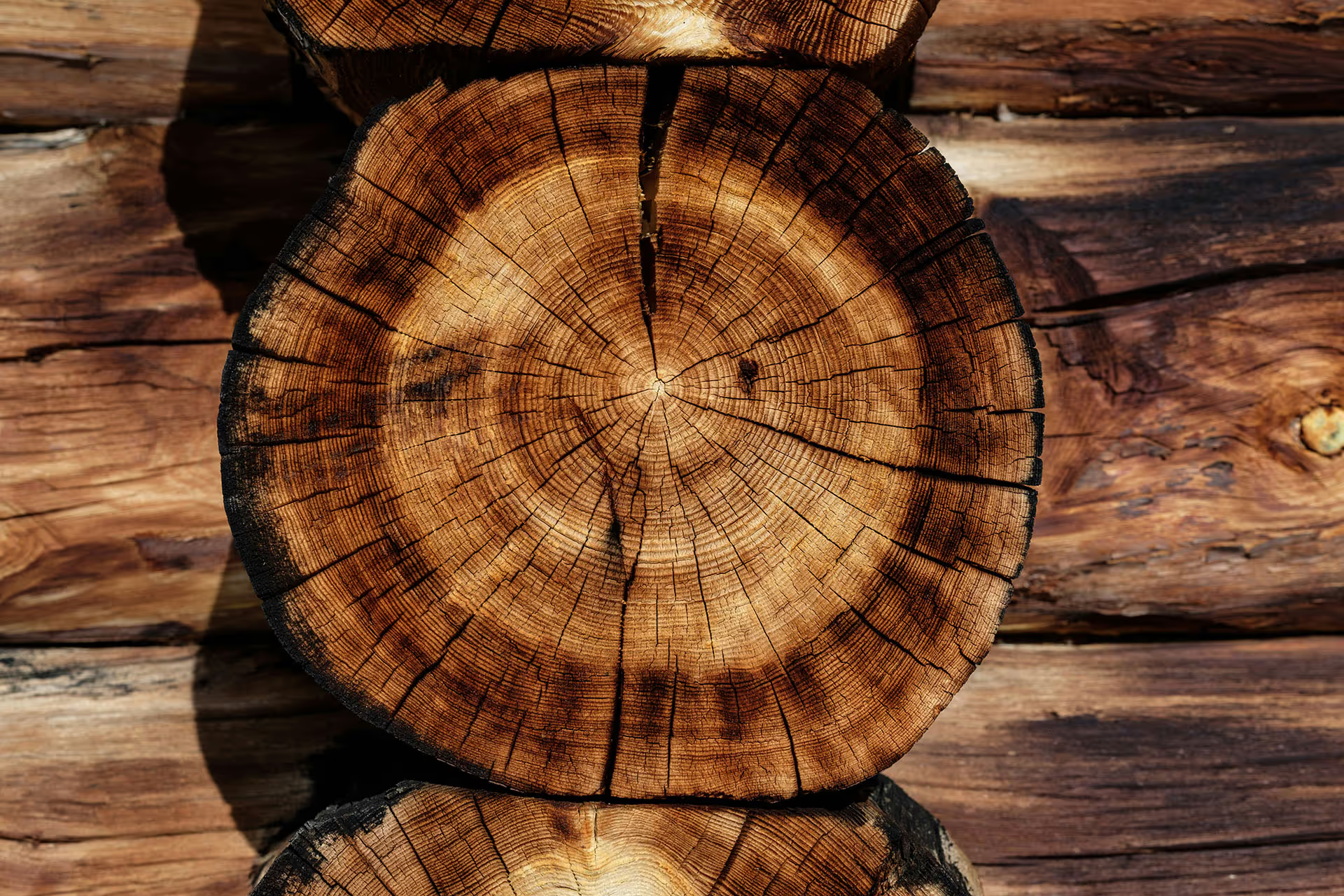
Rot-proof wood is wood that resists water, as well as fungi and insects, and that therefore does not rot. This type of wood, very popular in France, is often used for outdoor projects such as building a deck or garden furniture.
While some wood species are rot-proof by nature, others have to undergo a specific treatment to become so. In order to choose the best wood for your projects, it is essential to inform yourself properly about water-resistant outdoor woods.
Woodpartners explains everything about these hard-wearing woods and gives you the list of rot-proof woods:
- Rot-proof wood in brief,
- What are the characteristics of rot-proof wood?
- What is the classification of the different types of wood?
- List of naturally rot-proof woods,
- How do you make wood rot-proof?

Rot-proof wood in brief
- Rot-proof wood is wood that resists moisture and external attack (fungi, mould, insects and so on.
- Outdoor water-resistant woods have a long service life and need little maintenance,
- There are several rot-proof European and exotic woods : larch, teak, ipe and so on.
- Wood can be treated to become water-resistant.
What are the characteristics of rot-proof wood?
The quality of rot-proof wood is explained by many characteristics:
- Resistance to moisture : rot-proof wood is wood that is highly resistant to water and to the weather. This resistance means it does not deteriorate or rot on contact with moisture (water, damp environments and so on), which makes it particularly suited to outdoor use;
- Resistance to fungi and insects : rot-proof woods are naturally resistant to attack from fungi and insects (such as the wood-boring weevil or termites). There is therefore no need to treat them chemically to protect them;
- Good durability : rot-proof woods have a very long service life, which can range from 25 to 50 years;
- Little maintenance: outdoor water-resistant woods, thanks to their resistance, do not need much maintenance; regular cleaning with soapy water can be enough.

What is the classification of the different types of wood?
Woods are classified from 1 to 5, according to their resistance to water and to the weather. From class 4 upwards, we can speak of rot-proof woods.
Here is a summary table of the different wood classes and their uses:
|
Class |
Use |
Moisture content |
Description |
|
Class 1 |
Indoors |
< 20 % |
Dry wood used indoors, with a moisture content below 20%. |
|
Class 2 |
Roof frames |
< 20 %, occasionally > 20 % |
Dry wood that may occasionally come into contact with a moisture content above 20%. |
|
Class 3 |
Outdoors (cladding) |
Frequently > 20 % |
Wood that may be in frequent contact with moisture. Used outdoors, in particular for cladding, because it resists rain. |
|
Class 4 |
Decks, outdoor furniture |
Immersion in fresh water |
Wood that is not troubled by immersion in fresh water. Used for decks and outdoor furniture. |
|
Class 5 |
Seaside structures |
Immersion in salt water |
Wood resistant to salt water, used for seaside structures. A treatment is needed to reach this class. |

One form, several offers.
- Two minutes, no account
- Direct, no middleman
- Your identity stays private
List of naturally rot-proof woods
There are several wood species that are naturally rot-proof and water-resistant. The best known are the exotic woods such as teak, ipe or red cedar:
- Teak : it is one of the best-known rot-proof exotic woods for its appearance and its very high resistance to water. Coming from Asia, teak is often used for making garden furniture or boat decks, and has beautiful warm colours;
- Ipe: a rot-proof wood from South America, it is a very dense and very hard-wearing wood with brown colours, generally found on outdoor decks or beside a swimming pool;
- Western red cedar : this outdoor water-resistant wood has strong insulating power and very good durability. It is often used for decks, cladding and fence boards;
Although these exotic woods are extremely hard-wearing, being imported from abroad they therefore have a high environmental impact.
If you would like to enjoy rot-proof wood in an environmentally responsible way, there are several very hard-wearing European woods that are naturally rot-proof, such as black locust, larch, and also oak and sweet chestnut.
- Black locust : also known as false acacia, black locust is one of the European woods most resistant to rot. Renowned for its resistance to water and its great longevity, its timber is used for deck boarding or exceptional cladding;
- Larch : this outdoor water-resistant wood is often used for building garden sheds ;
- Oak and sweet chestnut : although less durable than some rot-proof exotic woods, they have good natural resistance to water. They should, however, not be immersed, so as to optimise their service life.

How do you make wood rot-proof?
While some woods are not naturally rot-proof, thanks to a treatment they become more resistant to water and to external attack. There are different types of natural and chemical treatments for making wood rot-proof:
- Natural heat treatments,
- Chemical treatments,
- The application of appropriate finishes.
Natural heat treatments
There are two methods of natural heat treatment for wood:
- High-temperature treatment : it consists of baking the wood at a high temperature (between 170° and 240°) in order to destroy the nutritive components of the wood that attract insects and fungi
- Oil-heat treatment : the wood is heated at a low temperature (about 150°) with the addition of vegetable oils that penetrate and replace the water the wood contained, so as to make it rot-proof.
Chemical treatments
This chemical treatment, called pressure treatment, consists of injecting a preservative by placing the wood in a large pressurised tube. With this process, the product penetrates the wood well, like a sponge soaking up water, which gives rot-proof wood that is treated right through to the core.
The application of appropriate finishes
Applying suitable finishes, such as oils and varnishes, can also help to extend the service life of the wood by protecting it against moisture and UV.
You now know everything about rot-proof woods. Whether you choose a naturally rot-proof wood or a wood treated for better water resistance, choosing a hard-wearing wood gives your outdoor projects high-quality materials and great longevity.