
Pressure treatment is one of the central processes of the timber industry. Wood, the noble and versatile material par excellence, is very often subject to damage caused by time, by insects and by weather conditions, and making it more hard-wearing is absolutely essential.
Thanks to the pressure treatment that we are going to dissect in this article, pressure-treated wood becomes more durable and hard-wearing, giving it multiple possible uses.
Discover, in this complete guide, the definition of pressure treatment and the full process. We will cover the following points:
-
What is pressure treatment? What is pressure-treated wood?
-
What are the stages and the variations of pressure treatment?
-
Where do pressure treatment operations take place?
-
What are the standards and labels for pressure treatment?
-
What are the effectiveness criteria for treated wood?
-
What are the advantages and drawbacks of pressure treatment?
-
Is pressure treatment dangerous?
-
Is pressure-treated wood sensitive to the elements?
-
What are the differences in shade of pressure treatment?
-
What is the link between the wood class and pressure treatment?
-
Other questions about the pressure treatment of wood
What is pressure treatment? What is pressure-treated wood?
Pressure treatment is a process consisting of injecting a preservative into wood, making it possible to render it more durable and hard-wearing. The treatment is carried out in an autoclave, that is to say a sealed pressurised tube, able to withstand high pressures, in which the wood is placed.
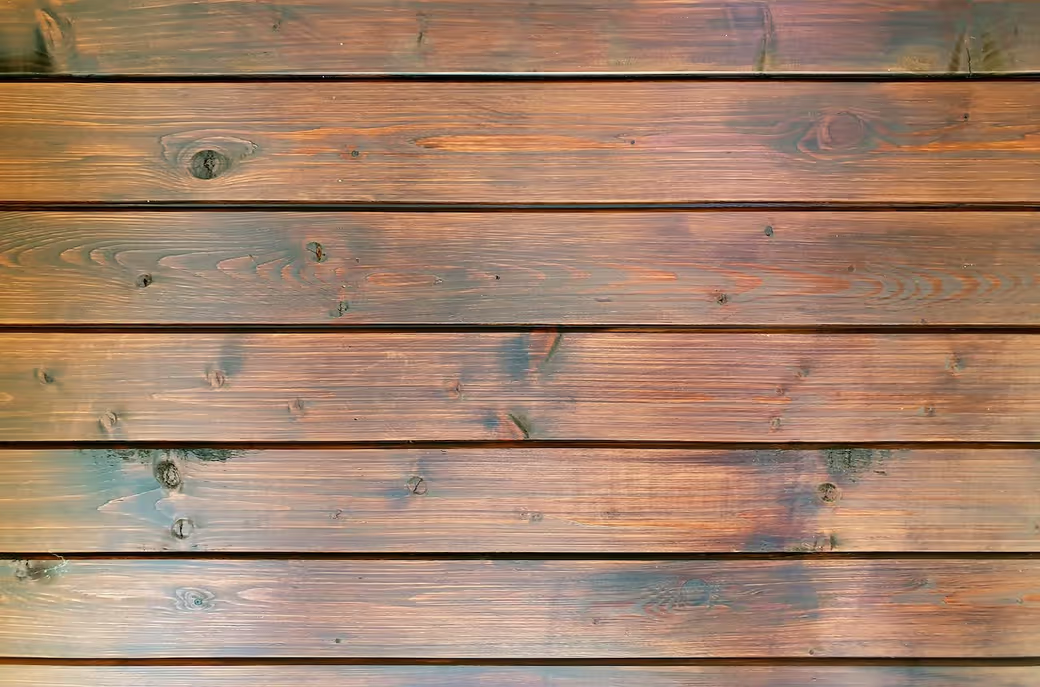
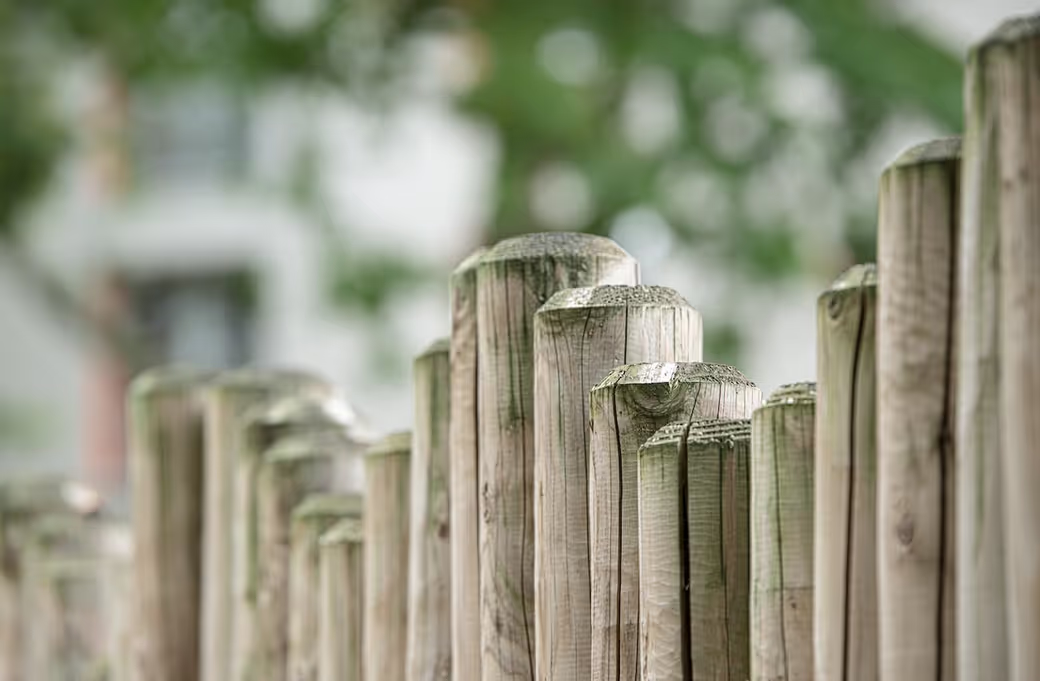
The treated wood is called pressure-treated wood, and its service life can be extended by decades thanks to the process. It will be more resistant to insect attack, to fungi and to decay, and can therefore be used outdoors for many purposes: cladding, fencing, decking and so on.
The pressure treatment of wood is seen as a major technology in the current context. Since forest resources are precious and construction requirements ever more rigorous, this treatment therefore represents an innovative way of extending the service life of wood.
What are the stages and the variations of pressure treatment?
The pressure treatment process generally takes place in 6 stages: preparing the wood, the vacuum phase, injecting the chemicals, pressure and soaking, the treatment time, and draining and drying.
More details on the stages of pressure treatment:
-
Preparing the wood : the wood is prepared by removing the bark, the knots and other imperfections that could hinder the treatment process.
-
The vacuum phase : the wood is placed in the autoclave, and the air is drawn out to create a vacuum.
-
Injecting the chemicals : a mixture of preservative chemicals is then injected into the autoclave. These chemicals can include fungicides and insecticides that penetrate deep into the wood.
-
Pressure and soaking : once the vacuum has been created and the chemicals injected, the pressure inside the autoclave is increased. This pressure forces the chemicals into every part of the wood. Some treatments can also involve soaking the wood in the solution.
-
The treatment time : the wood remains under pressure for a set period, allowing the chemicals to penetrate thoroughly and to treat the wood.
-
Draining and drying : once the treatment process is finished, the excess solution is drained off. The wood is then dried to remove any remaining moisture.
The variations of pressure treatment
7 variations of pressure treatment are used in the timber industry: traditional pressure treatment, vacuum-pressure-vacuum treatment, double-vacuum treatment, high-pressure treatment, low-pressure treatment, alternating pressure treatment, vapour-phase treatment and pulsed-vacuum treatment.
A look back at these different processes:
-
Traditional pressure treatment : this is the most commonly used process for guaranteeing deep penetration of the chemicals.
-
Vacuum-pressure-vacuum treatment (VPV): it involves two vacuum stages to remove the excess liquid and to encourage better retention of the chemical.
-
Double-vacuum treatment : it aims to improve the penetration of the chemicals by removing air and excess liquid.
-
High-pressure treatment : it is used to speed up the impregnation process of the chemicals.
-
Low-pressure treatment : it is useful for specific applications where high pressures could damage the wood.
-
Alternating pressure treatment : it offers better retention of the chemicals and more even penetration into the wood.
-
Vapour-phase treatment : it allows better distribution of the chemicals in the wood.
-
Pulsed-vacuum treatment : it encourages better penetration.
Each of these variations has its advantages and its drawbacks. The choice of process used will often be made according to the nature of the wood, the intended application and environmental requirements.
The types of chemicals used and the specific features of the pressure treatment process can vary according to local standards and the requirements of the project. The industry continues to develop new methods to improve the efficiency and the durability of pressure treatment.
Where do pressure treatment operations take place?
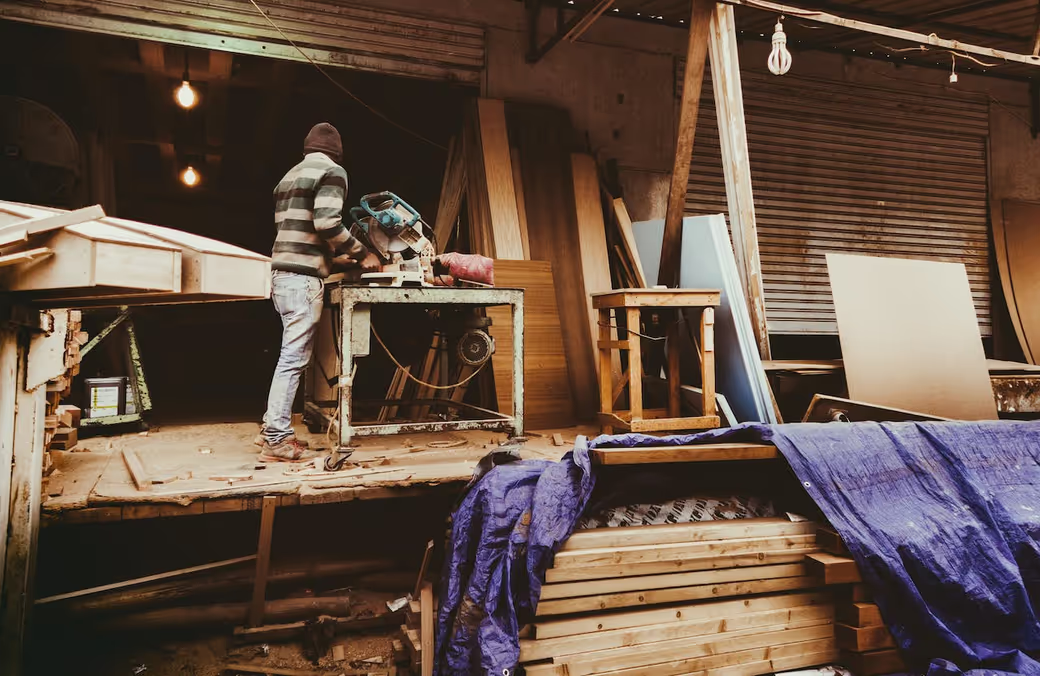
Pressure treatment operations are generally carried out in specialist facilities, also called wood treatment plants or wood preservation plants.
These facilities are equipped with autoclaves, treatment tanks and other equipment needed to carry out the process efficiently and in compliance with wood preservation standards.
Here are a few places likely to be equipped with autoclaves:
-
Wood treatment plants: generally equipped with autoclaves of different sizes to treat varying quantities of wood;
-
Specialist industrial facilities;
-
Some building material production centres may have their own pressure treatment facilities built into the manufacturing process;
-
Research and development centres in the field of wood preservation may also have pressure treatment facilities.
The location of pressure treatment facilities can vary according to local regulations, environmental standards and the needs of the industry. These facilities must often comply with strict standards to ensure the safety of workers, the protection of the environment and compliance with wood preservation standards.
What are the standards and labels for pressure treatment?
Pressure treatment is governed by various standards and labels that have evolved over time. Among them are the Biocides Directive "98/8/EC", the NF EN 15228 standard and the CTB B+ mark.
Standards, such as those set by the American Wood Protection Association (AWPA) in the United States or the European Committee for Standardization (CEN) in Europe, establish strict guidelines on the safety, the effectiveness and the environmental impact of wood treatments.
The Biocides Directive "98/8/EC"
This directive was put in place to regulate certain poorly controlled uses in wood treatments. It made it possible, among other things, to ban hazardous substances such as arsenic.
The "CE" marking, which you can see at the end of the title of this directive, is determined by the NF EN 15 228 standard. It validates the resistance requirements against certain pathological agents.
The NF EN 15228 standard
This standard concerns the treatment of wood and governs the "CE" marking that appears in the Biocides Directive "98/8/EC". It specifies the requirements for wood treated with a preservative, in order to protect it from attack by biological agents.
The CTB B+ mark
This quality label is awarded to industry professionals who undertake to comply with the standards in force. It is the FCBA (Institut technologique Forêt Cellulose Bois de construction Ameublement, the French technological institute for forestry, pulp, construction timber and furniture) that awards this quality mark.
This label meets the requirements of the Biocides Directive "98/8/EC" and attests to the performance of the wood impregnation process. It checks various criteria, such as the consistency of the treatment quality. The characteristics of the wood and its performance are thus maintained over time, while respecting the environment and health.
One form, several offers.
- Two minutes, no account
- Direct, no middleman
- Your identity stays private
What are the effectiveness criteria for pressure-treated wood?
Three effectiveness criteria exist for pressure-treated wood: retention, penetration and the SP retention of class 4 pressure-treated wood:
-
Retention : this is the quantity of product or active substance that is fixed in the treated wood.
-
Penetration : there are 5 penetration level requirements, from NP1 to NP5. These levels express the degree of penetration of the product into the wood, ranging from 3 mm for NP1 up to the whole of the sapwood for NP5.
-
SP retention for class 4 : this CTB B+ specification applies to demanding exposure conditions. Class 4 SP gives reinforced protection, extending the service life of the material by more than 15 years. This can be very useful for a pressure-treated wood earth retaining structure or for cladding, for example.
What are the advantages and drawbacks of pressure treatment?
Pressure-treated wood has several advantages, such as durability, protection against rot, dimensional stability, versatility, resistance to insects and compliance with standards. The use of chemicals can, however, have an impact on the environment.
The advantages of pressure treatment
Among the advantages of pressure treatment, the following points can be mentioned:
-
Durability : pressure treatment significantly increases the service life of wood by making it more resistant to pathogens, to insects and to weather conditions. This is the case with beech, for example, whose durability will increase thanks to this treatment, but also with maritime pine and ayous wood.
-
Protection against rot : a pressure-treated board is protected against rot, which is particularly important for structures in contact with the ground or exposed to damp conditions.
-
Dimensional stability : pressure-treated wood has improved dimensional stability, which reduces the swelling and shrinkage linked to variations in humidity.
-
Versatility : pressure-treated wood can be used in various applications, including building decks, fences, external coverings, fence posts and other outdoor structures.
-
Resistance to insects : it offers effective protection against wood-boring insects such as termites.
-
Compliance with standards : pressure-treated woods are often compliant with the performance standards set by the regulatory bodies.
Is pressure treatment dangerous?
Pressure treatment can be dangerous, to a certain extent, for the environment. It uses chemicals that can be a source of environmental concern. Its use should therefore be carefully considered according to the expectations of the project concerned, local regulations and environmental considerations.
Other wood treatment alternatives, such as heat treatments or oil-based wood preservatives, can also be considered according to preference, so as to allow the recycling of the wood.
Is pressure-treated wood sensitive to the elements?
Pressure-treated wood, such as class 4 pressure-treated pine, remains a living material. Regular moisture or heat in dry weather can therefore transform it, making it swell or shrink. Care must be taken, because cracks of varying size can appear.
This phenomenon does not, however, alter the quality and the strength of the wood if it has been treated correctly. Nevertheless, it is better to avoid storing treated wood in a place where water sits, so as to avoid any potential problem. If you have no choice, remember to install a drainage system, which will be very useful in minimising the risks.
What are the differences in shade of pressure treatment?
Pressure-treated wood can take on different colourings depending on the products injected during the treatment, giving a shade that is: green, brown, colourless, grey, black or Douglas pink.
-
Green : this is the most widespread colour. This colour comes from the copper salts present in the chemical formula of the treatment. The metal, as it oxidises, takes on this colour. This colour allows a certain harmony for outdoor use with its verdant character. It is fairly emblematic of fences or earth retaining structures.
-
Brown : this colouring, also called bronze, is obtained by adding a brown colouring additive to a base of biocides and copper. It thus tints the wood a warmer colour. The same active ingredients, and therefore the same effectiveness, are to be noted for these first two colourings.
-
Colourless : this shade is one of the new colours that have appeared to meet current trends in architecture. Copper is absent from this formula, so as to avoid the greenish colour. This colouring is most often used for façade elements.
-
Grey : this colour is also recent and used for façade cladding, for example. It has a copper-free formula with a smaller quantity of black pigments added, so as to obtain grey.
-
Black : like the previous two, the formulation used contains no copper but black pigments to tint the wood. These three new shades offer reduced effectiveness, which means the wood cannot be given a class 4 level of protection.
-
Douglas pink : this colouring protects the Douglas fir wood species while keeping its pinkish shade.
What is the link between the wood class and pressure treatment?
There are 5 wood classes, going from 1 to 5 according to their suitability for indoor or outdoor use. Thanks to pressure treatment, some class 3 woods can reach class 4, that is to say a use class above their original class.
A class 3 wood usable outdoors but without direct contact with the ground can thus become a class 4 wood, and therefore be used in more demanding conditions, for a deck or a fence for example.
Pine, for example, which is rich in sapwood, has a natural durability of class 3. If you want to use it for a more demanding outdoor application (contact with the ground in particular), it will have to be treated to become class 4 pressure-treated pine. Maritime pine and Scots pine, the woods most used for building decks, are very often pressure treated, making it possible to create decks or outdoor structures with a service life of more than 15 years.
Class 1 and 2 woods are not, on the other hand, pressure treated, but treated by spraying or dipping, for indoor use only. Other naturally durable woods do not need pressure treatment, such as black locust wood or exotic cumaru wood.
Other questions about the pressure treatment of wood
Which woods are most often given a pressure treatment?
The woods most often given a pressure treatment are softwoods. They are not naturally rot-proof and therefore have to be treated in order to be used outdoors.
This is the case, for example, with soft woods such as pine, fir and spruce. They are frequently treated because of their high risk of decay. Harder species, such as oak, can also benefit from this treatment, however, particularly for applications requiring considerable resistance, such as outdoor use.
Which chemicals are used in pressure treatment?
In pressure treatment, the chemicals commonly used included copper, chromium and arsenic salts. Since the Biocides Directive "98/8/EC", however, arsenic has been banned.
Because of environmental concerns, more environmentally friendly alternatives, such as micronised copper treatments, are gaining in popularity.
How does pressure treatment allow more sustainable practices in the timber industry?
Pressure treatment extends the service life of wood, thereby reducing the need to cut down new trees to replace deteriorated wood. This contributes to more sustainable and responsible forest management.
What are the new trends in pressure treatment?
The innovations include the use of more environmentally friendly chemicals, more efficient treatment processes and the search for new methods. Among them is the use of natural oils, for example, to respond to ever more pressing environmental concerns.