
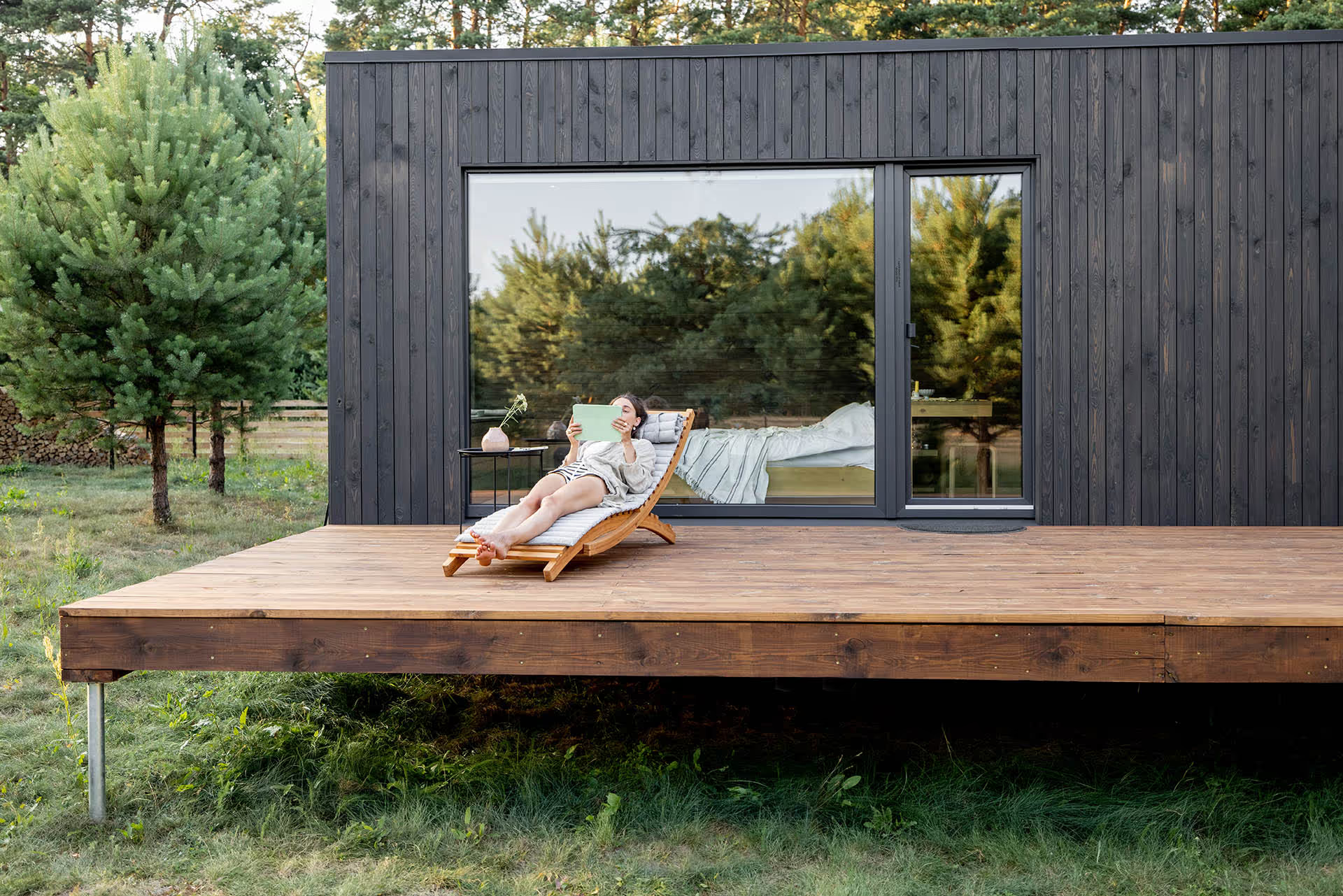
Good ventilation of a wooden deck is very important, guaranteeing not only the durability of the deck, but also your safety and your comfort. Once your deck is laid, you therefore have to make sure that the air can circulate freely and that moisture does not build up.
Would you like to know how to ensure the ventilation of your wooden deck? WoodPartners explains everything about deck ventilation and gives you its advice for ventilating your outdoor space properly.
- What is the ventilation of a wooden deck for?
- What are the risks of a poorly ventilated deck?
- How do you ventilate your wooden deck properly?
- How do you put the ventilation of your deck into practice?

What is the ventilation of a wooden deck for?
The main aim of ventilating a wooden deck is to prevent moisture from building up under the deck. Good ventilation allows the air to circulate freely, thereby removing the moisture that has built up after bad weather, an excess of water, or after the garden has been watered. Deck ventilation is generally ensured with ventilation shims or a ventilation grille.
What are the risks of a poorly ventilated deck?
Ventilating your deck properly is just as important as the wood species chosen. A poorly ventilated wooden deck risks deteriorating quickly, because if moisture builds up the wood will distort and rot, insects, wood-decaying fungi and mould will appear and damage the wood, and the deck will have to be maintained frequently:
- Rotting of the wood: standing moisture under the deck can cause the wooden boards to rot, not only reducing the service life of the deck, but also making the deck dangerous to use;
- The spread of mould: a damp environment encourages the growth of mould, which can damage the wood and, above all, cause health problems (allergies or breathing difficulties);
- Insect infestations: wood-boring insects, such as termites and longhorn beetles, are attracted by damp environments and can cause considerable damage to your wooden deck if ventilation is poor;
- Distortion of the wood: excessive moisture can cause the decking boards to swell and distort, affecting the appearance and the use of your outdoor space;
- Increased maintenance: while wooden decks are generally very durable, a poorly ventilated deck will require more frequent and more expensive maintenance work, such as replacing damaged boards or regular treatment against mould and insects.

One form, several offers.
- Two minutes, no account
- Direct, no middleman
- Your identity stays private
How do you ventilate your wooden deck properly?
To ventilate your wooden deck, an air circuit has to be created under the boards of the structure. The DTU 51.4 standard recommends ventilation of 1/50th of the area of your deck. Ventilation therefore depends on the size of your wooden deck. For example, for a wooden deck of 10 m², at least 0.2 m² of ventilation will be needed.
To allow the air to circulate under your deck, you have two options:
- You leave openings on the sides of your wooden deck to let the air pass underneath it.
- You prefer all the sides of your deck to be closed, in which case you have to use aluminium ventilation grilles.

What elements should be taken into account for good deck ventilation?
To ensure optimal ventilation when laying your wooden deck, you have to consider several parameters that are important to its installation:
- The space under the deck: leaving enough space, a minimum of 10 cm between the ground and the decking boards, is essential to allow good ventilation;
- Ventilation shims: ventilation shims are used to adjust the structures of the joists. The shim is important for correcting the unevenness of the ground and for allowing good air circulation between the ground and the deck;
- Ventilation grilles: if you choose a closed deck, you will have to fit ventilation grilles on the sides of the deck or directly on the boards, so that the air can circulate;
- Maintenance: regular cleaning of the deck prevents the build-up of debris that could block the ventilation grilles and reduce the effectiveness of the ventilation.
The ventilation of a wooden deck is essential to the durability and the appearance of your deck. By following this advice and carrying out a quality installation, you will ensure a long life for your deck while enjoying a healthy and pleasant outdoor space. For more advice on wooden decks, see our articles on WoodPartners.