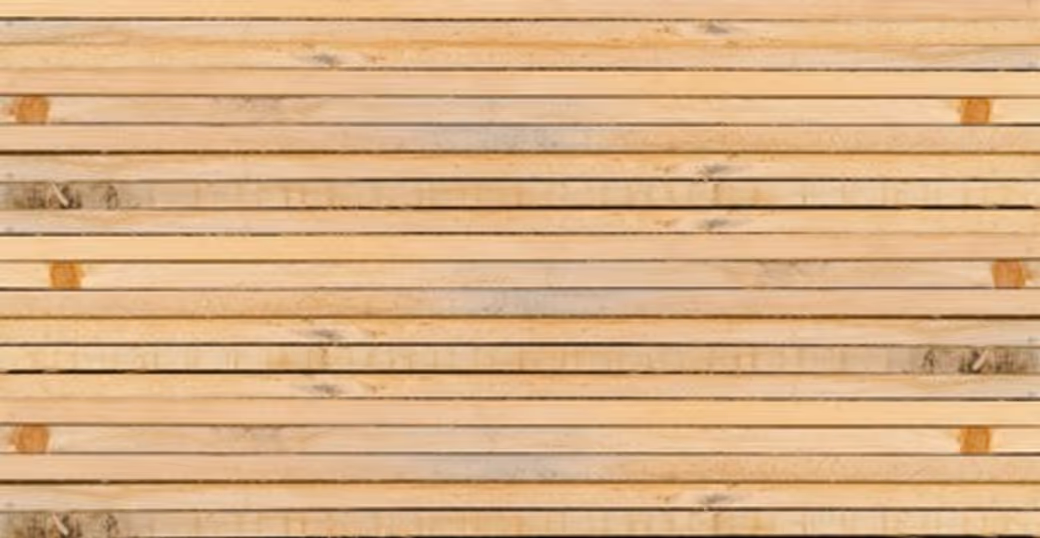
Ash is particularly supple and strong, which makes it an indispensable wood in many fields such as interior joinery or cabinetmaking.
Ash wood was used to make javelins and spear shafts in Antiquity and in the Middle Ages. Today it is still in high demand because of its physical characteristics, which are attractive for construction.
Discover everything you need to know about ash wood in the following sections:
-What is ash wood?
-What are the characteristics of common ash?
-Ash: what is it used for?
-How do you maintain ash wood?
-Other questions about ash
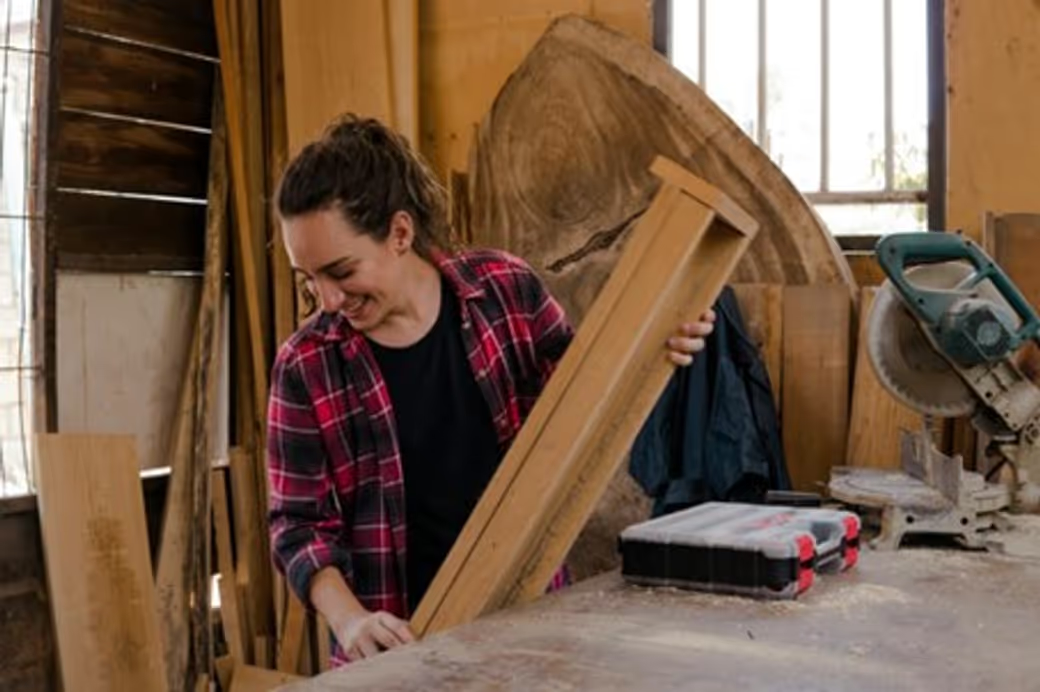
What is ash wood?
Ash wood comes from Europe, Asia and North America. Commonly called ash, it belongs to the Oleaceae family and its scientific name in Latin is "Fraxinus".
Ash in fact covers between 45 and 65 species of deciduous or evergreen trees. Common ash, or "Fraxinus excelsior", is one of them and is found mainly in Europe.
Ash wood covers less than 3% of the French forest; it prefers fairly damp, rich soils exposed to the sun. What is more, it also adapts to extreme temperatures down to -17°. Nevertheless, spring frosts are an enemy of ash wood, because they kill the terminal buds.
What is more, it is sometimes called tall ash because of its height. It can reach 45 metres in height thanks to its fast growth. Solid ash takes different names depending on the country :
-In France : Frêne;
-In Germany : Esche;
-In Spain : Fresno;
-In Italy : Frassino;
-In the United Kingdom : Ash.
One form, several offers.
- Two minutes, no account
- Direct, no middleman
- Your identity stays private
What are the characteristics of common ash?
Common ash has various characteristics such as distinct sapwood and a creamy white colour that can yellow under the effect of light. What is more, ash wood is heterogeneous and dense, which makes it a medium-hard wood. Its grain is coarse and its straight fibre direction can sometimes wave.
Description of ash
-Colour of ash wood : creamy white, yellows and darkens in the light;
-Ash leaf : large, made up of 7 to 15 oval leaflets;
-Bark of ash : greyish beige and slightly cracked;
-Sapwood (the soft, light-coloured part of the wood that forms each year under the bark): not distinct;
-Grain : coarse;
-Grain direction or fibre orientation : straight, sometimes wavy;
-Interlocked grain or direction contrary to the axis : absent.
Description of the ash log
-Diameter of the ash tree : between 40 and 100 cm;
-Preservation in the forest : average, treatment is recommended.
The physical properties of common ash
-Density of ash : between 600 and 850 kg/m3;
-Hardness (at 12% moisture content with 1 MPa = 1 N/mm²) : 5.1;
-Growth : fast;
-Volumetric shrinkage coefficient : 0.48%;
-Total tangential shrinkage (TS): 9.6%;
-Total radial shrinkage (RS): 5.7%;
-Ratio between TS and RS : 1.7;
-Fibre saturation point : 32%;
-Stability in service : moderately stable.
The natural durability and treatability of ash wood
-Resistance to fungi : class 5, not durable;
-Resistance to dry wood insects : class D, durable;
-Resistance to termites : class S, susceptible;
-Treatability : class 2, moderately treatable;
-Wood class: use class 1, for indoor use.
Drying ash
-Drying speed : normal to slow;
-Risk of distortion : high;
-Risk of case-hardening (accidental hardening): no particular risk;
-Risk of checks (splits): high;
-Risk of collapse (waviness, separation of the wood): no particular risk.
It is important to note that the risks of distortion and of checks become low when natural drying is carried out.
Sawing and machining ash wood
-Blunting effect : normal;
-Sawing teeth : stellite-tipped teeth;
-Machining tools : tungsten carbide;
-Suitability for peeling : good;
-Suitability for slicing : good.
Assembling ash
The assembly of ash wood is done in two steps:
-Nailing and screwing : good holding, with the need to make pilot holes;
-Gluing : satisfactory; a slightly acidic and porous wood, so favour adhesives with a fairly high viscosity for heterogeneous woods.
As regards the finishes, sanding gives excellent finished surfaces and takes the stain well. For varnishing, a grain filler is required because of the diameter of the vessels.
Ash: what is it used for?
Ash wood is renowned for its suppleness and its impact resistance, which allow it a variety of uses, from building a staircase to sports equipment. Indeed, there are various advantages and disadvantages of ash to know about if you are to use it wisely.
So, are you wondering what to do with common ash? We give you a few examples of use linked to its advantages and disadvantages :
-Ash wood for interior joinery: it benefits from good workability suited to various types of construction. It bends easily because of its suppleness while also having good hardness. These two characteristics combined are fairly rare in woods of this category, which makes ash a favoured choice for interior joinery work.
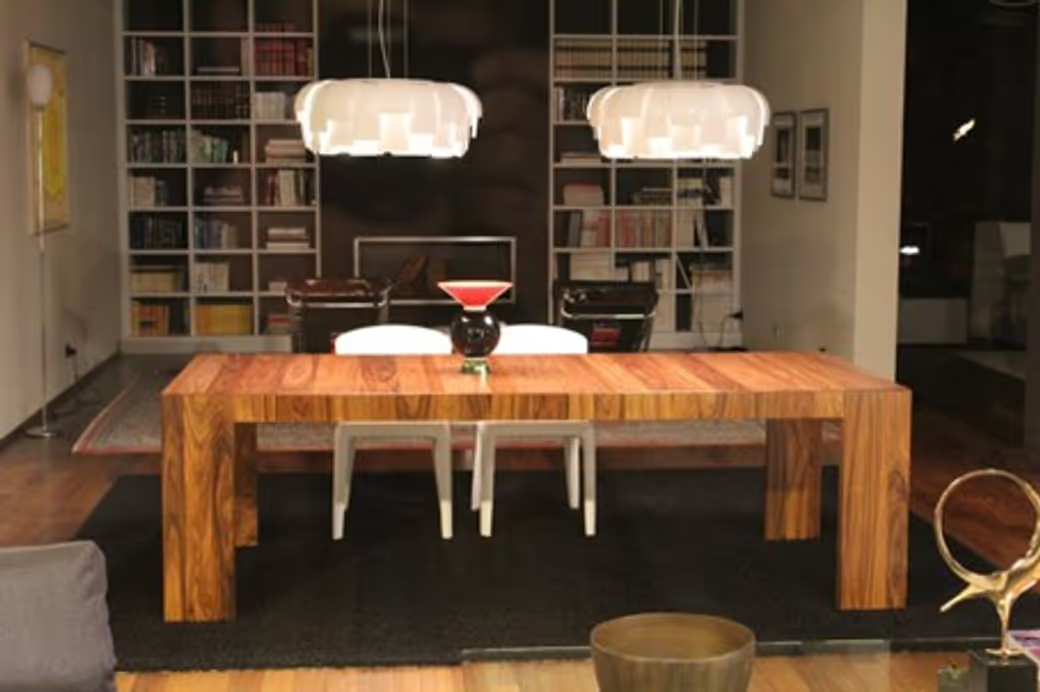
-Ash for cabinetmaking : this wood has a smooth and permeable surface, which allows it to take varnish, colour or paint. It is also robust and can therefore easily be used for building ash furniture or floors. For the latter, however, you will need to remember to protect the wood so as to avoid stains. Ash wood can show early decay and therefore requires regular maintenance, mainly for household items.
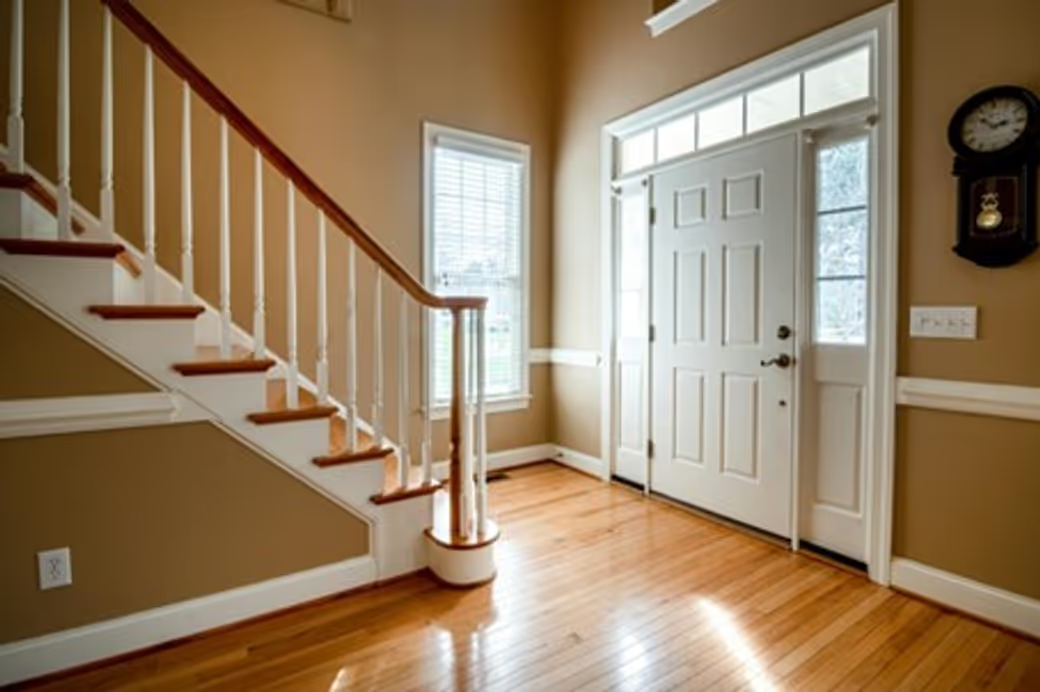
-Ash wood for building staircases : it is easy to work, whether for gluing, polishing or indentation. What is more, common ash wears down only with difficulty and therefore ensures good longevity for uses such as indoor staircases.
-Ash for sports equipment : this species has high impact resistance and considerable scope for bending, which gives it major assets for making items such as skis, sledges or parallel bars, for example.
-Ash wood for turned items: it is a very robust material with the suppleness needed for making small tools with complex shapes. What is more, since ash resists vibration, it is the ideal species for making handles for DIY tools.
Come and discover the ash wood products available at WoodPartners, such as an ash deck from FelixWood or ash cladding from LDCWood.
How do you maintain ash wood?
Ash wood requires a certain amount of maintenance, both in its raw state and once processed. In its raw state, ash can be given a pressure treatment, like Landes pine, for example, to avoid decline or deterioration caused by micro-organisms such as fungi.
However, once it has been processed (ash furniture, flooring, worktop and so on), ash wood requires regular and meticulous maintenance. We therefore advise you to use natural oils to protect it.
Finally, for the maintenance of thermally treated ash, you simply need to go over it with a low-pressure washer once a year if the greyish shade does not bother you. If you want to preserve the natural shade of the ash wood, however, you will have to use a saturator, to be applied once or twice a year, or a wood brightener if you have waited too long.