
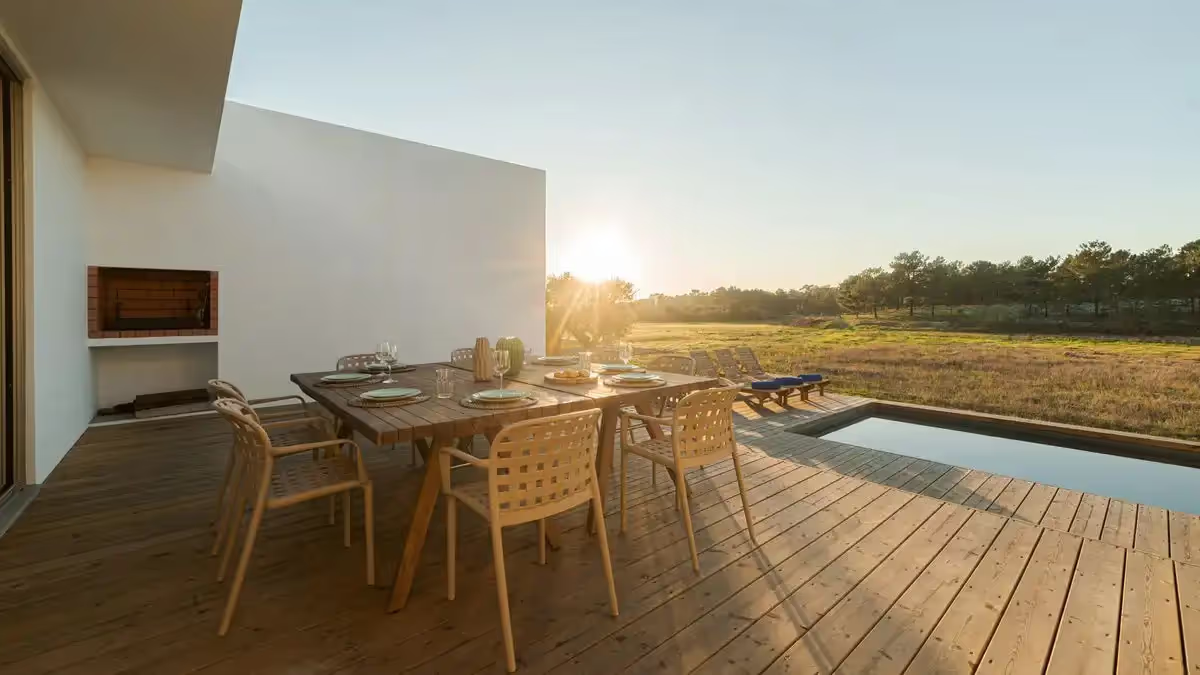
Wood is a natural material, warm, durable and elegant for designing an outdoor deck. It provides an authentic and timeless look, but it is also a layout that withstands time and wear very well.
There are many wood species available, and choosing the best wood for your deck is essential to create an elegant space designed to withstand time and the elements. Durability, price, intended use and maintenance—WoodPartners explains everything so you can make the right choice for your project and get the deck of your dreams.
Which wood to choose for a deck in summary
-
For a durable outdoor deck, at least a Class IV wood is essential. Class V is essential for extreme environments such as seaside areas or very humid zones.
-
The best wood for a deck depends on the balance between durability, price, use and aesthetics.
-
European woods offer good value for money, while exotic woods guarantee maximum longevity with little maintenance.
-
Composite wood and modified woods are technical alternatives that help reduce maintenance while ensuring good weather resistance, provided you choose sufficiently high-quality products.
-
Good ventilation, an appropriate installation method (pedestals or joists) and a stable base are essential to ensure the deck’s durability over time.
Which wood class for a sturdy deck?
The use class determines a wood’s ability to resist moisture and biological attacks (insects, fungi). Wood resistance to water determines its stability over time and is the first technical criterion to check before any purchase, as it guarantees that the wood is suitable for heavy-duty outdoor use.
The European standard defines 5 use classes for wood, including 3 higher classes suitable for a deck :
-
Class 1 and 2 are recommended for indoor use or under cover, because wood in these classes does not tolerate moisture well if it exceeds 20%.
-
Class 3: Class 3 woods must be sheltered from direct weather. They can be used for raised and well-ventilated installations, but are not suitable for direct contact with the ground.
-
Class 4 : this is the standard for a classic wooden deck, exposed to the elements and in permanent contact with fresh water. A Class 4 wood resists prolonged moisture without degrading.
-
Class 5 : woods in these classes are the most resistant for extreme environments and are essential for seaside decks or submerged structures such as pontoons. For a deck with heavy use, we recommend at least a Class IV wood.
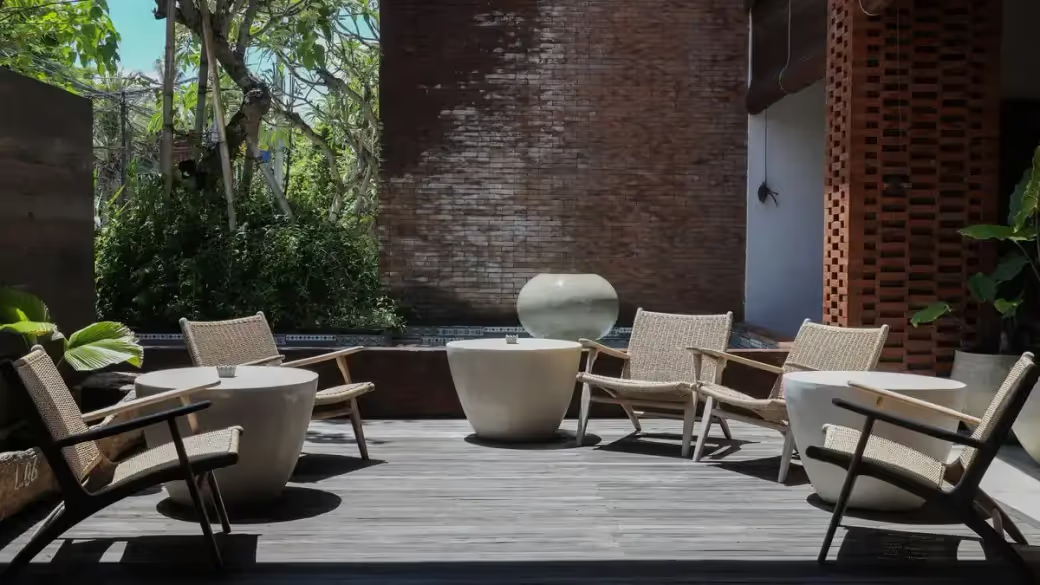
What is the best wood for a deck?
The best wood for a deck will be the one that is the most resistant, the most durable, but also the one that best matches your project in terms of price and aesthetics. To make the right choice, you need to distinguish different wood species, which refer to the tree species the wood comes from (pine, oak, ipe, etc.).
There are 4 major families of wood species with their own characteristics: density, moisture resistance, color and durability :
-
European woods
-
Exotic woods
-
Composite woods
-
Modified woods
European woods
European woods are softwoods from conifers, recognizable by their light shades. They are a preferred choice for their good value for money and their low environmental impactthanks to short supply chains. Among the European wood species suited to heavy-use decks, four stand out in particular:
-
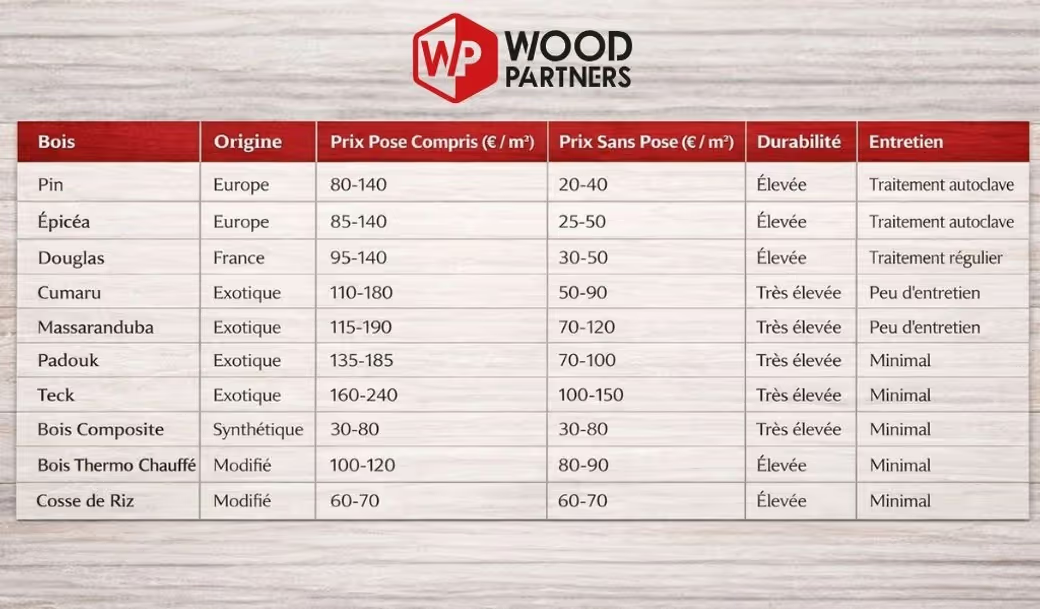
Pressure-treated pine (autoclave) or treated pine : this is Scots pine treated by injecting a chemical product that makes it rot-resistant, i.e., resistant to rot and fungi. It is the most economical species on the market with a lifespan of 10–15 years (after pressure treatment) for an average price of €80–140/m² including installation.
-
Douglas fir : this species is grown in France and has a pinkish hue with a lifespan of about 15 years. It is also a wood with good value for money, ranging between €95–140/m².
-
Larch : it stands out for its exceptional density among softwoods, making it very durable and naturally rot-resistant. It has a fairly light tone, an average lifespan of 20 years and a price between €100–150/m².
-
Black locust or false acacia : it is a wood that rivals the resistance of exotic woods, earning it the nickname “the most resistant hardwood in Europe.” Its characteristics and popularity have made it quite expensive, with a price between €120–180/m² including installation.
Our advice: pressure-treated pine is a popular choice for decks due to its good value for money and durability. It is recommended to use treatment and protection products to extend the lifespan of the wooden deck.
Exotic woods
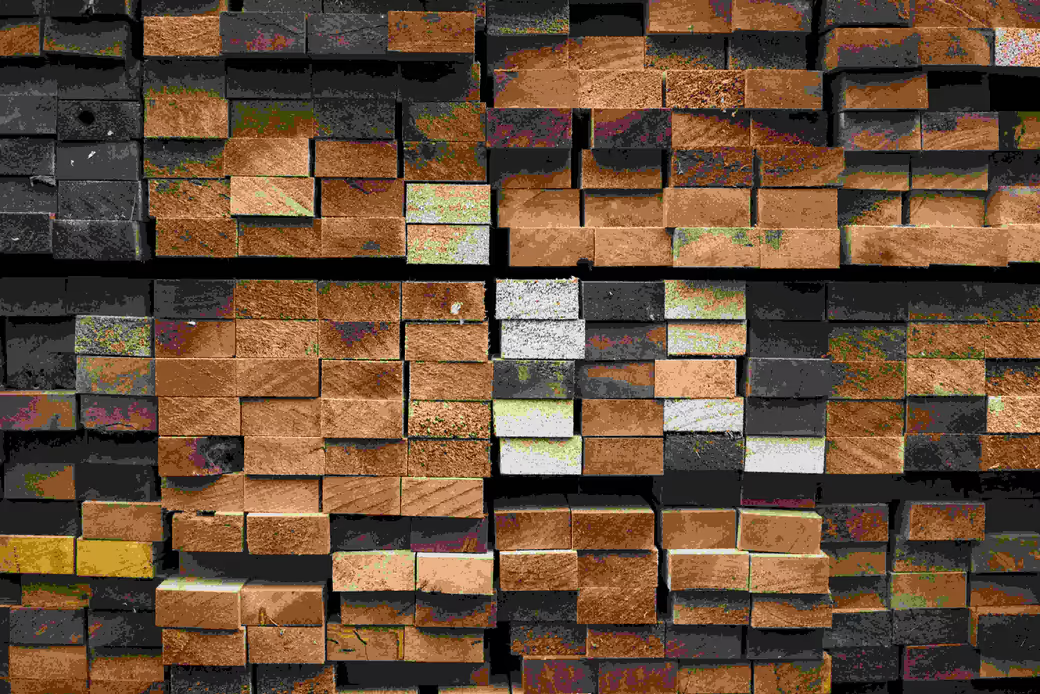
Exotic woods, mainly from South America and Central Africa, represent the premium option for a deck. Naturally very dense and rot-resistant, they require no chemical treatment and offer exceptional durability. Exotic woods are often preferred for their natural resistance to weathering and durability. Four exotic wood species stand out in particular :
-
Ipe : ipe is a South American wood and the most resistant on the market, with a lifespan of 25–50 years. It is a rather expensive wood with a price between €140–220/m². It is naturally in class 4 or 5, making it an ideal wood for a deck that requires little maintenance, even with heavy use.
-
Cumaru : it is a rot-resistant outdoor wood, classified as class 4. It has characteristics close to ipe, but is cheaper, because it is a fairly “nervous” wood that can warp if it is poorly dried after cutting. It has an orange-brown hue with a durability of 25 to 30 years and a price between €110–180/m².
-
Padauk : this wood comes from Central Africa and is characterized by a fairly unique red color. Due to its density, it is a wood that does not splinter and is therefore very pleasant to walk on barefoot on a deck. It has a lifespan between 25 and 35 years and a price between €135–185/m².
-
Teak : it is a wood that is becoming increasingly rare and is therefore very expensive to buy. But it is an ultra-resistant wood for heavy use, bad weather or exposure to UV rays. It costs between €160 and €240/m², including installation.
Our advice : cumaru is our #1 recommendation to combine the performance of an exotic wood with a controlled budget. Softwoods, such as Douglas fir and larch, are often cheaper, but require regular maintenance to ensure their durability.
Composite decking
Composite decking is not natural wood, but a hybrid material made from recycled wood fibers (sawdust) mixed with polymer resins (plastic). Made of wood particles and plastic resin, composite wood resists weather, insects and rot, and pigments are added to tint it.
-
Lifespan: about 20 years. Composite decking boards are designed to withstand the most demanding environments, including coastal areas.
-
Price: €50–80/m² supply only
-
Advantages : maintenance for a composite deck is almost zero (sweeping only) and there is a wide range of colors. It resists water, UV and insects and can be a good alternative to deforestation.
-
Disadvantages : its look is less authentic than real wood, and it can get quite hot in the sun.
Our advice : low-end composites (< €50/m²) are often of mediocre quality. For a durable composite deck, plan for at least €80/m².
Modified woods
Technological advances have also made it possible to make certain European wood species more resistant through specific treatments:
-
Thermally modified wood : thermally modified woods, such as ash, are treated at high temperature to increase their resistance to moisture and insects.
-
Chemical impregnation : it uses products like furfurylation to strengthen the wood.
Our advice : whatever your final decision, prioritizing quality, durability and expertise will ensure a wooden deck that meets your expectations and the challenges of intensive use.
Comparison table of wood species and prices
One form, several offers.
- Two minutes, no account
- Direct, no middleman
- Your identity stays private
How to choose deck wood according to its use?
The intended use is decisive in choosing the species, which should be based on 3 main criteria :
-
Usage intensity (residential, commercial)
-
The specific environment (pool, seaside)
-
The associated technical constraints.
Which wood for a heavy-use deck?
Because restaurant, hotel or public-space decks are subjected to constant foot traffic and high mechanical stress, they require particularly robust woods with at least Class IV, ideally Class V. These woods have a better ability to withstand bad weather and standing moisture.
This includes species such as black locust, larch, ipe or cumaru. Composite decking is also a good option: modern, durable and with minimal maintenance.
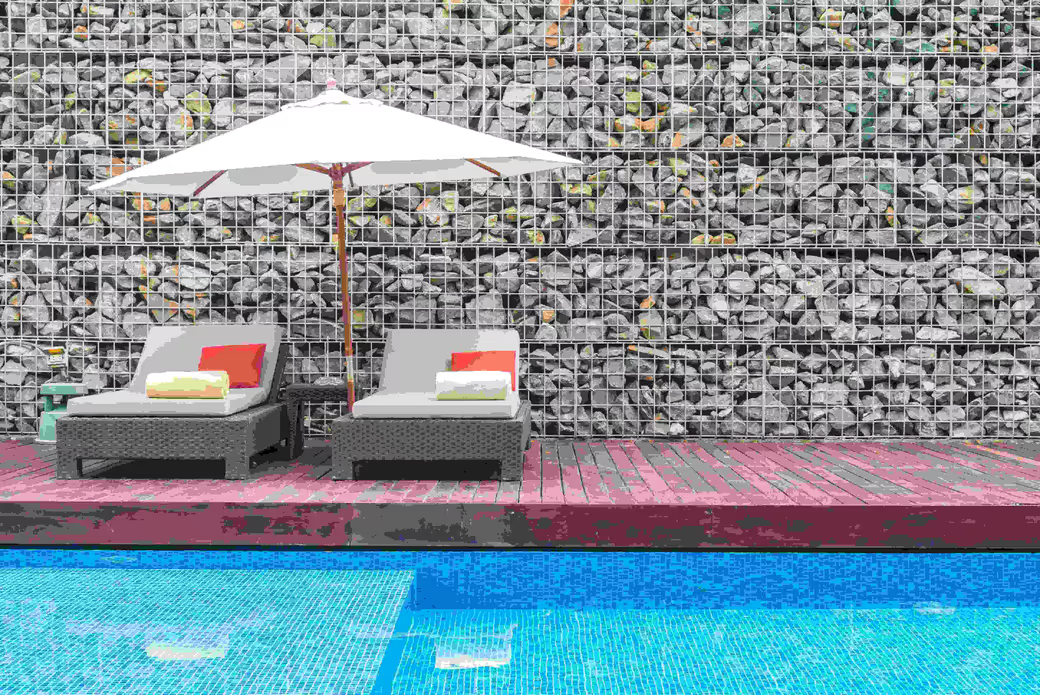
Which wood for a pool deck?
Proximity to water creates three major constraints for the wood of a poolside deck:
-
Resistance to constant moisture to ensure durability
-
Weather resistance due to outdoor exposure
-
A non-slip surface for safety and to avoid falls on a constantly wet surface.
The best woods for an outdoor poolside deck are :
-
Rice husk because it is a naturally non-slip material, even when wet, and it resists chlorinated water and UV very well. Rice husk is a rice-derived material which, combined with PVC, creates a material that looks like wood, but isn’t.
-
Grooved ipe or grooved cumaru, with their ribbed surface, offer excellent grip and have the advantage of not heating up excessively in the sun.
It is better to avoid pine and Douglas fir, or smooth woods without anti-slip treatment, as well as entry-level composites, because they are too slippery when wet.
Which wood for a seaside deck?
Class V wood is mandatory for any deck located less than 500 meters from the sea, because salty air, seawater and salty sea spray constantly attack materials. This class guarantees maximum resistance to salt water and extreme marine conditions.
Recommended wood species are :
-
Massaranduba : this is a Brazilian wood specifically known for its exceptional resistance to salt water. It is the reference wood for coastal installations, pontoons and decks facing the ocean. It has a lifespan in salty environments of 25+ years and a price of €115–190/m².
-
Ipe : naturally Class V, its high density makes it a very good choice for all situations, including seaside locations.
All untreated European woods (pine, Douglas fir, larch) are unsuitable for seaside locations. Composite decking should also be avoided, because salt accelerates the degradation of polymers. In general, any wood below Class IV presents risks of premature degradation.
How to maintain wood for an outdoor deck?
To ensure the longevity and aesthetics of a wooden deck, several maintenance tips can be applied:
-
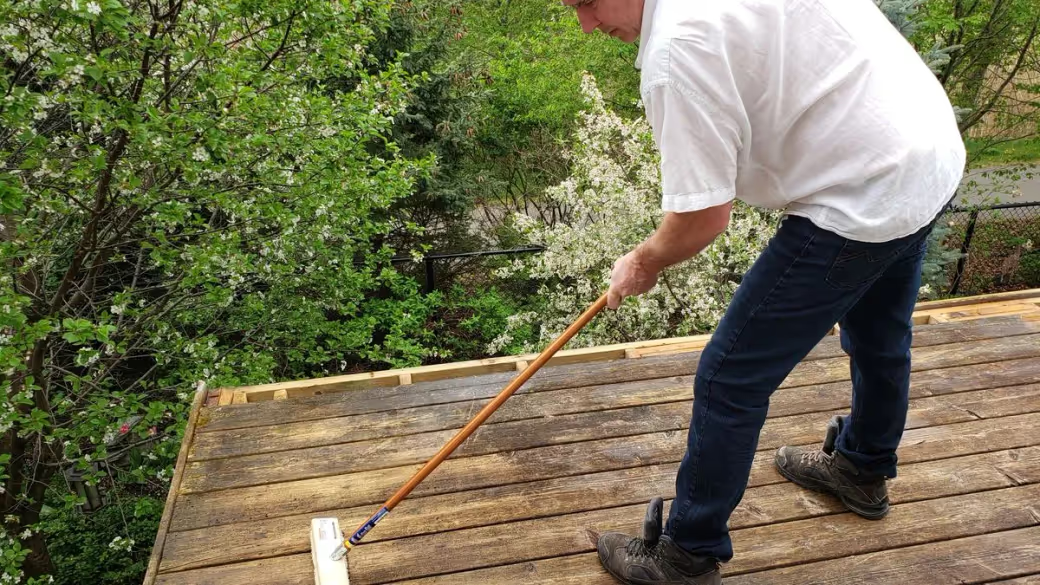
Maintenance is mainly based on regular sweeping to remove dead leaves and other debris that retain moisture. Once a year, it is still recommended to carry out a more thorough cleaning using either clear water with a stiff brush, or a pressure washer.
-
Annual or biannual application of a saturator helps preserve the color and durability of the wooden deck, because saturators impregnate and nourish the wood.
-
It is recommended to regularly check the condition of the pedestals and fasteners of the wooden deck.
-
It is not recommended to use film-forming paints on pressure-treated woods, as they may blister.
-
Natural graying that appears over time is a purely aesthetic phenomenon. You should either accept it, or delay it by applying a saturator product every 1 to 2 years.
-
To remove moss and stubborn stains, favor natural products such as diluted white vinegar or oxalic acid, which are as effective as they are environmentally friendly.
Which structure to choose for a durable wooden deck?
Beyond the wood chosen, the type of structure determines the longevity of a deck depending on:
-
The format(boards or tiles)
-
The installation method (on adjustable pedestals or on traditional joists).
Choosing the format
Deck boards come as planks 2 to 5 meters long and generally 145 millimeters wide. They are particularly suitable for medium and large surfaces (over 15 m²) and offer great design flexibilityby allowing varied patterns depending on the installation direction.
Tiles, on the other hand, come as square elements of 50×50 or 100×100 centimeters, perfect for small surfaces such as balconies and decks under 15 m². Their simplified and quick installation makes them well suited to DIY projects, but they absolutely require a perfectly flat and stable ground.
Choosing the installation method
Installation on adjustable pedestals is the modern solution par excellence, because it is suitable for terrain with irregularities or slopes to be compensated. These plastic or concrete supports, adjustable in height millimeter by millimeter, not only make it possible to offset ground defects, but also ensure excellent ventilation under the decking, preventing moisture buildup.
Installation on joists is the most traditional method, with wood or composite pieces laid directly on the ground to form the supporting structure onto which the boards are screwed perpendicularly. This technique offers exceptional stability for large surfaces over 30 m², with a lower cost than installation on pedestals and a natural elevation that improves ventilation. On the other hand, it requires perfectly flat ground or prior leveling work to compensate for irregularities.
You now know which wood to choose for your deck. If you’re looking for the best wood species at the best price to build your deck, discover our WoodPartners collection and find the ideal material.