
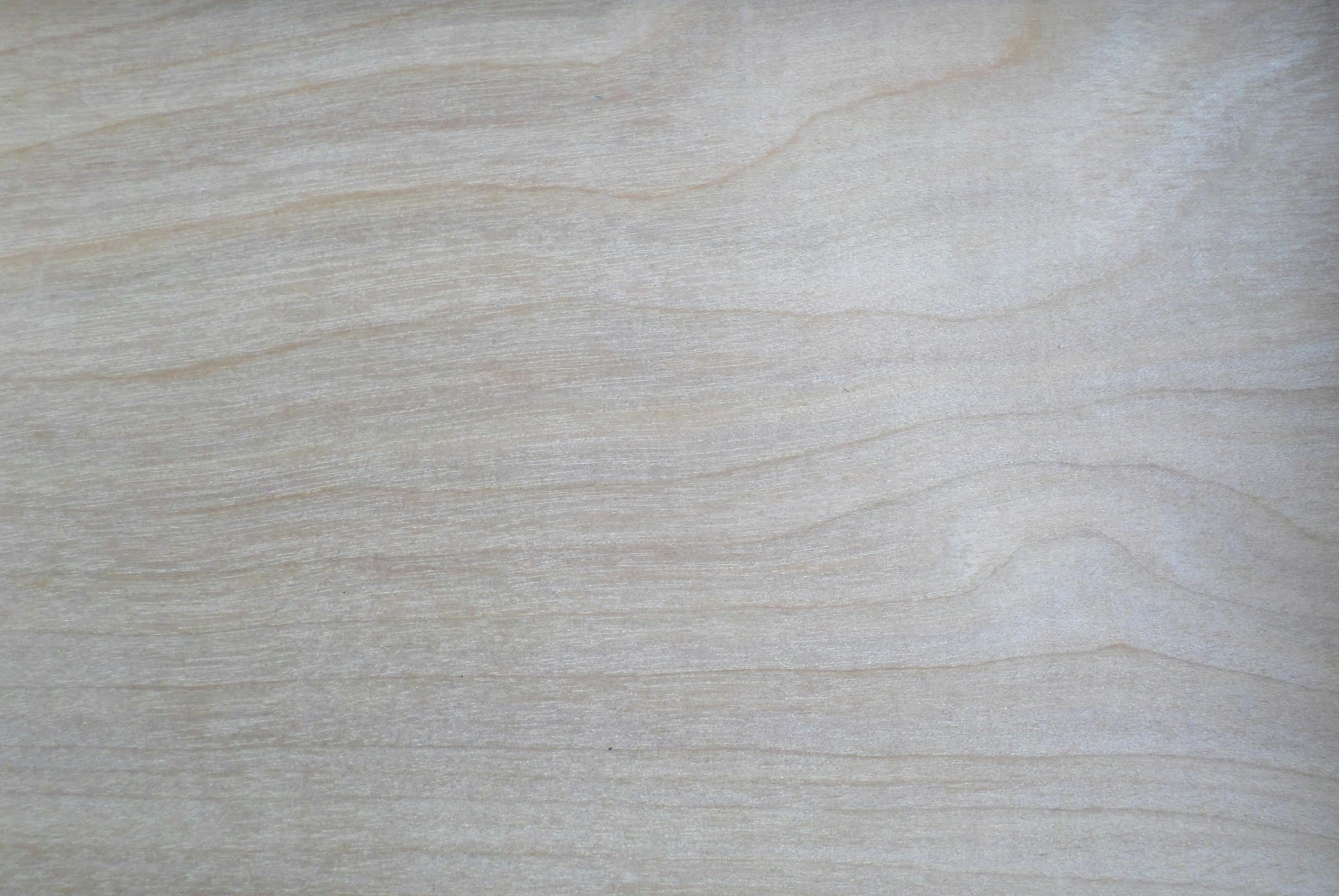
Birch is native to northern Europe. This pioneer species is used mainly as firewood or in joinery. Also valued for its pale colour and how easily it can be shaped, it can be found in plywood panels or in furniture.
Would you like to learn more about birch? WoodPartners explains everything you need to know about birch wood:
- What is birch wood?
- What are the characteristics of birch?
- Birch wood: for which uses?
- How do you care for birch?
- Other questions about birch wood

What is birch wood?
Birch wood is one of the pioneer species native to northern Europe. It is found, among other places, in the north of France and in the Morvan, where it grows on poor soils up to 2,000 m in altitude.
The birch species belongs to the Betulaceae family and has several Latin names referring to the different species present in Europe: betula pendula, or silver birch, and betula pubescens, or downy birch, are the most common.
Birch is a pale wood with characteristics fairly similar to those of beech, and it can therefore be used as firewood as well as in furniture.
Finally, it goes by different names depending on the country:
- France : Bouleau ;
- Denmark : Birke ;
- Great Britain : Birch ;
- Netherlands : Berk.

What are the characteristics of birch?
Birch has an attractive cream colour for interior fit-out work, a fine texture and use class 1, for indoor use only.
Description of birch wood
- Colour of birch : cream to pale brown with some yellowish shades ;
- Texture : fine ;
- Grain or fibre direction : straight to wavy ;
Description of the birch log
- Diameter : between 40 and 45 cm.
The physical properties of birch wood
- Density (at 12% moisture content with 1 MPa = 1 N/mm²): between 0.64 and 0.60 ;
- Hardness (at 12% moisture content with 1 MPa = 1 N/mm²) : 3.1 ;
- Volumetric shrinkage coefficient : 0.38% ;
- Stability in service : stable to moderately stable.
The natural durability and treatability of birch
- Treatability : treatable to moderately treatable ;
- Use class: class 1, for indoor use only, even after pressure treatment.
Drying birch wood
- Drying speed : fast ;
- Drying difficulties: none, easy and free of defects.
Sawing and machining birch
- Machining difficulties: none, an easy wood to machine ;
- Suitability for rotary peeling : adequate ;
- Suitability for slicing : good.
Joining birch
For joining birch wood, two steps matter:
- Nailing and screwing : adequate, with pre-drilling required ;
- Gluing : good.

One form, several offers.
- Two minutes, no account
- Direct, no middleman
- Your identity stays private
Birch wood: for which uses?
Birch wood is fairly versatile for indoor use. Being class 1, it cannot be used outdoors, but it is perfectly suited to the following uses:
- Firewood: birch is a medium-hard wood that works well as firewood because it burns easily, so it will be simple to light your fire with it.
- Furniture: easy to machine, to bend and to shape, it delights furniture makers. What is more, its pale colour brings genuine visual appeal to your interior.
- Joinery: birch is useful in joinery because it is easy to shape and therefore allows many fit-out applications such as veneering.
How do you care for birch?
Birch can be preserved and protected through an impregnation treatment that will allow it to withstand moisture and decay more easily. What is more, its service life will be extended by this type of product.
However, this class 1 wood can never be used outdoors, even after such a treatment, because it is not durable.
Other questions about birch wood
What is the price of birch?
The price of a stere of birch ranges between 62 and 88 euros. It will depend on the origin and on the supplier.
How do you recognise a birch tree?
A birch tree stands out thanks to its white, smooth and shiny bark, which forms horizontal bands that are easy to recognise.
Birch is an adaptable and versatile species for indoor use: furniture, firewood and veneer. WoodPartners has given you all the keys to using birch wood in your projects.