
Wood chippers
Wood chippers include machines that transform sawmill offcuts and by-products into wood chips. They add value to a material that would otherwise be lost. Compare models from manufacturers on WoodPartners online.
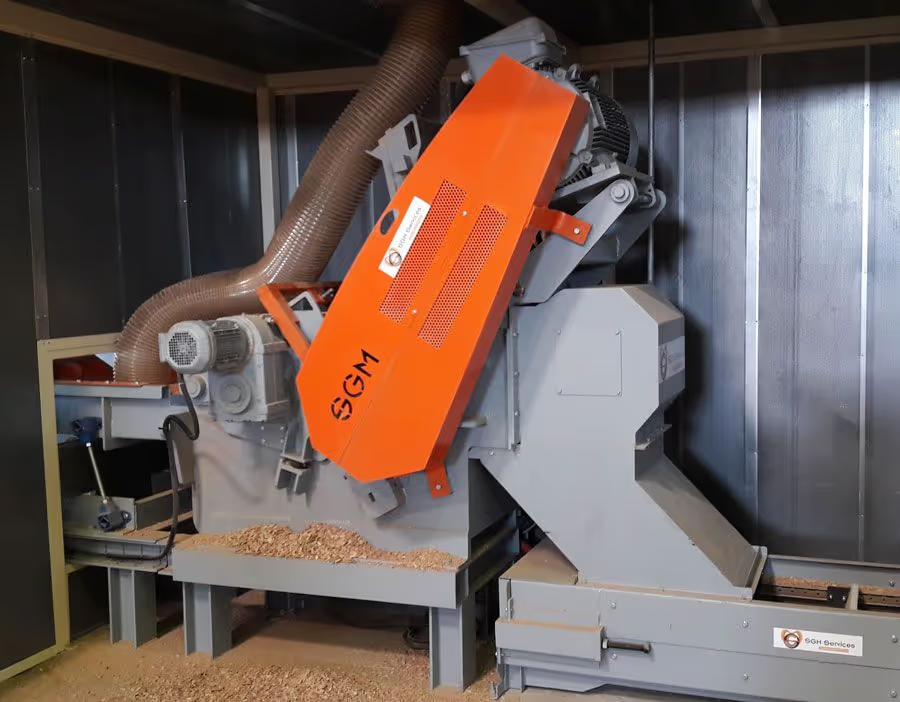
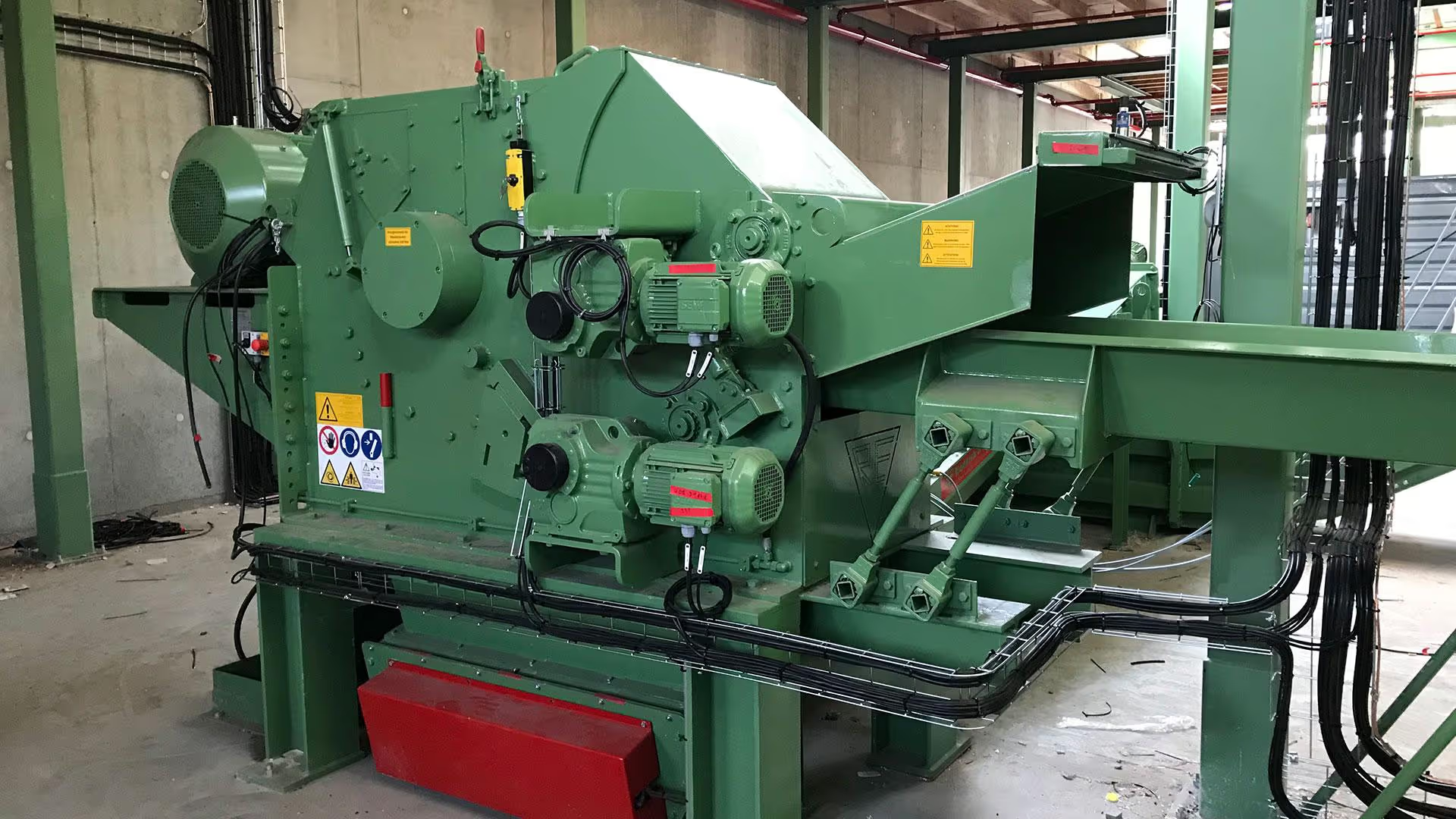
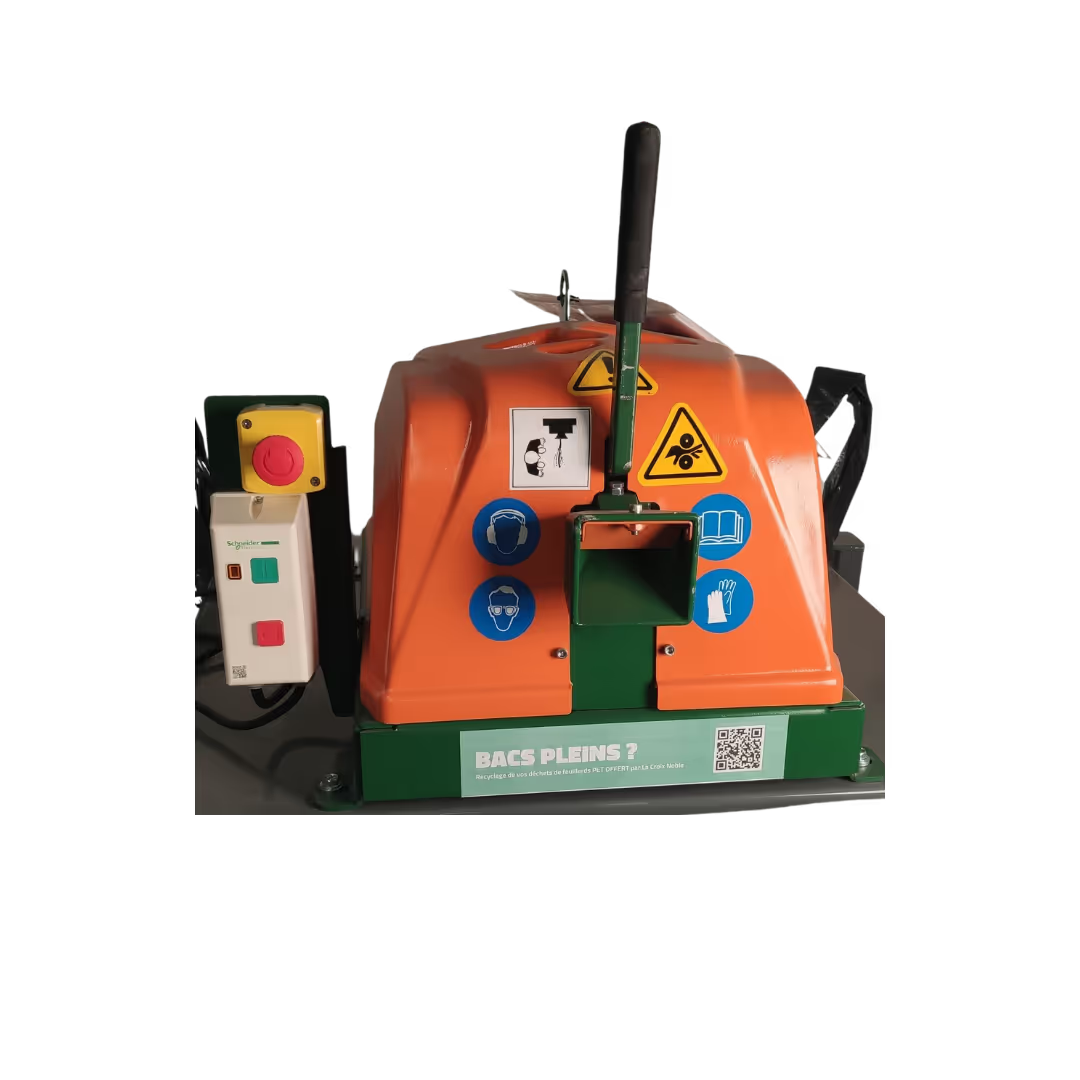
Discover wood chippers to generate additional income from your sawmill by-products.
The chipper, a lever for adding value to by-products
The chipper turns sawmill by-products into a marketable raw material. Slabs, edgings and offcuts from sawing lines become graded wood chips. They are sold to the panel and paper industries, or used as fuel.
These chips can also supply the sawmill boiler room, notably to produce heat for kilns. They then join the wood energy market. The chipper thus completes the chain of primary processing machines by adding value to every cubic meter of logs.
Chipping and grinding equipment
The choice of equipment depends on the type of by-products and the desired chip quality.
The drum chipper
The drum chipper cuts wood using knives mounted on a rotating drum. A screen then grades the size of the chips produced. Robust, it accepts products of various shapes, from slabs to small-diameter roundwood. It differs from the disc chipper, which produces very uniform chips but is less tolerant of the diversity of by-products.
The industrial grinder
The industrial grinder reduces offcuts and waste wood into grindings. It operates by crushing and fragmentation rather than clean cutting. The resulting product is less graded than a chip, but the grinder tolerates irregular pieces better. It is mainly suited to fuel production.
By-product processing installations
By-product processing installations organize the collection and conditioning of by-products. Conveyors carry offcuts to the chipper, then screens separate the chips by size. Silos finally store the material before loading or sending it to the boiler room.
How to choose a chipper or grinder for sawmill by-products?
The choice depends above all on the type of by-products to be processed and the desired end product.
A drum chipper accepts by-products of various shapes and produces graded chips, while a disc chipper prioritizes chip uniformity.
The grinder is better suited to irregular offcuts and waste wood when the main objective is to produce fuel rather than graded chips.
For a complete installation, you must also consider flow organization: conveying offcuts, screening chips and silo storage must be sized consistently with the quantity of by-products generated by the sawmill.
Add value to your sawmill by-products
Slabs, edgings and offcuts can become a resource when they are properly transformed and conditioned.
WoodPartners brings together chipping, grinding and by-product processing solutions offered in particular by SGM Industry, La Croix Noble and André Technologies.
Compare equipment according to the material to be processed and the desired product, then contact manufacturers to define an installation adapted to adding value to your by-products.