
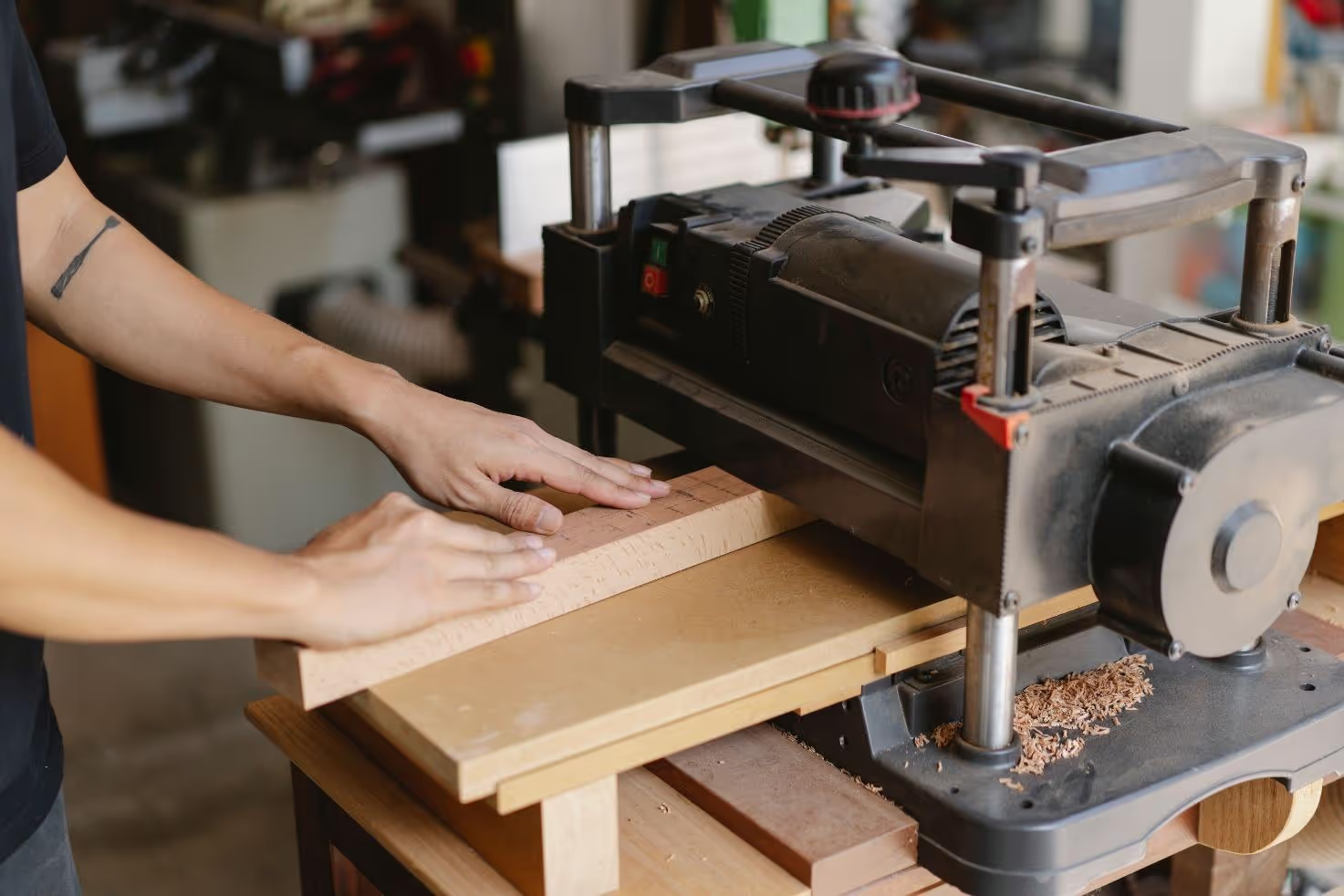
Woodworking machines are equipment that allow you to saw, joint, plane, shape, assemble or sand wooden parts and transform wood into various objects. For a professional, the choice of woodworking machines depends above all on the operations to be carried out, the materials being worked and the dimensions to be machined. For example, a combination machine groups several functions on the same frame, while specific machines make it possible to organize dedicated workstations.
WoodPartners, a wood specialist website, offers the most complete catalog on the market of industrial, workshop or portable woodworking machines, to help you make the best choice adapted to your activity.
Find your woodworking machine
Are you looking for a specific piece of equipment for your workshop? Access directly the machines and suppliers in the category that interests you.
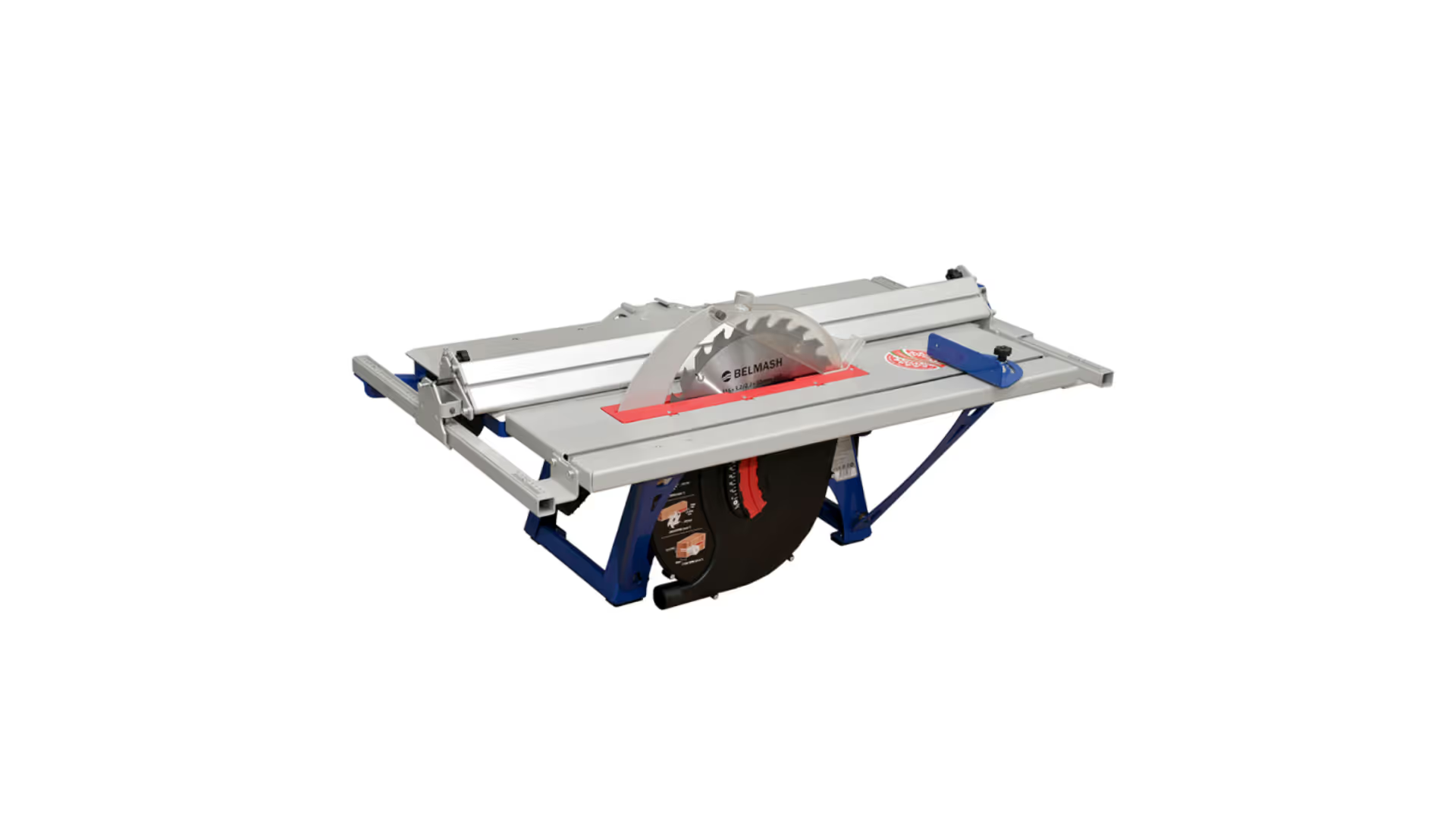
Combination woodworking machines
Combine several joinery operations on a single machine and adapt your equipment to the available space.
See the machines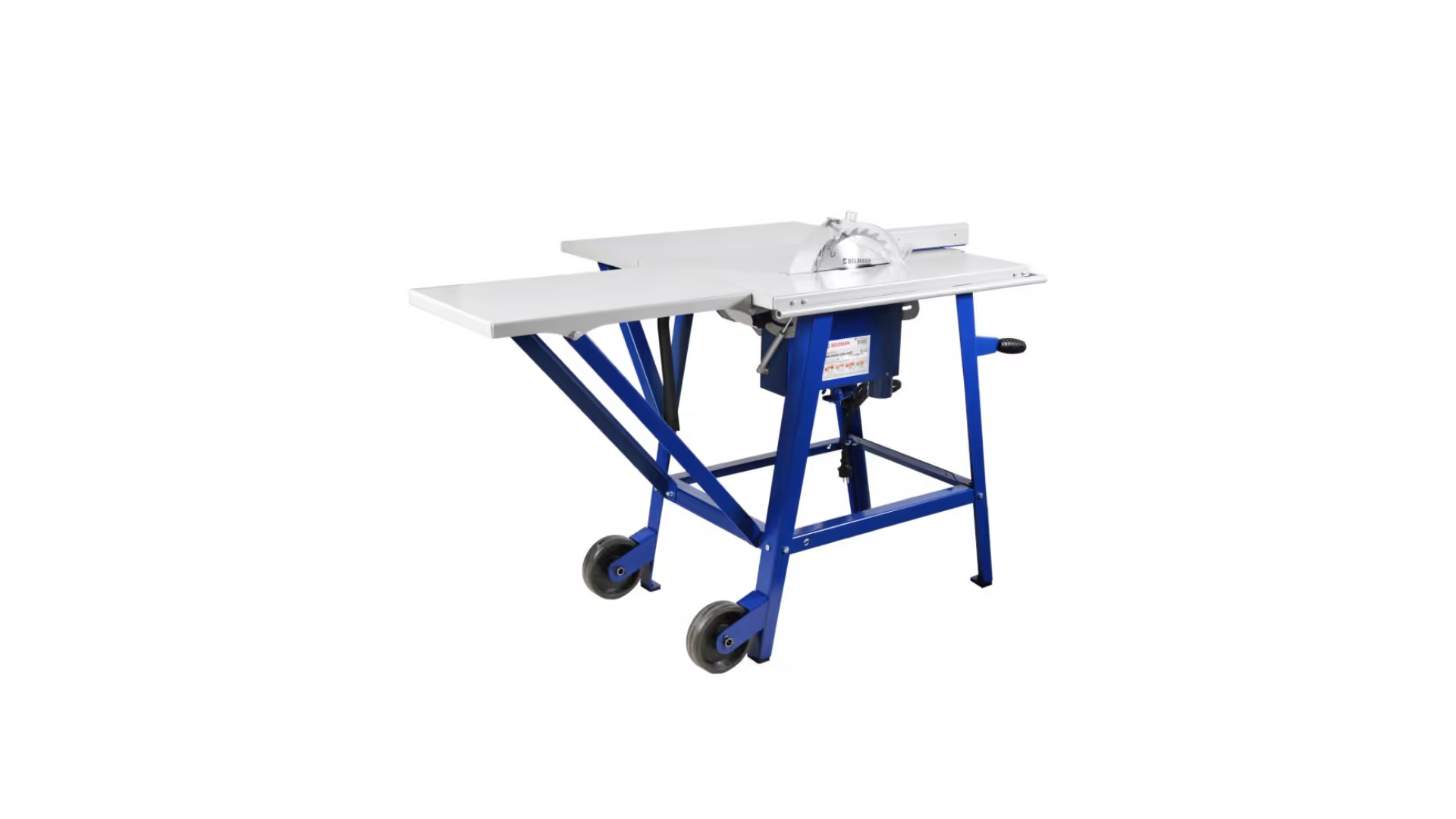
Stationary woodworking saws
Rip, crosscut and cut your wood and panels with equipment suited to the dimensions of the parts.
See the machines
Planers and jointers
Flatten the faces and edges of your wood, then thickness it before machining and assembly.
See the machines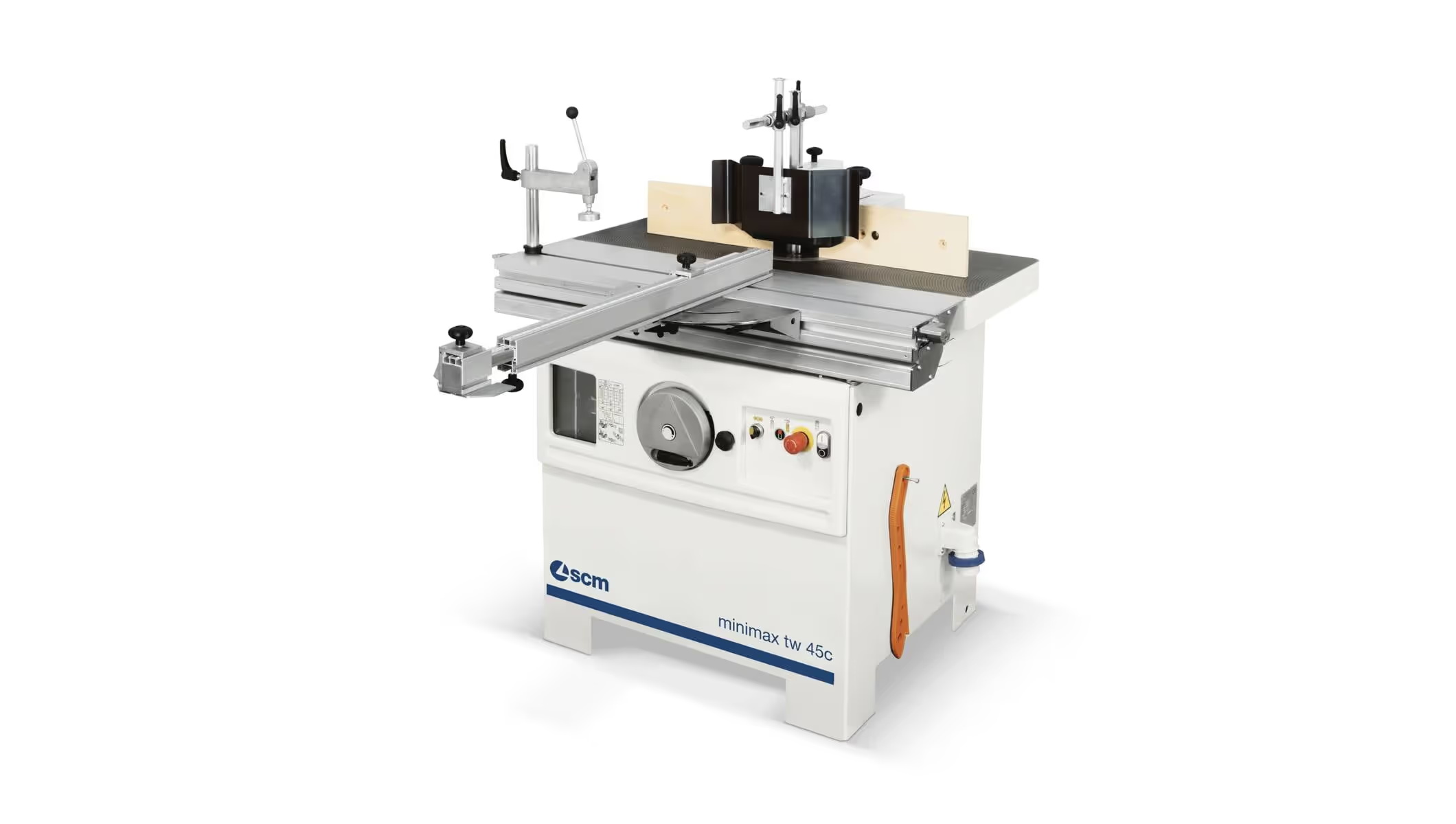
Spindle moulders
Create profiles, grooves and rabbets with tools suited to your production.
See the machines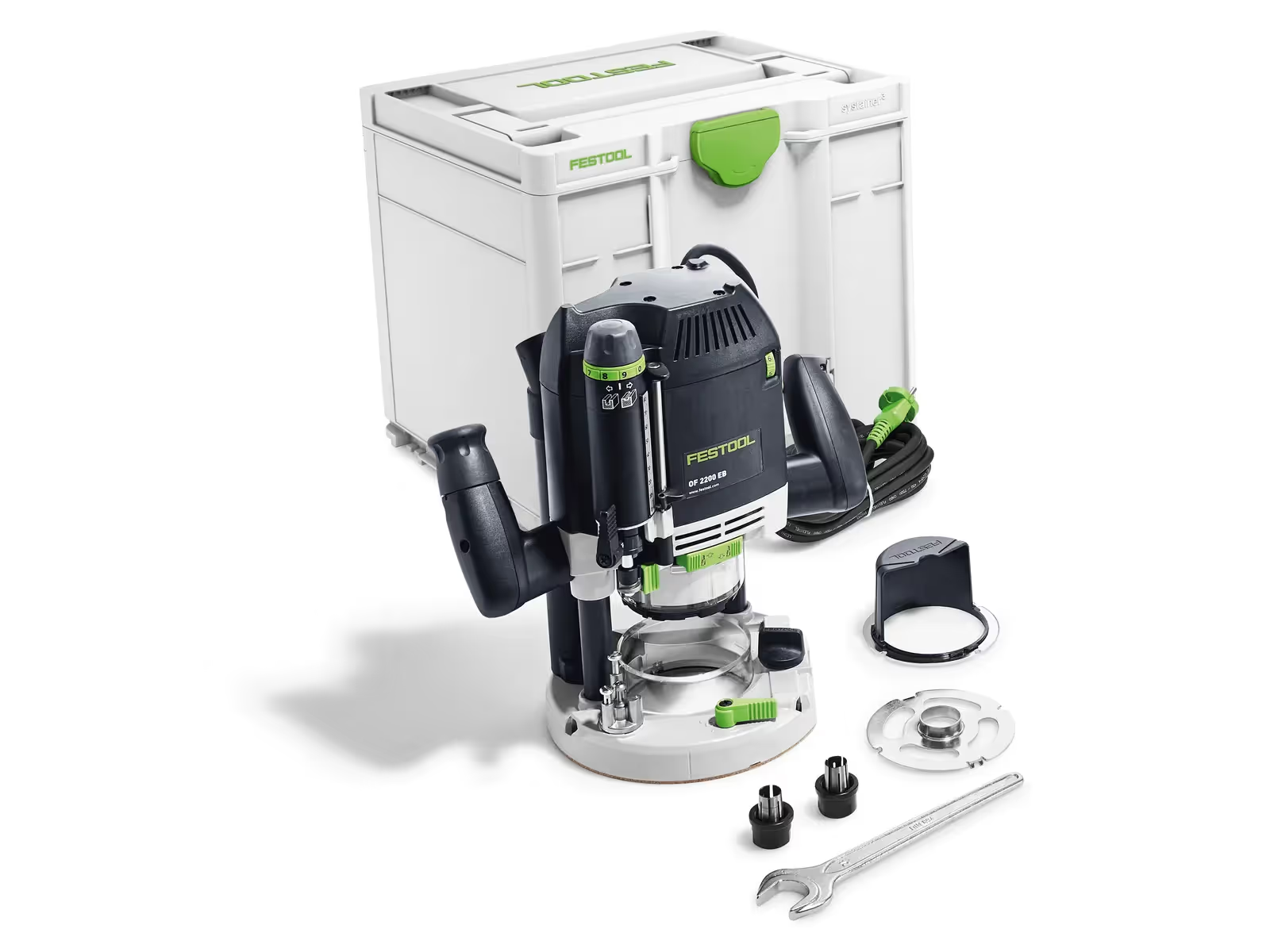
Routers and trim routers
Mill grooves, trim edges and work the contours of parts in the workshop or on site.
See the machines
CNC machining centers
Program cutting, drilling and milling operations according to the machining center configuration.
See the machines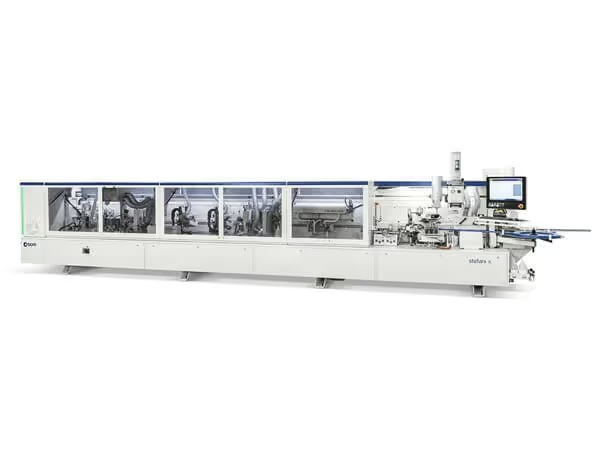
Edge banders
Apply edging to your panels to prepare furniture and interior fit-out components.
See the machines
Workshop sanders
Even out the surface condition of parts and prepare substrates before finishing.
See the machines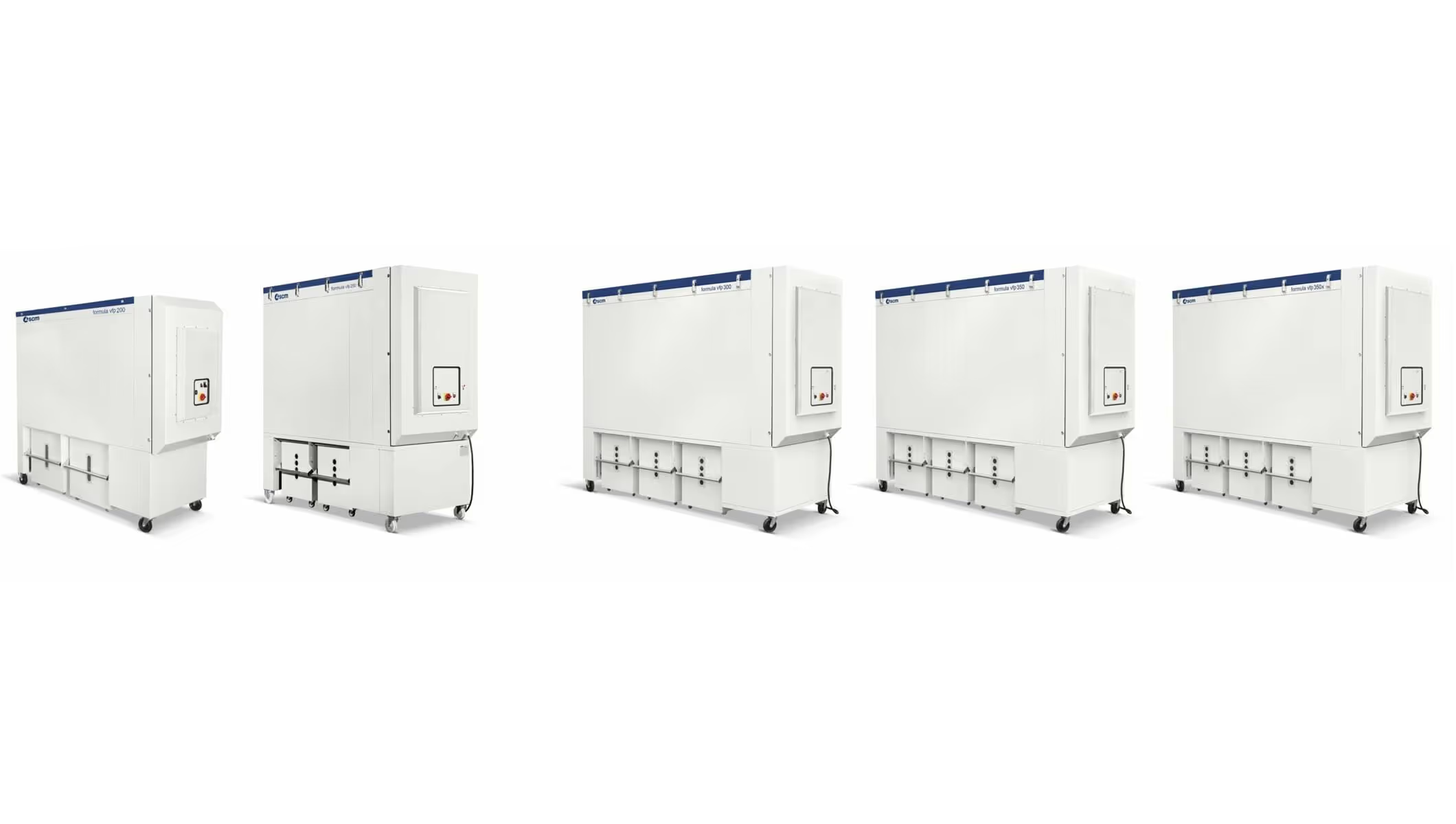
Dust extractors for woodworking machines
Find chip and dust extraction equipment suited to your workstations.
See the machines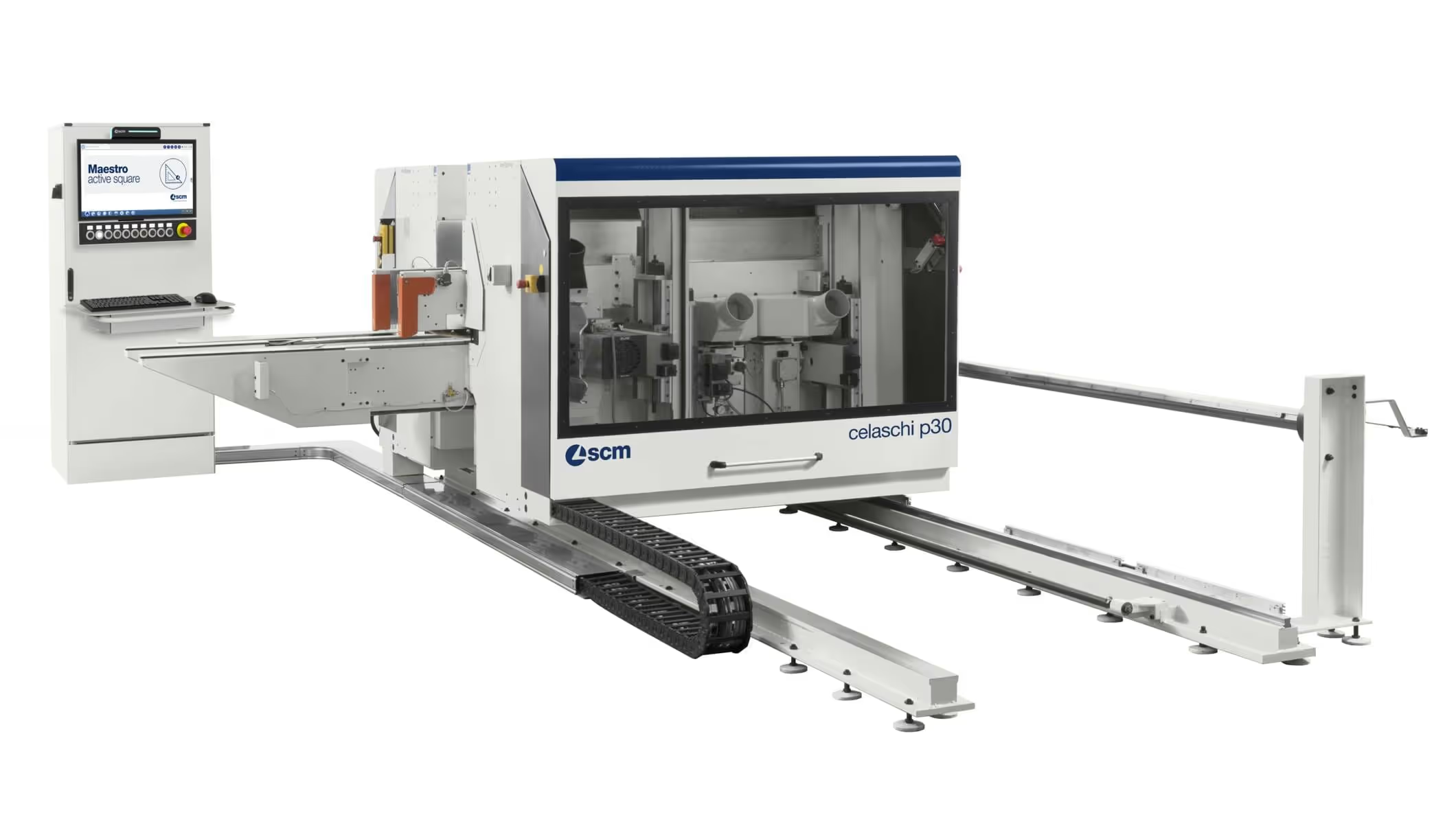
Tenoners and mortisers
Prepare the machining required for joinery assemblies and frame manufacturing.
See the machinesAlso explore the three main families in the catalog
What are the main woodworking machines and their uses?
The main woodworking machines are:
-
Saws for cutting
-
Jointers and planers to flatten and thickness parts
-
Spindle moulders and routers for profiling and grooving
-
Tenoners and mortisers to prepare joints
-
Sanders to work the surface finish.
These woodworking machines are divided into three major families in the WoodPartners catalog:
-
Primary processing machines used to turn logs into sawn timber.
-
Secondary processing machines used to work wood and panels to manufacture joinery, furniture or interior fit-out components.
-
Portable machines support cutting, machining and finishing in the workshop as well as on site.
Primary processing woodworking machines
Primary processing machines turn logs into sawn timber, intended in particular for construction and joinery. They are used in sawmills, before the manufacturing operations carried out in the workshop. This family includes debarkers, chippers and sawing lines.
The primary processing machines therefore meet needs that differ from those of a workshop that already receives boards or panels.
Sawing lines
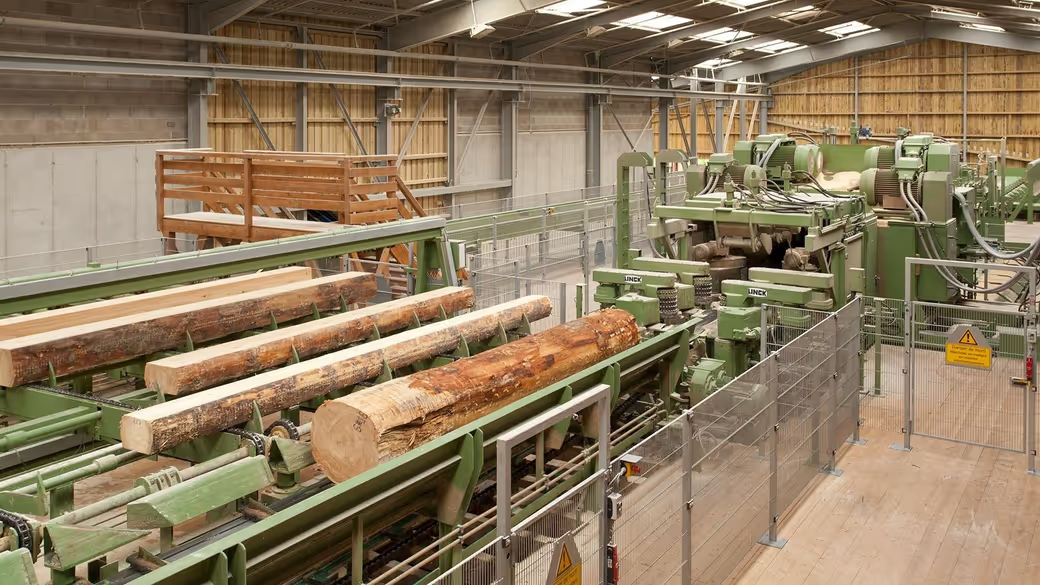
A sawing line brings together a set of equipment and machines used to transform logs into boards, beams, or other wood products. It makes it possible to produce wooden parts whose dimensions match the sawmill’s outlets.
A sawing line generally includes a conveyor to feed the logs, a saw to cut the wood according to the desired pieces, as well as sorting and handling equipment to process the wood efficiently.
Secondary processing woodworking machines
Secondary processing machines are used to cut, flatten, thickness, shape and assemble wood and panels. They equip joinery, cabinetmaking and interior fit-out workshops in particular. This family includes woodworking saws, jointers and planers, spindle moulders, tenoners, edge banders, sanders, combination machines, as well as dust extraction systems.
Saws for ripping and cutting wood
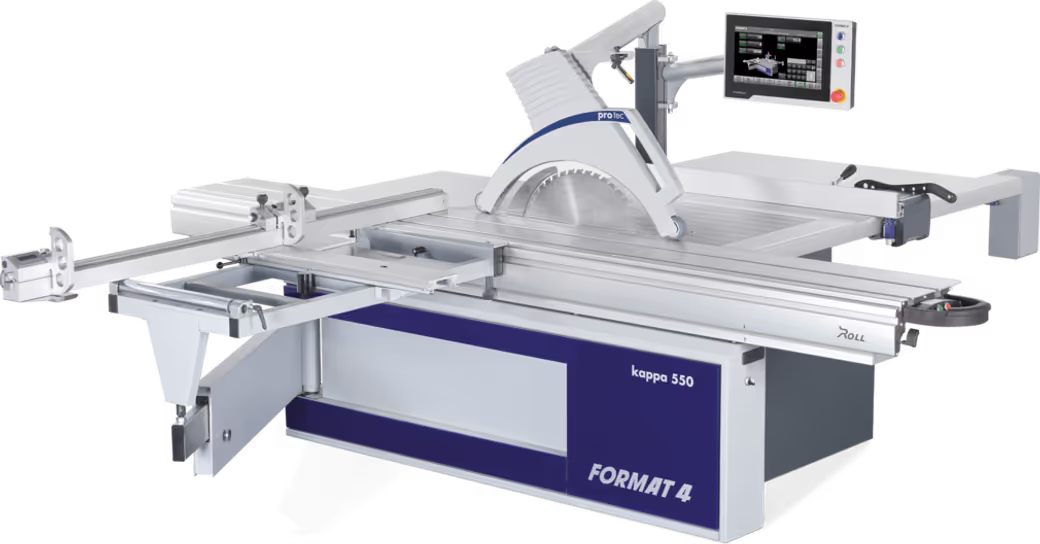
A stationary woodworking saw is a fixed machine designed to perform various cutting operations on wooden parts. It is used to separate material and prepare the dimensions of parts. There are several types:
-
Sliding table saw: it has a sliding carriage that supports the workpiece during the cut. It is used for working panels and solid wood. The panel saw is more specifically designed for breaking down large formats. In its vertical version, it holds the panel on an almost vertical support.
-
Band saw: uses a continuous band-shaped blade that runs around two wheels. This allows more precise cuts, especially for curved shapes, and is often used for resawing thicker pieces of wood.
-
Radial arm saw: it has a blade mounted on an articulated arm, allowing the blade to move in different directions, which is useful for bevel and miter cuts
The choice among stationary saws therefore depends as much on the cuts to be made as on how to support and move the parts.
Jointers and planers to prepare parts
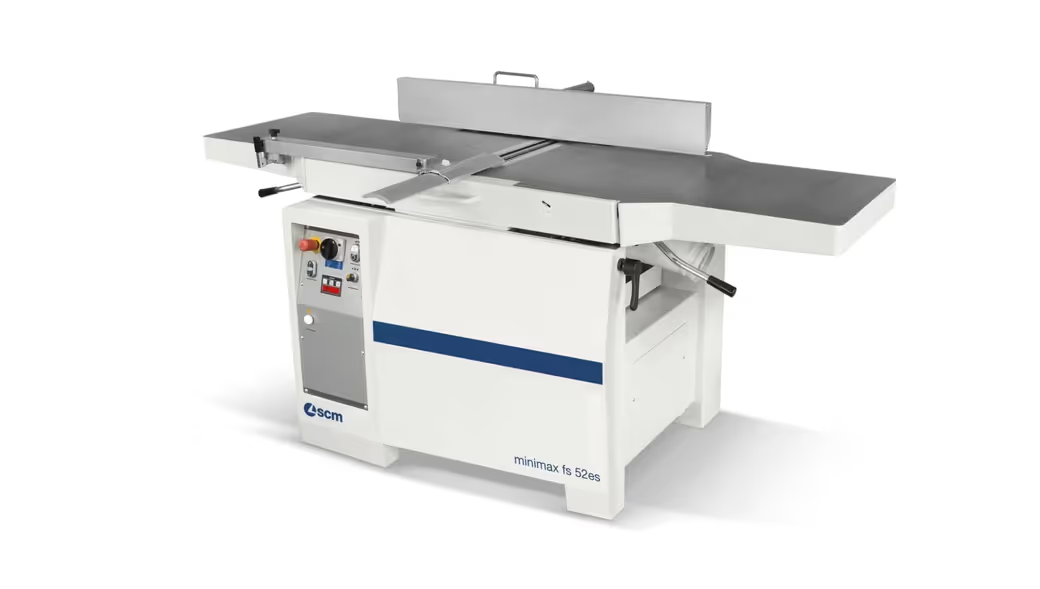
The jointer creates a flat reference face and allows you to square an edge. The planer uses this reference to reach the desired thickness and make the opposite face parallel.
This preparation is particularly important because poorly flattened parts complicate gluing, assembly and the setup of subsequent operations.
These functions exist on separate machines or on a combined planer-jointer. The latter brings the two operations together on the same machine, with function-change handling that varies by model.
Spindle moulders for making profiles and grooves
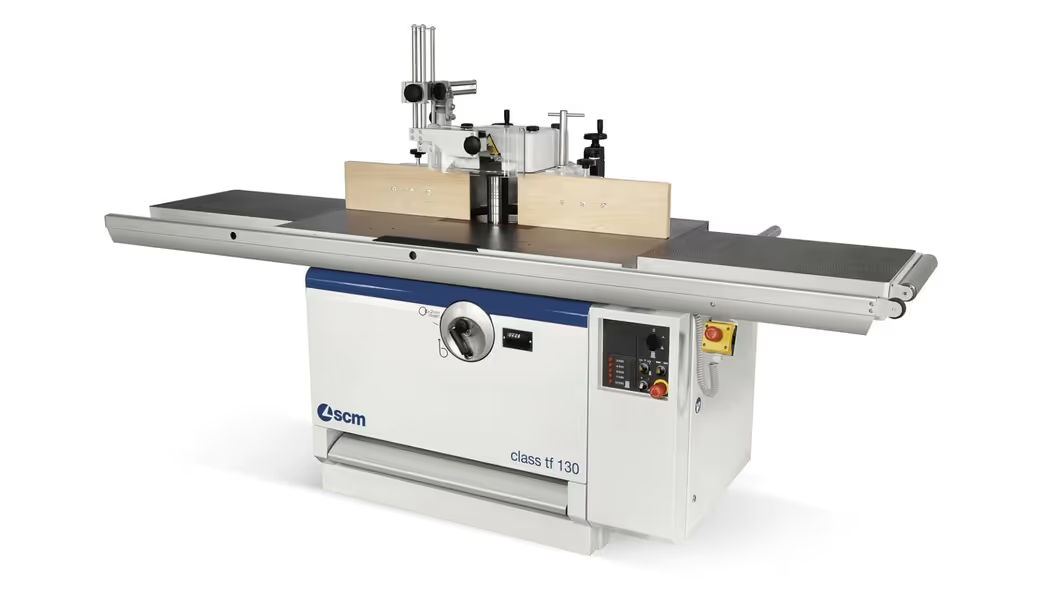
The spindle moulder is a stationary woodworking machine equipped with a vertical spindle on which the cutting tool is mounted. It makes it possible to work a part’s profile, make a groove or create a rabbet, i.e., a recess along an edge.
It is used in particular in the manufacture of doors, frames, mouldings and furniture components. Its capabilities depend on the tooling, fences and the holding or feed equipment available.
Tenoners and mortisers to prepare joints
Tenoners and mortisers are used to prepare two pieces of wood so they fit together in a mortise-and-tenon joint. The tenoner shapes a protruding part at the end of a workpiece, called the tenon. The mortiser cuts a cavity in the other workpiece, called the mortise, which receives this tenon. These two operations are used in particular to make frames, doors and certain furniture components
Machining precision determines the fit of the joint. That is, a tenon that is too thick enters the mortise with difficulty, while a tenon that is too thin leaves play. Their positioning must also allow the rails and stiles to align correctly.
The tenoners and mortisers are therefore chosen according to the dimensions of the parts, the shape and depth of the joints, as well as the quantities to be produced. For batch work, repeatable settings make it possible to achieve the same fit from one part to the next.
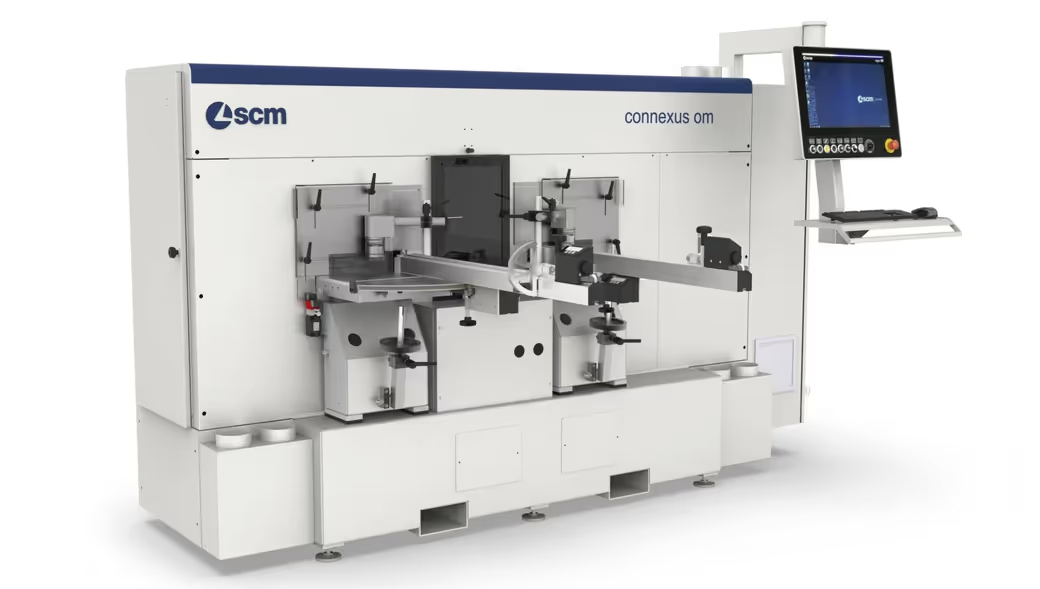
CNC machining centers to program manufacturing
A CNC machining center is a numerically controlled machine that moves its tools according to a program to cut, drill or mill wooden parts. The program defines, in particular, toolpaths, dimensions and machining depth.
Its advantage is that it can reproduce consistent machining and produce complex shapes while limiting manual repositioning. The operator still prepares the program, the tools and the workholding. They also handle loading and check the result.
The CNC machining centers are chosen according to part dimensions, the operations to be carried out and the production volumes. The work area determines accepted formats, while the number of axes and available equipment determine tool movement and machining possibilities.
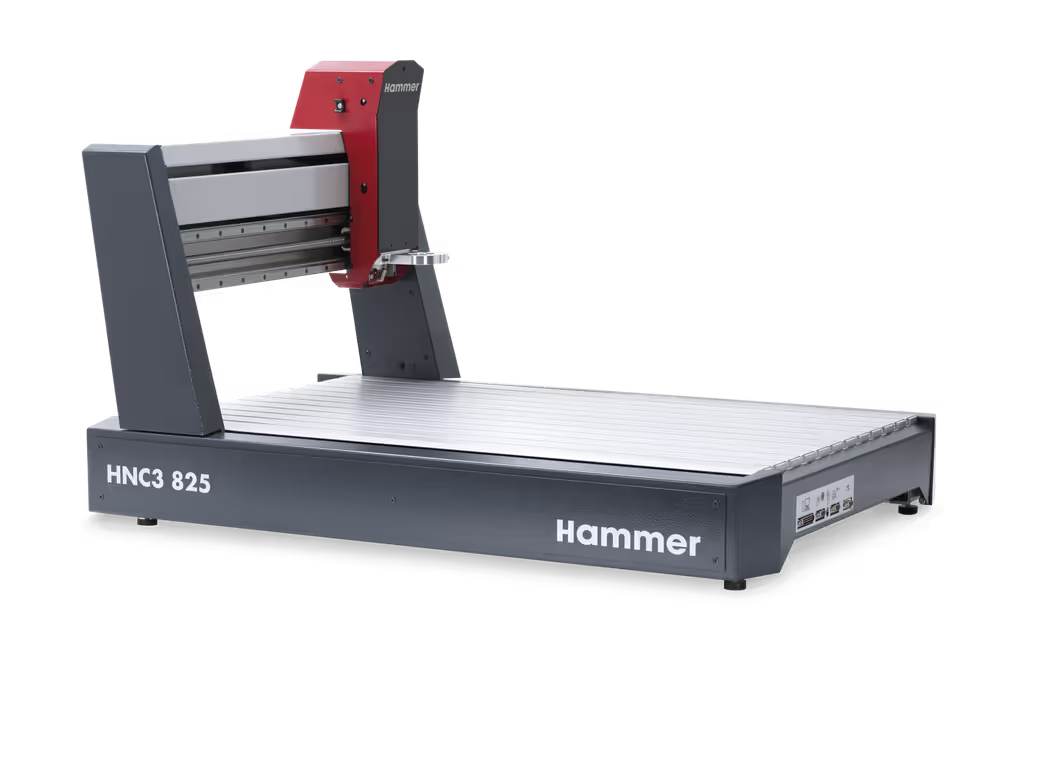
Edge banders for interior fit-out panels
An edge bander applies a finishing strip to the edge of a panel in order to cover the visible edge and protect the edges of a furniture component, a shelf or an interior fit-out.
Depending on its equipment, the machine can chain gluing, pressing the band, trimming the ends and removing overhang. Finishing operations then produce clean edges that are pleasant to the touch.
Comparing edge banders should therefore focus on the workshop’s common materials and formats, as well as the manual touch-ups that will remain necessary.
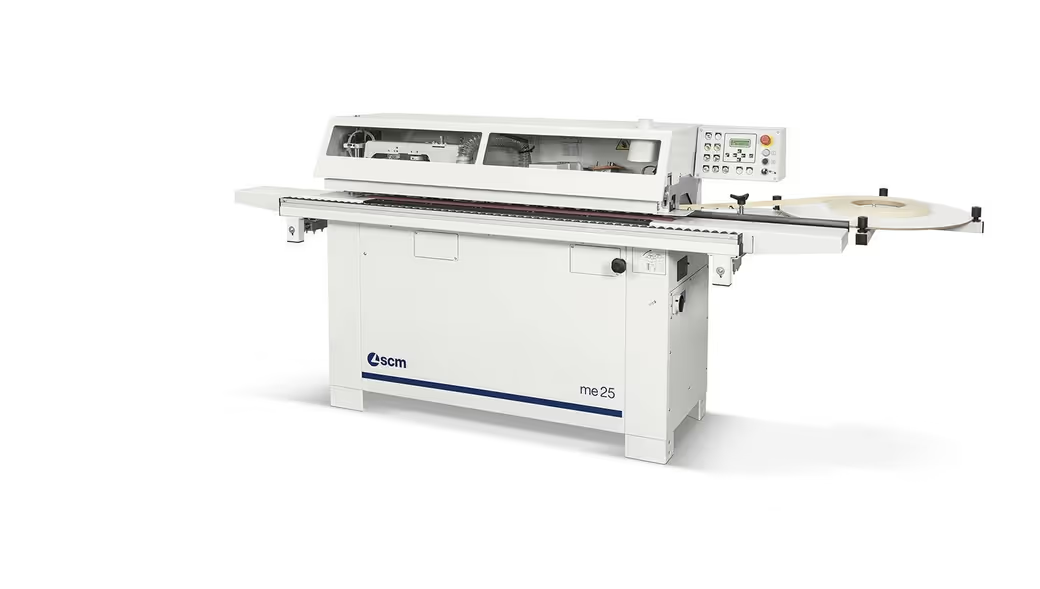
Sanders to prepare the surface finish
A sander removes a thin layer of material using an abrasive to reduce machining marks and make the surface more even. It prepares the wood to receive an oil, varnish or paint. The result depends in particular on the abrasive grit, the pressure applied and the number of passes.
-
A wide-belt sander is used to process the flat faces of panels and tops.
-
An edge sander works their edges, while an oscillating spindle sander makes it easier to sand curved contours.
-
Portable models complement this equipment for touch-ups and working on already-assembled pieces or hard-to-reach areas.
The workshop sander must match the geometry of the parts and the expected result. The choice of abrasives and their condition remain decisive to avoid scratches and finishing inconsistencies.
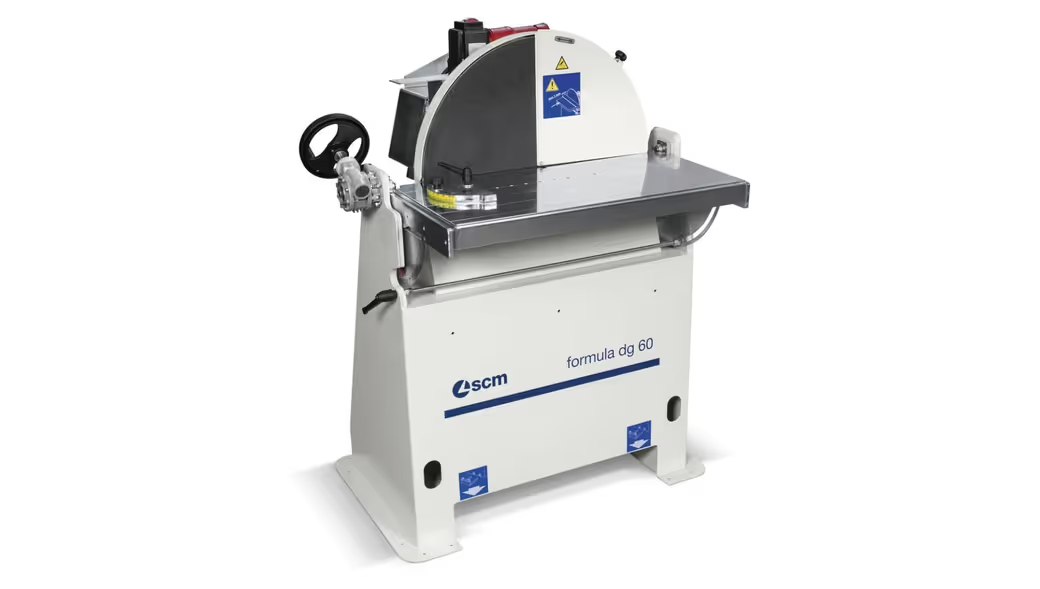
Combination machines to bring multiple operations together
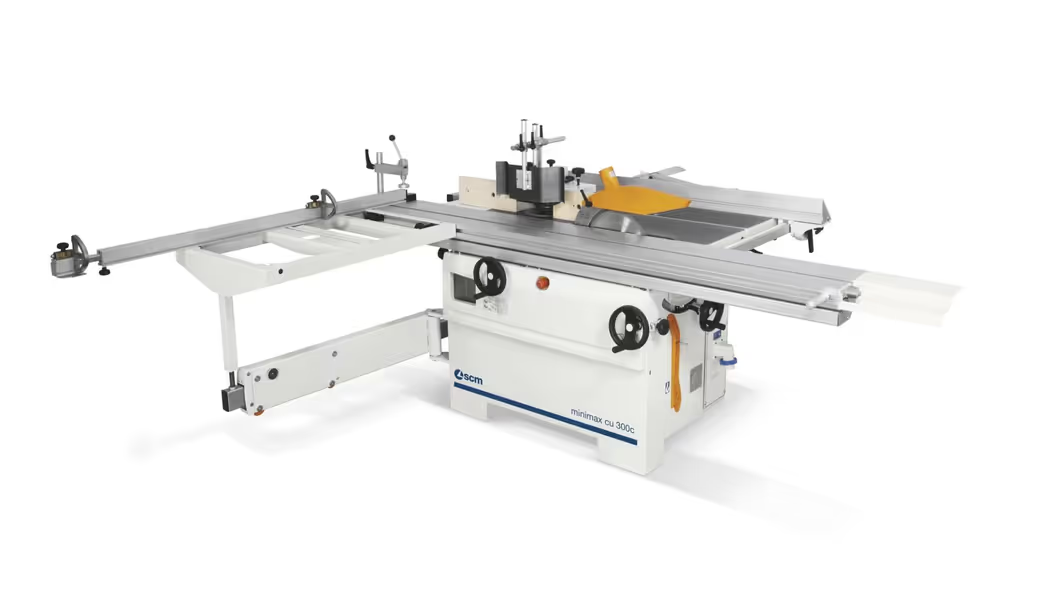
A combination woodworking machine brings together several functions to prepare and machine parts without installing a separate machine for each operation. For example, a planer-jointer is a combination machine that allows you to flatten a face and an edge, then thickness the wood. A universal combination machine can also integrate a saw, a spindle moulder and, depending on its equipment, a mortiser.
The combination woodworking machines make it possible to have several machining capabilities in a limited space. Their value also depends on the time required to switch from one function to another and on how work is organized in the workshop.
Dust extractors to capture chips and dust
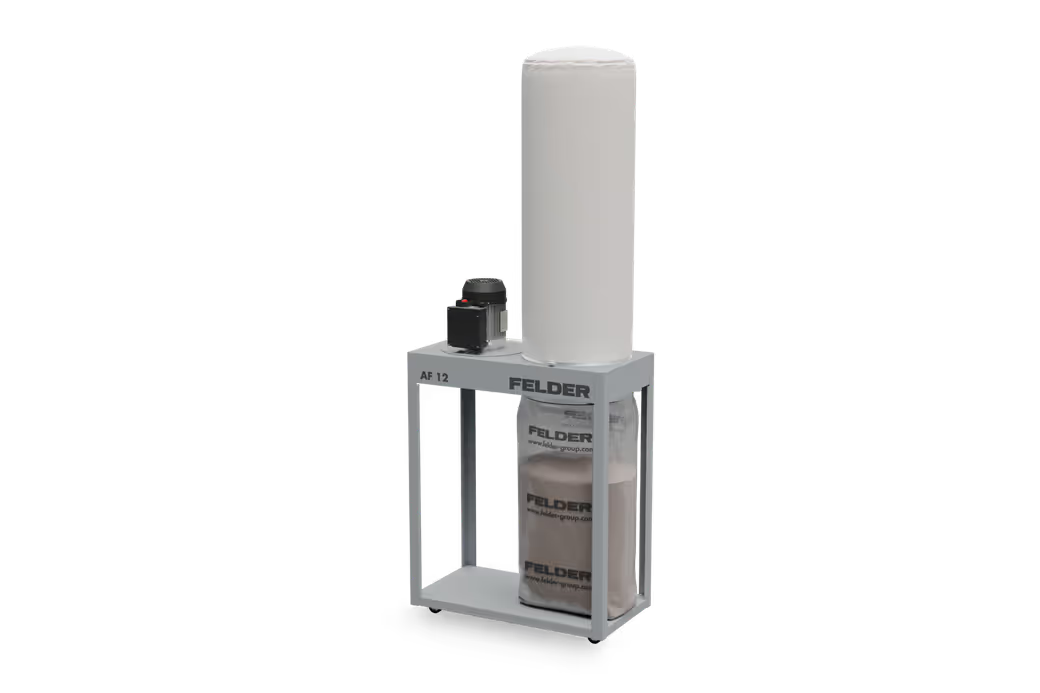
A dust extractor for woodworking machines collects chips and dust produced during cutting, planing or sanding. Connected to the machine, it extracts waste as close as possible to the tool and directs it to a collection and filtration unit. It therefore helps limit accumulation on workstations and dispersion in the workshop.
Be careful: a vacuum for portable tools does not necessarily replace a system designed for a stationary machine. The required airflow, pressure losses, connections and filtration must be adapted to the installation. Electrical power alone is not enough to choose. You must check that the installation provides the extraction required by the manufacturer at the machine connection point. INRS recommends capture as close as possible to the source, on fixed machines as well as on portable tools.
See dust extraction solutions for woodworking machines to plan an installation consistent with your machine fleet.
One form, several offers.
- Two minutes, no account
- Direct, no middleman
- Your identity stays private
Portable machines for working in the workshop and on site
Portable machines allow you to bring the tool to the workpiece to carry out cuts, machining or finishing. They complement stationary equipment when the size of the work, its location or the required adjustments make working on a fixed machine less practical.
The portable machines therefore have their place in workshop manufacturing as well as in installation work.
Routers and trim routers for mobile machining
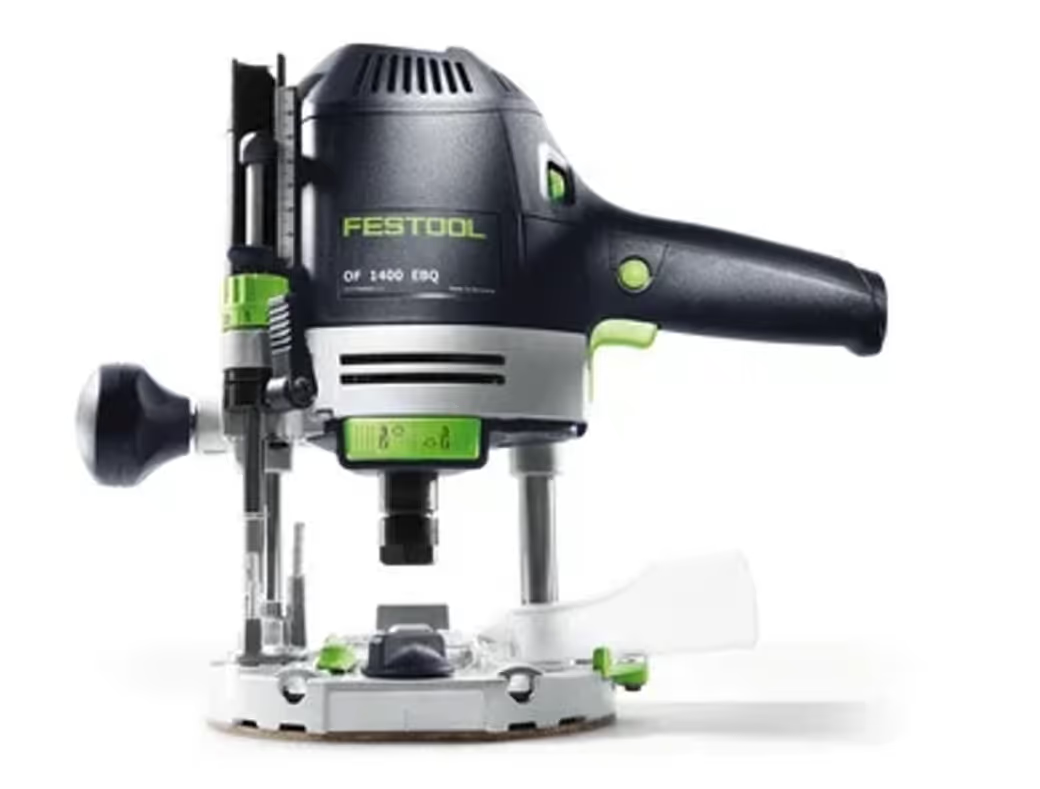
The router allows you to cut grooves, prepare recesses and shape the contours of a wooden workpiece. It uses a rotating bit whose shape and cutting depth determine the machining. The operator moves the tool over the workpiece, using a fence or template to follow the intended layout.
The trim router is mainly used to trim materials that overhang an edge and to make small profiles. Generally lighter and more compact, it can be used in particular to remove the overhang of a glued edge band and bring it flush with the panel faces. It can also break a sharp edge or create a roundover, depending on the bit used.
The routers and trim routers complement stationary machines when it is more practical to move the tool than the workpiece. They therefore have their place in template work, adjustments and installation.
Why choose a combination woodworking machine?
Choosing a combination woodworking machine is useful when you need to carry out several operations in a workshop where space is limited, especially if a single operator performs them one after another. It allows you to joint, plane, saw or shape depending on its configuration, without installing as many separate machines.
It is particularly suitable for varied manufacturing that you can organize in stages, for example by planing all the parts before moving on to sawing. On the other hand, if several operators need to work in parallel or if function changes interrupt production too often, separate machines may be more suitable.
Functions combined in a combination machine
A combination machine can include jointing, planing, sawing, profiling and mortising, depending on the model and the equipment installed. The main configurations meet different needs.
-
The planer-jointer allows you to create a flat face and a square edge, then thickness the wood.
-
The saw-spindle moulder combines cutting parts and working profiles, such as grooves, rabbets or mouldings.
-
The universal combination machine generally combines these four functions and may offer mortising to cut the recesses needed for mortise-and-tenon joints.
The number of operations advertised must be compared with the functions actually supplied. That is, you must check options, the capacities of each station and the accessories required for the intended work. For example, a combination machine may handle your boards in planing, but have a sliding table that is too short for certain panel cuts. Each function must therefore be evaluated separately.
Choosing between a combination machine and separate machines
Separate machines make it easier to create dedicated stations. They also make it possible to organize the work of multiple operators on different equipment.
A combination machine remains interesting when versatility and footprint play an important role in the project. However, you must plan for the necessary clearances around its different functions.
|
Workshop situation |
Point to examine |
|---|---|
|
One operator makes varied work |
The value of grouping functions and how simple it is to switch operations. |
|
Several operators work in parallel |
Availability of independent stations. |
|
The same machining operations are repeated in series |
Setup time and production continuity. |
|
Available space is limited |
Total footprint with workpieces, carriages and movement paths. |
|
Production needs to evolve |
The capacities of each function and the possibilities for adding to the equipment. |
Compare the configurations offered by suppliers.
How to choose a woodworking machine for your workshop?
To choose a woodworking machine, you need to:
-
Look at the operations to be carried out.
-
Take into account the materials being worked, the dimensions of the parts and the volume to be produced
-
Check that the machine’s capacities match the needs of the workshop and the available space.
-
It is important to compare the cost of the complete setup (tooling, accessories, installation, maintenance, etc.).
Identify the operations to be carried out
Choose your machine according to the work to be done in the workshop, such as sawing, planing, drilling, shaping or sanding. To do this, list the machining operations you want to perform in-house and those you already outsource. This step helps identify priority equipment.
For example, working rough boards requires jointing and planing them. With panels that are already cut and edge-banded, needs focus more on drilling and adjustments.
Take materials and dimensions into account
Note the usual dimensions of the parts, then the largest formats you truly need to handle. Then compare the machine’s useful capacities, in particular:
-
working width,
-
cutting height,
-
sliding table length
-
table dimensions.
Tool compatibility with the materials must also be checked.
Match capacity to production pace
Choose a machine capable of processing your typical quantities within the available time, including setup, loading and checks. If you make different items, prioritize simple setting changes. If you produce identical series, focus especially on ease of loading, feed rate and the stability of settings.
Plan for space, power supply and extraction
Before buying, check that you can install the machine, handle your workpieces, and connect electricity and extraction in your workshop:
-
To plane long boards, for example, plan enough clearance at the infeed and outfeed, in addition to the space taken up by the machine.
-
Also check the width of access points for delivery, moving carriages and access to maintenance points.
-
On the electrical side, check the manufacturer’s requirements, in particular single-phase or three-phase supply and the required power.
Compare the cost of the complete setup
Compare the budget required to install, use and maintain the machine, not just its purchase price. Check whether the quote includes cutting tools, accessories, transport, commissioning and training. A cheaper offer may require several additional purchases before you can start working.
Add recurring expenses, such as abrasives, sharpening and maintenance. Also check spare-parts availability and after-sales service conditions. Finally, compare quotes with equivalent capacities and equipment.
Find suppliers for your project
WoodPartners allows you to browse listed machines and contact the companies that offer them. You can thus specify your need and request the information required to compare equipment.
To prepare your request, indicate the materials being worked, part dimensions, expected operations and production pace. Add space constraints, available power supply and the equipment already present in the workshop.